 Pin
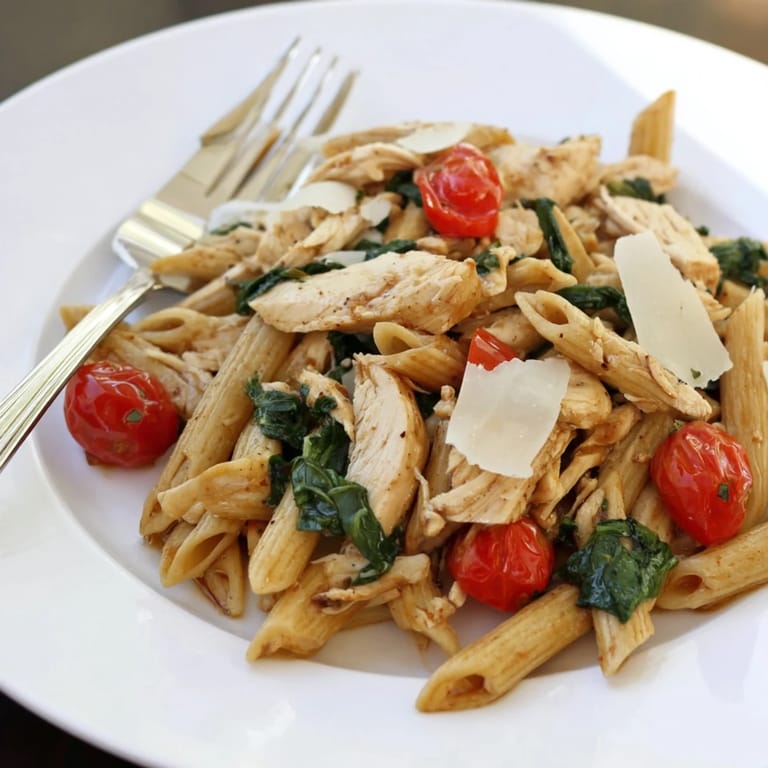
Pin My neighbor knocked one evening holding a bag of cherry tomatoes she couldn't use before her trip. I had chicken thawing and a box of penne in the pantry, so I grabbed a bottle of balsamic vinegar and started improvising. The kitchen smelled like a trattoria within minutes. That spontaneous dinner turned into one of my most requested recipes, proving that sometimes the best meals come from a little produce rescue and pure instinct.
I made this for my book club once, doubling the recipe and serving it family style in a big ceramic bowl. Everyone went quiet for the first few bites, then the questions started: What's in the glaze? Is this from a cookbook? One friend scraped the bowl clean with a piece of bread and declared it her new weeknight standard. I've been sending the recipe out ever since, usually with a reminder to save some pasta water because that's the secret to a sauce that actually coats instead of pools.
Ingredients
- Boneless, skinless chicken breasts: Slicing them thin ensures they cook quickly and evenly, plus more surface area means more glaze in every bite.
- Penne or spaghetti: Penne traps the sauce in its ridges, but spaghetti twirls beautifully with the glaze, so pick whichever shape makes you happiest.
- Garlic: Mince it fresh and don't let it brown or it turns bitter; 30 seconds in hot oil is all you need for that fragrant base.
- Cherry tomatoes: They burst into sweet little pockets of juice that balance the tangy balsamic perfectly.
- Baby spinach: It wilts down to almost nothing but adds color and a subtle earthiness without any prep work.
- Olive oil: Use a decent bottle since it's in the glaze; the flavor really comes through.
- Balsamic vinegar: The cheap stuff works fine here because you're reducing it with honey, which smooths out any sharpness.
- Honey: This is what transforms the vinegar into a glossy, slightly sweet glaze instead of just acidic liquid.
- Dijon mustard: Just a teaspoon adds depth and helps emulsify the glaze so it clings instead of separating.
- Italian herbs: Dried works great and saves you from buying four different fresh herb bunches.
- Parmesan cheese: Grate it yourself if you can; the pre-shredded stuff doesn't melt into the pasta the same way.
- Fresh basil: Totally optional, but tearing a few leaves over the top makes it feel like a special occasion.
Tired of Takeout? 🥡
Get 10 meals you can make faster than delivery arrives. Seriously.
One email. No spam. Unsubscribe anytime.
Instructions
- Boil the pasta:
- Get your water boiling and salt it generously, like the ocean, because this is your only chance to season the pasta itself. Don't forget to scoop out some pasta water before draining; that starchy liquid is liquid gold for bringing the sauce together.
- Sear the chicken:
- Heat your skillet until it's properly hot, then add the chicken in a single layer so it gets golden instead of steaming. Season it now while it cooks, and don't move it around too much or you'll lose that nice caramelized crust.
- Sauté the aromatics:
- Once the chicken is out, toss in the garlic and let it sizzle for just 30 seconds until you can smell it. Add the tomatoes right after and let them soften and release their juices into the pan.
- Make the glaze:
- Whisk the balsamic, honey, mustard, and olive oil together in a small bowl until it's smooth. This takes about 20 seconds and ensures everything is evenly mixed before it hits the hot pan.
- Glaze the chicken:
- Pour that balsamic mixture over the chicken and tomatoes, then let it simmer and thicken. You'll see it go from thin and runny to glossy and coating the back of your spoon in just a couple of minutes.
- Toss it all together:
- Add the drained pasta and spinach, then toss everything with tongs until the spinach wilts and the pasta is coated. If it looks dry, add splashes of pasta water until you get a silky sauce that clings to every piece.
- Serve hot:
- Plate it up immediately while it's steaming, then shower it with Parmesan and basil. The cheese will start melting into the warm pasta, creating little pockets of creamy, salty goodness.
 Pin
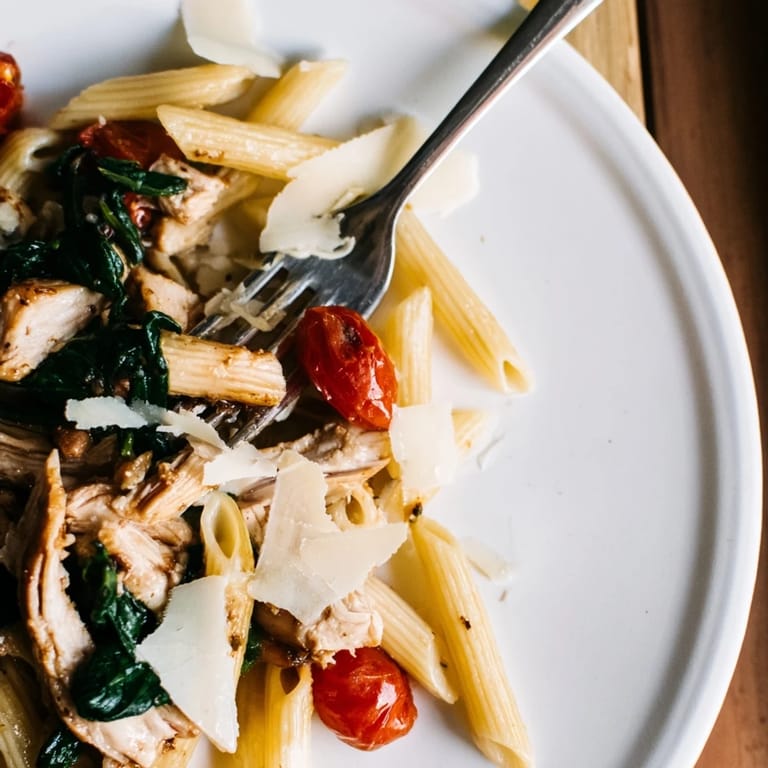
Pin My teenage son, who usually inhales dinner without comment, paused halfway through his second helping and said this was restaurant good. That's when I knew it had earned a permanent spot in our rotation. Now whenever I pull out the balsamic vinegar, he wanders into the kitchen asking if I'm making the pasta, and I love that a dish born from leftover tomatoes has become one of his favorites.
Choosing Your Pasta Shape
Penne is my go to because the glaze pools inside the tubes and you get a burst of flavor with every bite. Spaghetti works beautifully if you like twirling your pasta, and the long strands get coated in that glossy sauce. I've also tried rigatoni when I want something heartier, and bowties when I'm feeling playful. Whatever you choose, cook it a minute under the package directions since it'll finish cooking in the skillet with the sauce.
Making It Your Own
Swap the spinach for arugula if you want a peppery bite, or use kale if you have some that needs using up, though you'll want to add it a minute earlier so it softens. I've made a vegetarian version with thick sliced mushrooms in place of chicken, and honestly, it's just as satisfying. A splash of cream at the end turns this into something richer, almost like a balsamic Alfredo, and a pinch of red pepper flakes adds a gentle heat that plays nicely with the sweet glaze.
Storing and Reheating
This keeps in the fridge for up to three days in an airtight container, and I actually prefer it the next day when the flavors have melded together. Reheat it gently in a skillet over medium low heat with a splash of water or broth to loosen the sauce; the microwave works in a pinch, but the pasta can get a little rubbery. If you're meal prepping, store the Parmesan separately and add it fresh when you reheat so it doesn't get gummy.
- Add a drizzle of fresh olive oil when reheating to bring back that silky texture.
- Toss in a handful of fresh spinach or tomatoes to brighten up leftovers.
- If the glaze has thickened too much in the fridge, a tablespoon of pasta water or broth will bring it back to life.
 Pin
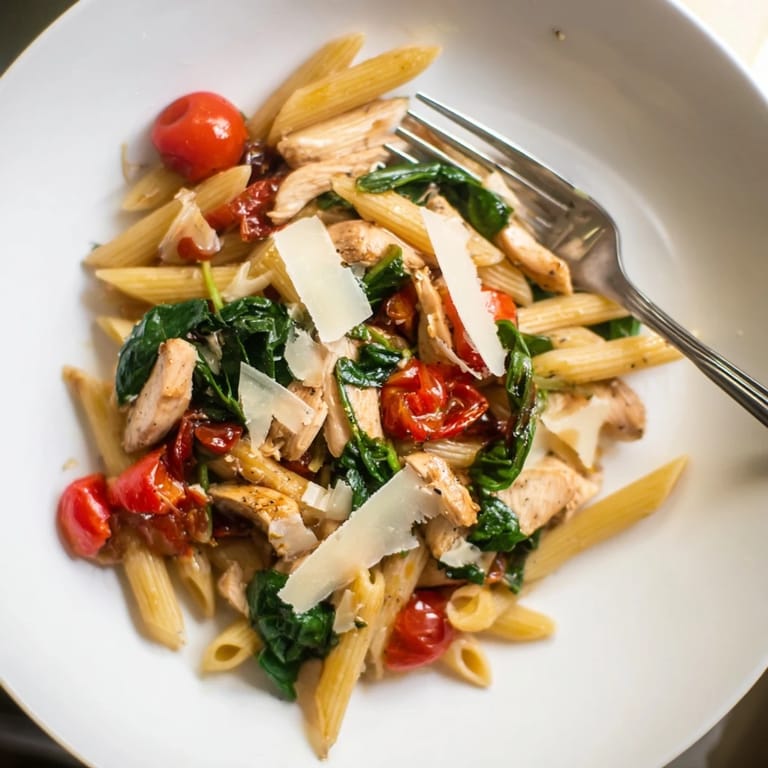
Pin This dish has pulled me out of more dinner ruts than I can count, and it never feels boring because the flavors are bright and bold. I hope it becomes one of those recipes you turn to on busy nights when you still want something that feels like a treat.
Recipe Q&A
- → Can I use chicken thighs instead of breast?
Yes, boneless, skinless chicken thighs work wonderfully and stay juicier during cooking. Adjust cooking time to 8-10 minutes to ensure they're cooked through.
- → What pasta shapes work best?
Penne and spaghetti are ideal for catching the glaze. Fusilli, rigatoni, or bow-tie pasta also pair well and hold the sauce nicely.
- → How do I prevent the balsamic glaze from being too acidic?
The honey and Dijon mustard balance the acidity naturally. For deeper sweetness, simmer the glaze for an extra minute before adding chicken, allowing flavors to meld.
- → Can I make this vegetarian?
Absolutely. Substitute chicken with sautéed mushrooms, tofu, or chickpeas. Cook mushrooms until golden before adding the balsamic mixture.
- → What wine pairs best with this dish?
Light Pinot Noir complements the balsamic richness, while crisp Sauvignon Blanc brightens the dish. Both enhance the flavors without overpowering the delicate balance.
- → Can I prepare this ahead?
Cook components separately and store in airtight containers. Combine just before serving to maintain pasta texture. The glaze can be made up to two days ahead.