 Pin
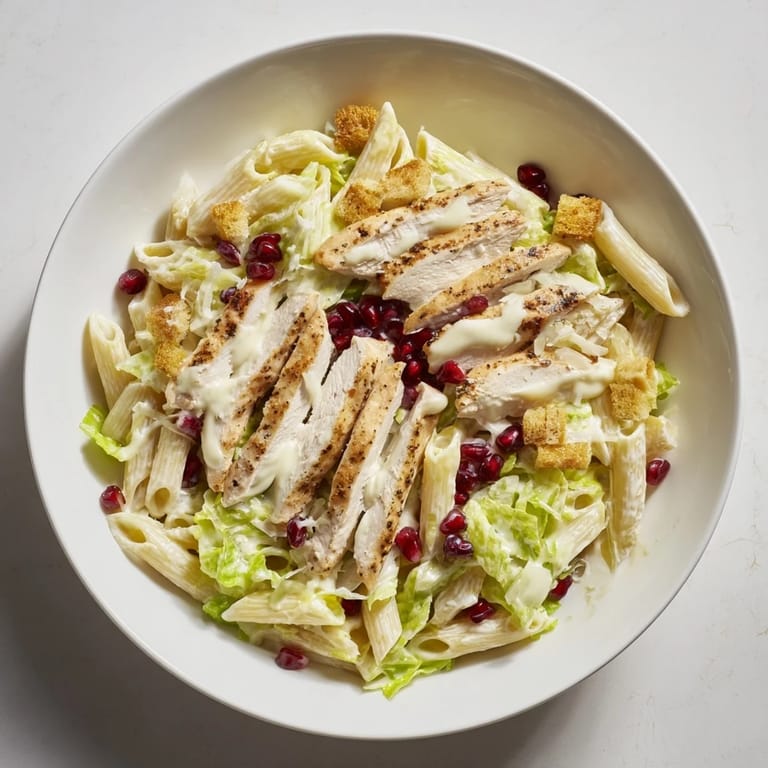
Pin My sister called me last minute asking what I was making for her birthday dinner, and I realized I'd promised something that felt special but wasn't going to tie me to the kitchen all evening. Chicken Caesar Pasta came to mind, but the moment I said it out loud, I knew I needed to do something unexpected with it. I walked to the market thinking about how to make it feel celebratory, and there they were—pomegranate arils gleaming under the produce lights like tiny jewels. That's when it clicked: the classic cream and anchovy would meet bright, tart pomegranate, and suddenly this weeknight pasta transformed into something that looked like I'd spent hours planning it.
I remember my sister's face when I set that first plate in front of her—she was expecting comfort food, not a dish that looked like it belonged at a dinner party. She took a bite, then another, and the pomegranate seeds scattered across her plate seemed to catch the light. That's the moment I realized this recipe had become more than a time-saver; it was the kind of dish that makes people feel genuinely celebrated without fuss.
Ingredients
- Boneless, skinless chicken breasts: Two large ones (about 400 g) give you enough protein to make this feel substantial without weighing it down; searing them until they develop a golden crust seals in the moisture.
- Penne or fusilli pasta: 350 g (12 oz) of short pasta shapes catch and hold the dressing better than long noodles, and their ridges create little pockets of flavor throughout.
- Romaine lettuce: One small head chopped gives you that crisp, fresh foundation; it stays crunchy even when dressed, unlike softer lettuces that wilt.
- Pomegranate arils: About 1 cup from a medium pomegranate—these are the stars, so don't skip them or swap them out; their tartness is essential to the balance.
- Fresh parsley: 1/4 cup chopped (optional but worthwhile) adds a bright, herbaceous whisper that ties everything together.
- Mayonnaise: 1/2 cup forms the creamy base of your dressing; using quality mayo makes a noticeable difference here.
- Grated Parmesan cheese: 1/4 cup for the dressing plus 1/4 cup shaved for topping; freshly grated tastes leagues better than pre-shredded.
- Lemon juice: 2 tbsp provides the acid that brightens and balances the richness; fresh juice, not bottled, changes everything.
- Greek yogurt or sour cream: 2 tbsp lightens the dressing and adds a subtle tang that keeps it from feeling heavy.
- Dijon mustard: 1 tbsp adds complexity and a gentle sharpness that deepens the flavor profile.
- Worcestershire sauce: 2 tsp is the secret weapon—it adds umami depth that makes people ask what's different about your Caesar.
- Garlic: One small clove minced gives you just enough garlicky presence without overpowering the delicate balance.
- Olive oil: 1 tbsp for searing the chicken; choose a good quality one you'd actually want to taste.
- Salt and pepper: Season generously at each stage rather than all at once; it builds flavor layer by layer.
- Croutons: 1/2 cup for topping; homemade are wonderful, but a good quality store-bought version is perfectly fine.
Tired of Takeout? 🥡
Get 10 meals you can make faster than delivery arrives. Seriously.
One email. No spam. Unsubscribe anytime.
Instructions
- Boil your pasta water with intention:
- Fill a large pot generously with water, salt it like the sea, and bring it to a rolling boil; this is your only seasoning chance for the pasta itself, so don't be shy. Once it's bubbling hard, add your penne or fusilli and cook according to package directions until it's just tender with a slight resistance when you bite it—al dente, not mushy.
- Sear the chicken until golden:
- Pat your chicken breasts dry with paper towels, then season them boldly with salt and pepper on both sides. Heat a skillet or grill pan over medium-high heat, add a tablespoon of olive oil, and listen for that sizzle as the chicken hits the pan—that's the sound of a good sear developing; cook for 6–7 minutes per side until the internal temperature hits 165°F, then let the meat rest for 5 minutes before slicing thinly.
- Whisk together your Caesar dressing:
- In a small bowl, combine mayonnaise, grated Parmesan, fresh lemon juice, Greek yogurt, Dijon mustard, Worcestershire sauce, and your minced garlic, whisking until it's smooth and creamy. Taste it and adjust the salt and pepper—this is your moment to make it exactly right, so trust your palate.
- Bring it all together in one big bowl:
- Drain your pasta and let it cool slightly, then combine it with the chopped Romaine, sliced chicken, and half of your pomegranate arils in a large bowl. Pour the dressing over everything and toss gently but thoroughly, making sure every piece gets coated without crushing the lettuce.
- Plate and garnish with care:
- Divide the salad among four plates, then top each one with croutons, shaved Parmesan, the remaining pomegranate arils, and a scatter of fresh parsley if you're using it. Serve immediately while the pasta is still warm and the croutons are crispy.
 Pin
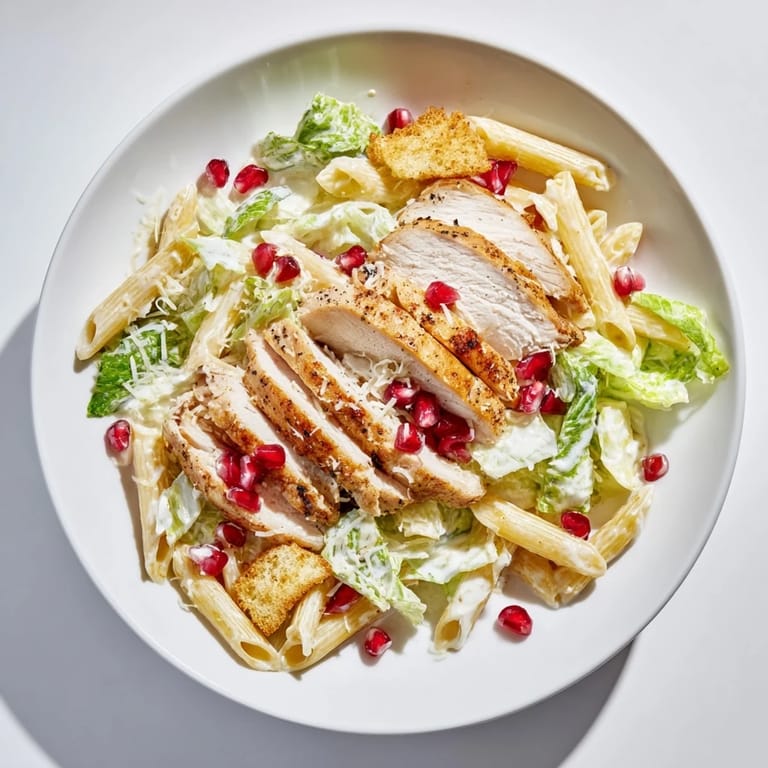
Pin There's something about watching someone discover that pomegranate in the middle of a familiar dish—it breaks their expectation in the best way, like a surprise that was hiding in plain sight. That's when Caesar pasta stops being just dinner and becomes a moment worth savoring.
Why Pomegranate Changes Everything
I spent years making standard Caesar salad before I realized how one unexpected element could shift the entire experience. The pomegranate's tartness against the creamy, savory dressing is almost like discovering a chord in music you didn't know existed—suddenly the whole composition makes more sense. It's not just decoration; those arils are there to balance, to brighten, to make you pause and notice what you're eating.
Shortcuts and Substitutions That Actually Work
I've tested variations because real life doesn't always allow for perfectly seared chicken and homemade dressing. Rotisserie chicken saves you time without sacrificing quality—just shred it and warm it gently in a pan with a touch of olive oil. If pomegranate isn't in season or feels like too much effort, pomegranate molasses drizzled over the finished dish gives you similar tartness and complexity. For the dressing, Greek yogurt can completely replace the sour cream, and if you're out of Worcestershire sauce, a tiny splash of soy sauce and a squeeze of lemon juice approximates that umami depth.
Making It Your Own at the Table
One of my favorite things about this dish is how it invites people to customize as they eat. I set out extra pomegranate arils, more croutons, and a small bowl of fresh parsley so everyone can adjust the balance to their preference. Some people want more crunch, others prefer more dressing, and there's something lovely about a dish that adapts to what each person craves in that moment.
- Set toppings on the side if you're serving guests so they can control the ratio of crunch to creaminess.
- A drizzle of good olive oil over the finished plate adds richness and a hint of earthiness that feels indulgent.
- If you're making this for a crowd, keep the pasta separate from the dressing until the very last moment before serving.
 Pin
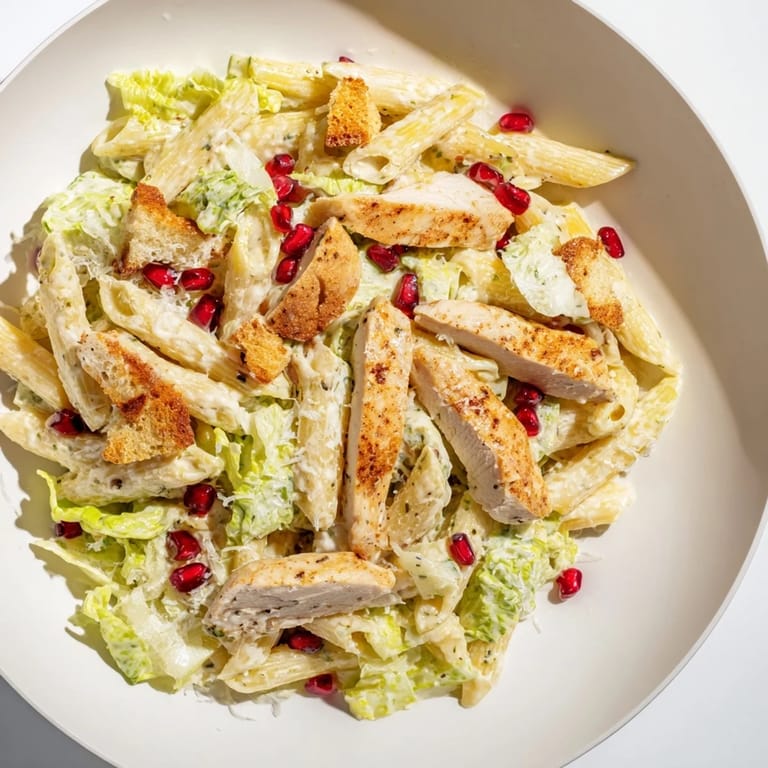
Pin This recipe taught me that celebration doesn't require hours in the kitchen—it just requires paying attention to a few good ingredients and the people you're cooking for. That's the whole secret right there.
Recipe Q&A
- → What pasta works best for this dish?
Penne or fusilli are ideal as their shapes hold the creamy dressing well and mix nicely with the other ingredients.
- → Can I prepare the chicken ahead of time?
Yes, grilling or pan-searing chicken breasts in advance and slicing them before serving helps streamline the process without sacrificing flavor.
- → What makes the dressing rich and creamy?
The combination of mayonnaise, grated Parmesan, lemon juice, and Greek yogurt creates a luscious, tangy dressing that complements the savory elements.
- → Are there good substitutions for Romaine lettuce?
Baby spinach or kale can be excellent alternatives, offering different textures and a slight variation in flavor.
- → How do pomegranate arils contribute to the dish?
They add a sweet-tart burst of freshness and a vibrant pop of color, balancing the creamy and savory components.