 Pin
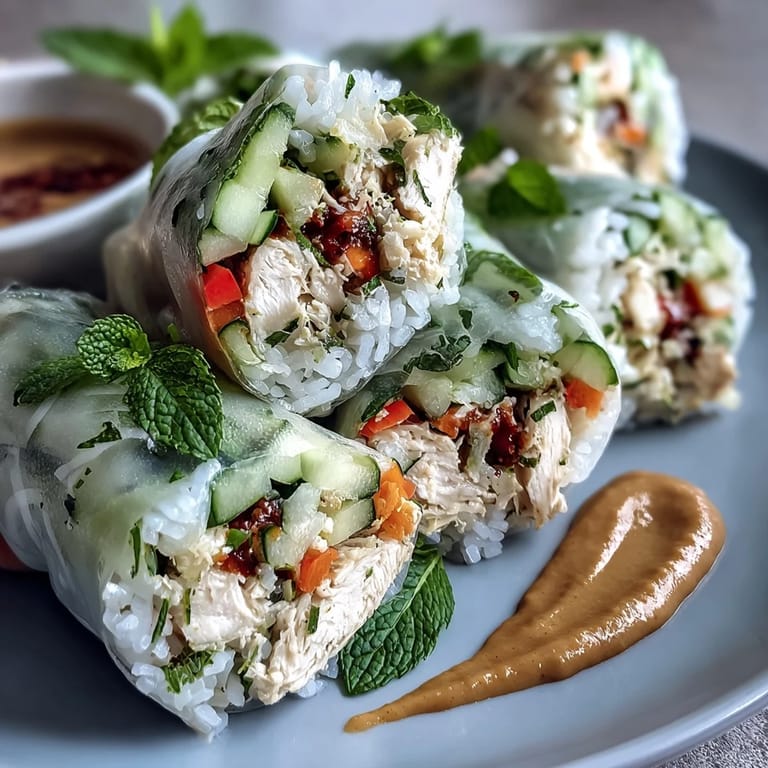
Pin My neighbor knocked on my door one humid afternoon with a bag of fresh mint from her garden, insisting I try making spring rolls the way her mother taught her in Vietnam. I'd always been intimidated by rice paper—that fragile, translucent membrane seemed impossible to handle without tearing. But sitting at her kitchen counter, watching her move with such casual confidence, I realized the secret was patience and warm water, not precision. Now these rolls remind me of that afternoon and how food becomes a bridge between different kitchen traditions.
I made these for a small dinner party where one guest had just gone dairy-free, and I loved that I could serve something impressive without feeling like I was accommodating a limitation. Everyone circled back for seconds, and someone asked for the recipe before dessert even arrived. That's when I knew these weren't just a nice appetizer—they were the kind of dish that makes people feel genuinely cared for.
Ingredients
- Rice paper wrappers: These delicate sheets are your canvas, and the trick is not letting them soak too long or they'll shred in your hands—10 to 15 seconds in warm water is the sweet spot I learned through trial and error.
- Cooked chicken breast, shredded: Use rotisserie chicken if you're short on time; the slight char and extra seasoning actually makes the rolls taste better.
- Fresh vegetables (carrots, cucumber, bell pepper): Julienne or slice thin so they stay tender when bitten through, and they add a satisfying crunch that feels lighter than heavier fillings.
- Lettuce and fresh herbs (mint, cilantro): These are where the magic happens—the mint and cilantro give each bite a brightness that makes the whole roll feel alive and not heavy at all.
- Creamy peanut butter: The foundation of your sauce; I prefer natural peanut butter because the oil helps it mix smoothly with the other ingredients.
- Soy sauce: Use tamari if you need gluten-free, and don't skip the salty umami it brings to balance the sweetness of the honey.
- Fresh lime juice, honey, sesame oil: Together these create a sauce that tastes bright and complex, never one-note or overly sweet.
- Garlic and ginger: Mince these finely so they distribute evenly throughout the sauce without overpowering the peanut flavor.
Tired of Takeout? 🥡
Get 10 meals you can make faster than delivery arrives. Seriously.
One email. No spam. Unsubscribe anytime.
Instructions
- Set up your assembly station:
- Arrange all prepped vegetables and herbs on a large platter in little piles so everything is within arm's reach. This setup feels almost meditative once you get into a rhythm, and you'll thank yourself for not hunting through the fridge mid-roll.
- Prepare the rice paper:
- Fill a shallow dish with warm (not hot) water and gently submerge one wrapper for about 10 to 15 seconds until it's soft and pliable but still has slight resistance. Lay it flat on a damp kitchen towel and you'll feel how it continues softening even after you remove it from water.
- Layer your filling:
- Lay down a small bed of lettuce on the bottom third of the wrapper, then add a small handful each of chicken, carrots, cucumber, pepper, mint, cilantro, and green onion—less is actually more here because overstuffing leads to tears. The key is creating a thin, even line so nothing pokes through the delicate wrapper.
- Roll with intention:
- Fold the bottom edge up and over your filling, tuck in both sides like you're making a burrito, then roll tightly toward the top. You'll develop a feel for how much pressure to use after just a couple rolls, and suddenly your hands know exactly what to do.
- Make the peanut sauce:
- Whisk together peanut butter, soy sauce, lime juice, honey, sesame oil, minced garlic, and grated ginger in a small bowl, then slowly add warm water while stirring until you reach a consistency that's pourable but still coats a spoon. Taste it and adjust—more lime for brightness, more honey for sweetness, more water if it's too thick.
- Serve and enjoy:
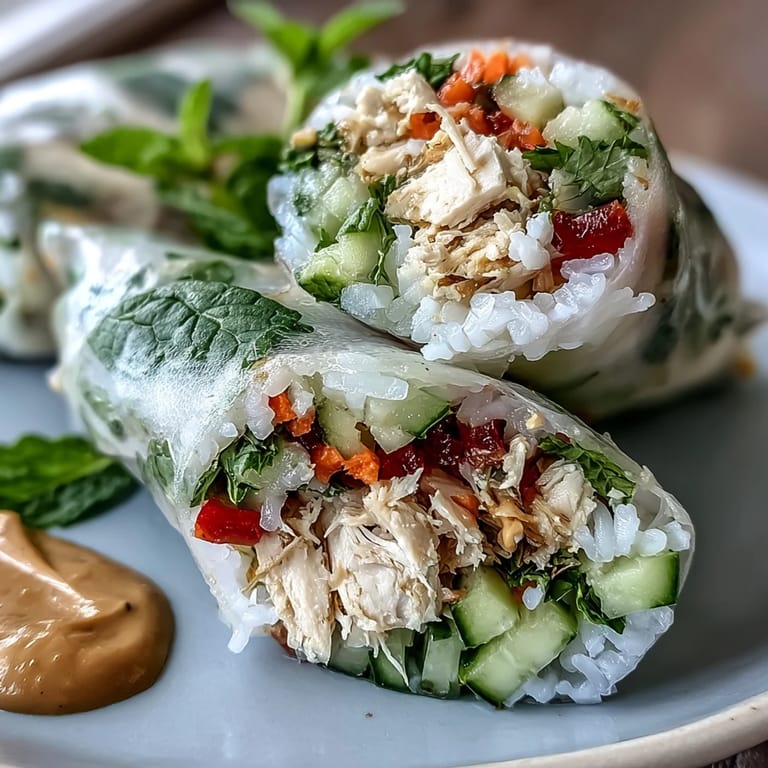
- These are best eaten within an hour while the wrapper is still supple and the vegetables are crisp, though you can cut them in half on the bias for a prettier presentation. Dip each piece in the peanut sauce and let that first bite remind you why fresh food tastes so good.
 Pin
Pin There's something about serving food you've rolled with your own hands that feels more intimate than opening a takeout container. My sister once said eating these made her feel like she was being told a secret, and I think that's because the lightness and care baked into each roll somehow comes through in the taste.
The Art of Not Overstuffing
One of my biggest mistakes early on was treating spring rolls like burritos and jamming in as much filling as possible. The wrapper would tear, the filling would slide around, and the whole thing fell apart in my hands. I realized that the beauty of spring rolls is their delicate balance—they're meant to be light and easy to bite through, with each component tasting distinct rather than mushed together. Now I use about two-thirds of what I think looks right, and they're infinitely better for it.
Why the Peanut Sauce Matters So Much
The sauce is honestly where people fall in love with these rolls, so don't rush it or substitute anything arbitrarily. I once tried making it with almond butter to save money, and it tasted flat and one-dimensional—there's something about peanut butter's richness that brings out the lime and ginger in a way other nut butters just don't. The sauce should taste like a complete thought on its own, something you'd want to dunk vegetables in even without the rolls.
Making These Ahead (and Why Timing Matters)
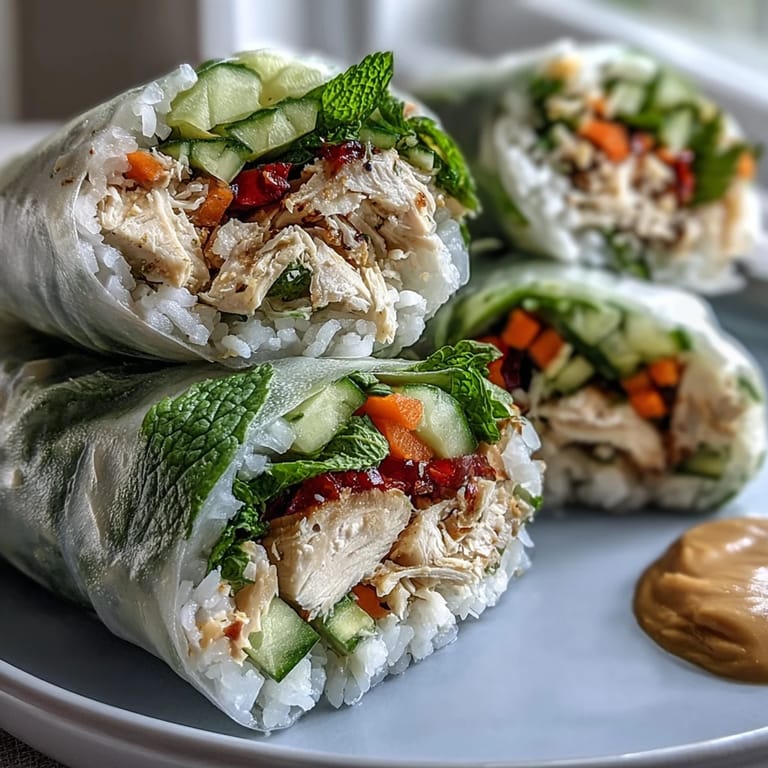
Unlike some appetizers, spring rolls don't love sitting around waiting to be served. The wrapper will slowly harden and lose that tender, silky texture that makes them special, and the vegetables can weep and become limp. I've had the best success assembling them no more than an hour before serving, though the peanut sauce can be made ahead and stored in the fridge for up to three days. If you're hosting and want to prep early, prep all your vegetables and keep them in separate containers, then do the actual rolling just before guests arrive.
- Make the peanut sauce up to three days ahead to let flavors meld and deepen.
- Keep prepped vegetables in airtight containers so they stay crisp until assembly time.
- Roll them within an hour of serving for the best texture, or accept that they'll be softer and still delicious.
 Pin
Pin These spring rolls taught me that some of the most impressive dishes are the ones that feel effortless to eat. Serve them with cold tea on a warm evening and watch people slow down, actually taste their food, and smile a little wider.
Recipe Q&A
- → How do I keep rice paper wrappers from tearing?
Soak each wrapper in warm water for just 10–15 seconds until pliable but not too soft. Lay it on a damp towel while filling—overly wet wrappers become fragile. Roll tightly but gently, folding sides in before the final roll to seal everything securely inside.
- → Can I make these spring rolls ahead of time?
It's best to assemble spring rolls just before serving. Rice paper wrappers can dry out and become tough when refrigerated. You can prep all ingredients and sauce up to 24 hours ahead, then roll them when ready to eat for optimal texture.
- → What's a good vegetarian substitute for chicken?
Extra-firm tofu works beautifully—press, slice into strips, and use raw or lightly pan-fried. For more protein, add cooked vermicelli noodles or edamame. The vegetables and herbs provide plenty of flavor, so you won't miss the chicken.
- → How can I adjust the peanut sauce consistency?
Add warm water one tablespoon at a time to thin the sauce for easier dipping. For a thicker, richer consistency, reduce the water slightly. The sauce naturally thickens as it sits, so start slightly thinner if making ahead.
- → What other vegetables work well in spring rolls?
Shredded cabbage, snap peas, avocado slices, mango strips, or cooked mung bean noodles all add great texture and flavor. Stick to crisp, raw vegetables that hold up well inside the delicate wrapper without making it soggy.
- → Are these spring rolls gluten-free?
Most rice paper wrappers are naturally gluten-free, but always check the label. Use tamari instead of soy sauce in the peanut sauce to keep the entire dish gluten-free. The remaining ingredients—vegetables, herbs, chicken, and peanut butter—are all naturally gluten-free.