 Pin
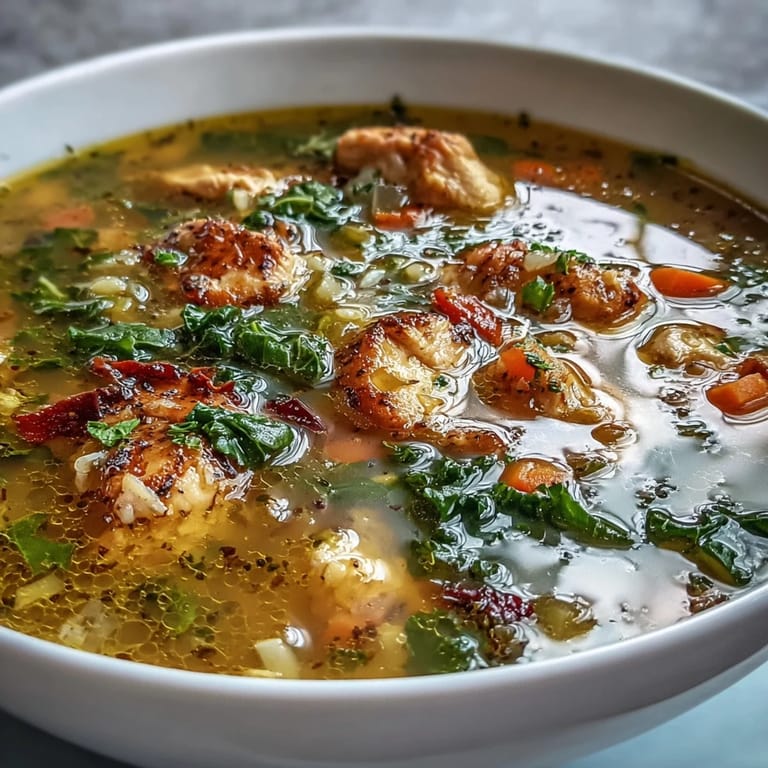
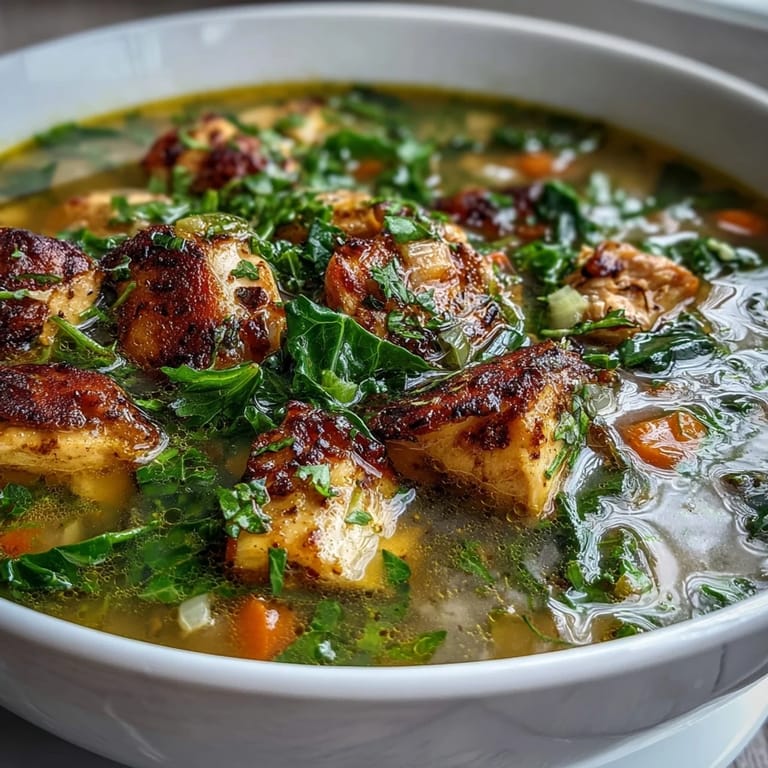
Pin There's something about the smell of turmeric hitting hot oil that just stops you mid-morning. I was half-awake, scrolling through emails, when my neighbor knocked with a bag of fresh lemons from her tree and mentioned she'd been fighting off a cold. That afternoon, I found myself building this soup almost by instinct—golden, steaming, the kind of thing that feels like it's doing actual good as you eat it. The chicken gets so tender it practically dissolves, the kale adds a peppery bite, and that lemon brightness cuts through everything like a small miracle in a bowl.
I made this for my partner on a random Thursday when we were both exhausted, and watching them eat three bowls while actually engaging in conversation again told me everything I needed to know. There's something about a soup this alive—not heavy, not boring—that makes people want to slow down. That's when I knew it was becoming regular rotation.
Ingredients
- Boneless, skinless chicken breast or thighs (500 g): Thighs stay juicier if you're not fussing over timing, but breasts work fine if you cut them into proper bite-sized pieces so they cook evenly.
- Medium onion, finely chopped: The foundation everything else builds on—don't skip the chopping step, texture matters.
- Medium carrots, peeled and diced: They add natural sweetness that balances the turmeric and lemon without needing any sugar.
- Celery stalks, diced: I learned the hard way that celery can get stringy if you don't cut it small enough, so aim for quarter-inch pieces.
- Garlic cloves, minced (3): Fresh garlic makes a visible difference here—jarred just doesn't have the same punch.
- Baby kale (100 g): It wilts down to almost nothing, which means you're getting greens without that overwhelming raw kale texture.
- Low-sodium chicken broth (1.5 liters): The quality of your broth matters more than you'd think, so taste it before committing—some brands are saltier than others.
- Fresh lemon juice and zest (1 lemon): This is what makes the whole soup sing, so use fresh lemons, not the bottled stuff.
- Ground turmeric (1.5 tsp): It can taste bitter if you let it scorch, which is why we bloom it in oil first.
- Ground cumin (1 tsp): A quiet helper that adds warmth without announcing itself.
- Ground black pepper (1/2 tsp): Fresh cracked is better, but I won't judge if you use the pre-ground stuff.
- Sea salt (1 tsp): Adjust to taste, especially if your broth already carries salt.
- Crushed red pepper flakes (1/4 tsp, optional): Skip it if heat isn't your thing, but a tiny pinch adds complexity.
- Olive oil (1 tbsp): Just enough to get everything cooking without making the soup greasy.
Tired of Takeout? 🥡
Get 10 meals you can make faster than delivery arrives. Seriously.
One email. No spam. Unsubscribe anytime.
Instructions
- Heat the pot and build your base:
- Warm the olive oil in a large pot over medium heat, then add your onion, carrots, and celery together. Let them soften for 4 to 5 minutes while you listen for them to start smelling sweet—that's your signal they're ready.
- Wake up the spices:
- Add your minced garlic, turmeric, cumin, black pepper, and red pepper flakes to the softened vegetables. Stir constantly for about a minute until the kitchen smells like something golden and warm—don't let it sit too long or the spices can burn.
- Cook the chicken through:
- Add your chicken pieces to the pot and stir every 30 seconds or so for about 3 to 4 minutes until they're lightly browned on the edges. They won't be fully cooked yet, and that's exactly right.
- Build the broth and let it simmer:
- Pour in your chicken broth and bring everything to a rolling boil, then immediately turn the heat down to a gentle simmer. Let it go uncovered for 15 minutes—the chicken will finish cooking, the vegetables will get tender, and the flavors will start talking to each other.
- Finish with brightness:
- Stir in your baby kale, lemon juice, and lemon zest, then simmer for another 2 to 3 minutes until the kale relaxes into the broth. Taste it now—this is when you adjust salt or add more lemon if you want it brighter.
- Serve and savor:
- Ladle it into bowls while it's hot and steam is still rising. If you want, top it with fresh herbs or an extra lemon wedge.
 Pin
Pin There was a morning last winter when I made this soup for myself before work, and I sat at my desk eating it straight from the container, not even bothering with a proper bowl. Halfway through, I realized I wasn't just eating lunch—I was actually feeling better, more present, like the soup had worked some quiet magic. That's when I understood it wasn't just good food; it was something that cared about me while I was eating it.
Why This Soup Actually Works
The protein-to-volume ratio here is genuinely generous without making you feel stuffed afterward, which is rare for something this satisfying. The turmeric brings an earthy warmth that feels grounding, while the lemon keeps everything from getting heavy or one-note. Most soup recipes feel like they're just existing; this one feels intentional, like every ingredient knows what it's supposed to do.
Timing and Flexibility
The whole thing comes together in 45 minutes start to finish, which means you can make it on a random Tuesday without planning your entire evening around it. If you're running behind, you can prep your vegetables earlier and just keep them in containers—the soup actually gets better if it sits for a day, flavors deepen, everything mingles more. You can also double the recipe and freeze half, though I've never managed to do that because I keep eating it instead.
Customization and Additions
This soup is flexible enough to work with whatever you have on hand without falling apart, but generous enough that small changes feel intentional rather than like you're just working with scraps. If you want it heartier, add cooked quinoa or brown rice—I learned that throwing in warm grains right before serving keeps them from getting soggy. You can swap spinach or Swiss chard for the kale, play with the lemon-to-turmeric ratio if you want it brighter or earthier, or add a pinch more red pepper flakes if you like heat.
- Fresh herbs like cilantro or parsley scattered on top right before eating bring a completely different energy to each bowl.
- If you're making this for someone who's sick or needs gentle eating, cut the chicken extra small—it feels more approachable that way.
- A squeeze of fresh lemon juice at the table lets people dial in their own brightness, which somehow makes it feel more personal.
 Pin
Pin This soup somehow became the thing I make when I want to feel capable, or when someone I care about needs something that tastes like attention. It's honest food that doesn't apologize for being simple.
Recipe Q&A
- → Can I use chicken thighs instead of breast?
Yes, boneless skinless chicken thighs work beautifully and add extra richness. Just adjust cooking time by 2-3 minutes to ensure they're fully cooked through.
- → What can I substitute for baby kale?
Baby spinach or Swiss chard make excellent alternatives. Add them during the last 2-3 minutes of cooking to maintain their vibrant color and tender texture.
- → How long does this soup keep in the refrigerator?
This soup stores well for 4-5 days in an airtight container. The flavors actually develop and become more harmonious after resting overnight.
- → Can I make this in a slow cooker?
Absolutely. Sauté vegetables first, then transfer everything to your slow cooker. Cook on low for 4-6 hours or high for 2-3 hours, adding kale during the last 30 minutes.
- → Is this soup freezer-friendly?
Yes, freeze for up to 3 months. Consider adding the kale when reheating to prevent it from becoming too soft. Thaw overnight in the refrigerator before warming.
- → How can I make this soup more filling?
Add cooked quinoa, brown rice, or diced potatoes during the last 10 minutes of simmering. A can of drained chickpeas also works wonderfully for extra substance.