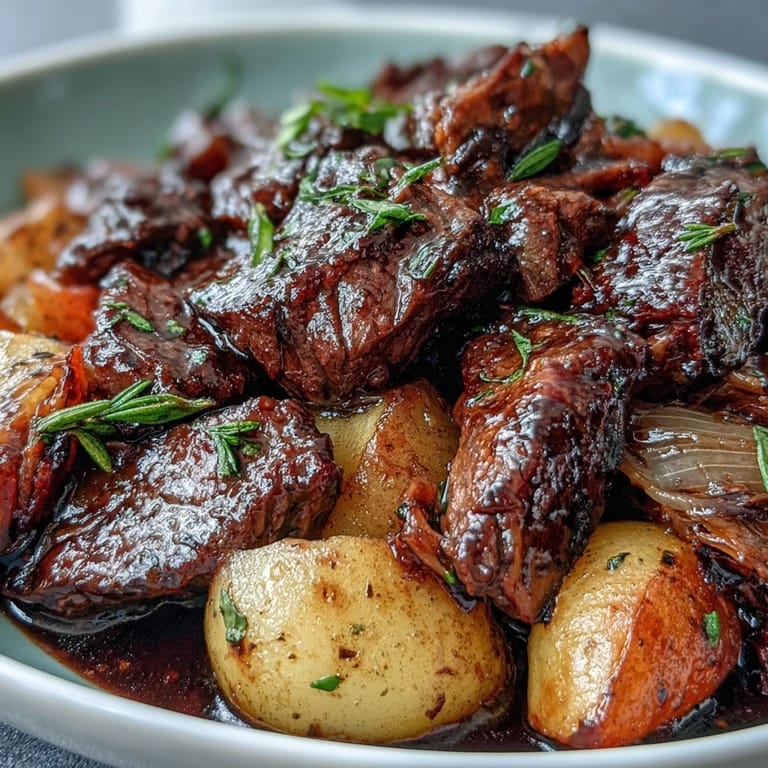
 Pin
Pin Nikujaga is the ultimate Japanese comfort food, a hearty "meat and potatoes" stew that embodies the warmth of a home-cooked meal. This classic dish features tender slices of beef, waxy potatoes, and sweet onions braised in a flavorful soy-based sauce until perfectly glossy and rich. Perfect for a cozy meal, it is a staple of Japanese home cooking that is both nourishing and deeply satisfying.
Pin Traditionally enjoyed in households across Japan, Nikujaga is as nutritious as it is delicious. By simmering the ingredients in dashi, soy sauce, and mirin, the vegetables soak up all the savory umami, making them just as satisfying as the meat itself. Whether you're a fan of Japanese cuisine or just looking for a new way to enjoy beef and potatoes, this dish is sure to impress.
Ingredients
Tired of Takeout? 🥡
Get 10 meals you can make faster than delivery arrives. Seriously.
One email. No spam. Unsubscribe anytime.
- 300 g thinly sliced beef (such as chuck or ribeye)
- 600 g waxy potatoes, peeled and cut into large chunks
- 2 medium onions, sliced
- 1 large carrot, peeled and sliced into thick rounds
- 100 g shirataki noodles (optional, rinsed and drained)
- 100 g snow peas or green beans, trimmed (optional)
- 400 ml dashi stock (or water with 1 tsp instant dashi powder)
- 4 tbsp soy sauce
- 3 tbsp mirin
- 2 tbsp sake
- 2 tbsp sugar
- 1 tbsp neutral oil (e.g., canola or vegetable oil)
Instructions
- 1. Prep and Sauté
- Heat the oil in a large saucepan or deep skillet over medium heat. Add the sliced onions and sauté for 2-3 minutes until just softened.
- 2. Brown the Beef
- Add the sliced beef and cook until lightly browned, stirring often.
- 3. Add Vegetables
- Add the potatoes and carrots, mixing to combine.
- 4. Seasoning
- Pour in the dashi stock, then add soy sauce, mirin, sake, and sugar. Stir well.
- 5. Boil and Skim
- Bring to a gentle boil. Skim off any foam or impurities that rise to the surface.
- 6. Simmer
- Reduce heat to low, cover with a lid slightly ajar, and simmer for 20-25 minutes until the potatoes are tender and the flavors have melded. If using shirataki noodles, add them about 10 minutes before the end of cooking.
- 7. Reduce the Sauce
- For a glossy finish, remove the lid for the final 5 minutes and let the sauce reduce slightly.
- 8. Final Touch
- Add snow peas or green beans in the last 2-3 minutes so they stay bright and crisp.
- 9. Serve
- Serve hot with steamed white rice.
Zusatztipps für die Zubereitung
Using a large saucepan or deep skillet allows the ingredients to cook evenly. Skimming the foam during the boiling process is essential for a clean and refined sauce. To ensure the potatoes don't fall apart, use a sharp knife for cutting and stick to waxy varieties that hold their shape well during the simmer.
Varianten und Anpassungen
Thinly sliced pork can be substituted for beef for a common regional variation. For a vegetarian version, use firm tofu and a vegetable-based broth. You can also adjust the sweetness by varying the amount of sugar and mirin to your personal preference. For a gluten-free option, use tamari or certified gluten-free soy sauce.
Serviervorschläge
Serve this comforting stew hot with a side of steamed white rice. It pairs beautifully with a cup of hot green tea or even a glass of chilled sake to balance the rich, savory flavors. This recipe yields 4 servings, each containing approximately 350 calories and 20g of protein.
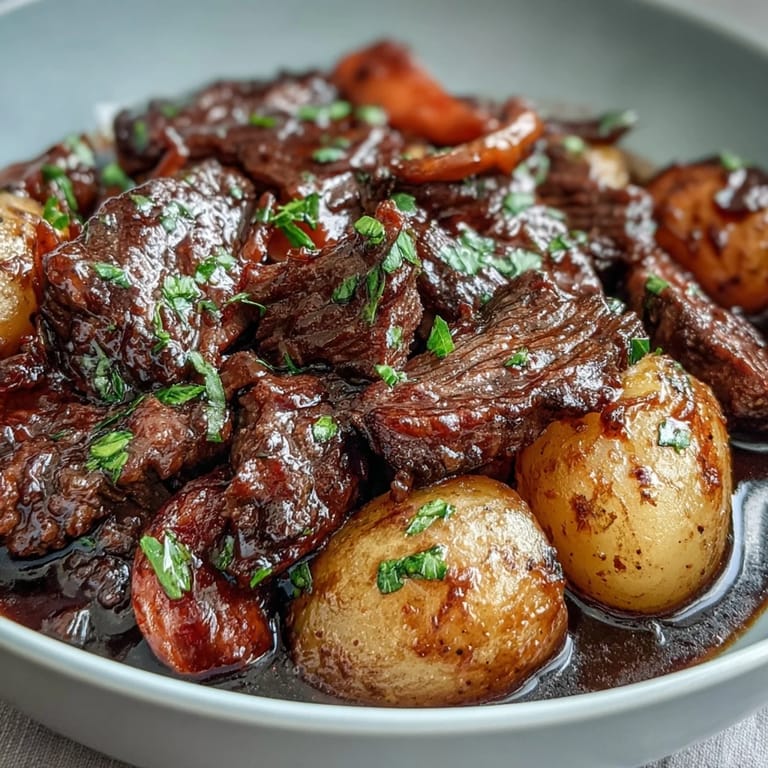 Pin
Pin With a total time of just 50 minutes, Nikujaga is a practical yet impressive addition to your weekly menu. Its simple ingredients and rewarding taste make it the perfect introduction to authentic Japanese home cooking.
Recipe Q&A
- → What cut of beef works best for this dish?
Thinly sliced chuck or ribeye beef offers tenderness and flavor, braising well without toughening.
- → Can I substitute the potatoes with another vegetable?
Waxy potatoes hold their shape well, but sweet potatoes or carrots alone can be used for variation.
- → Why is mirin included in the sauce?
Mirin adds a subtle sweetness and depth, balancing the savory soy and enhancing the glaze texture.
- → How does adding shirataki noodles affect the dish?
Shirataki noodles absorb flavors while adding a unique texture without heaviness, commonly added near the end of cooking.
- → What are good side dishes or drinks to pair with this meal?
This dish pairs well with steamed rice, pickled vegetables, and drinks like chilled sake or green tea for balance.