 Pin
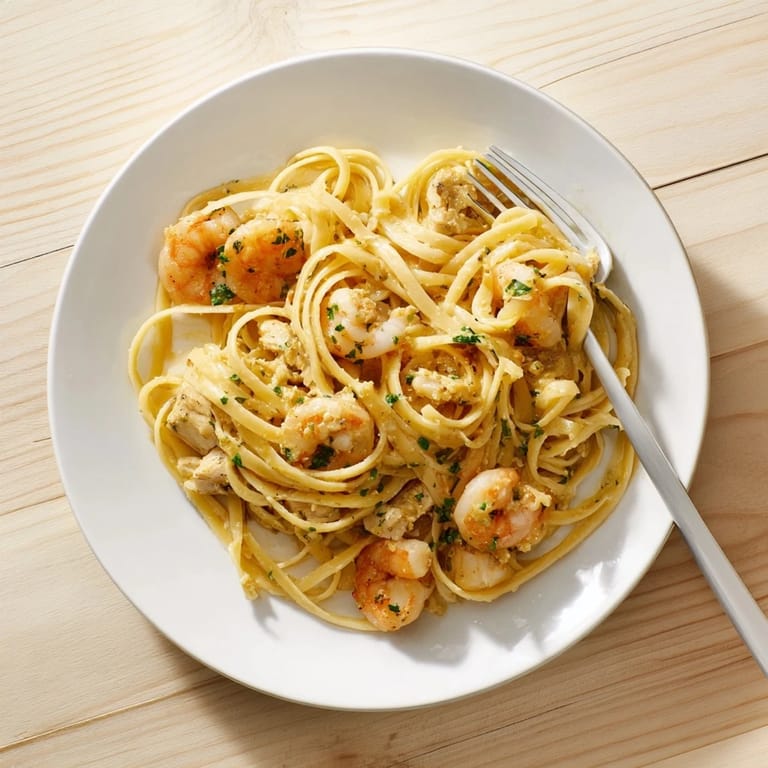
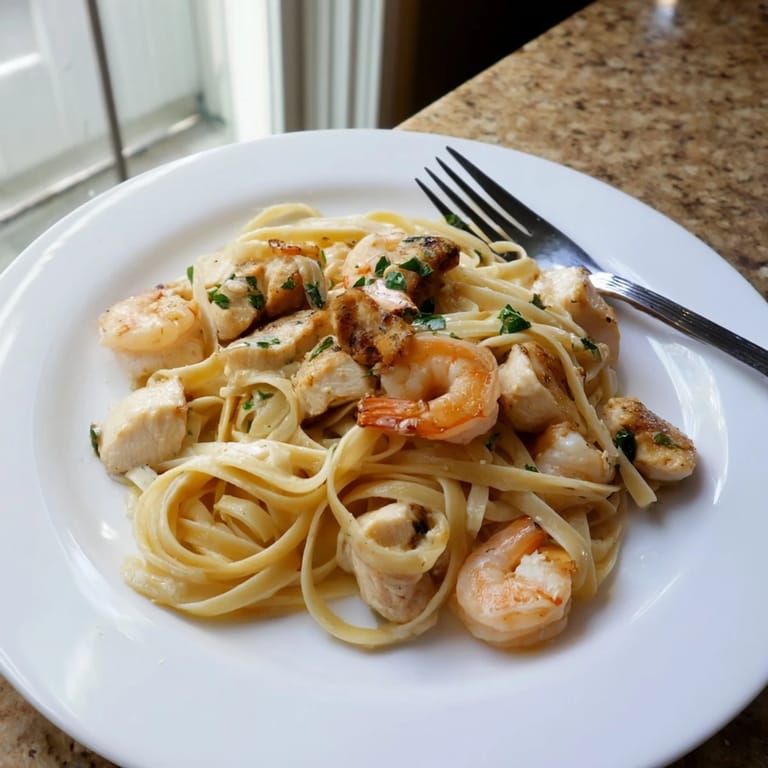
Pin The butter was just starting to foam in the skillet when I realized I'd bought shrimp and chicken without any real plan. My neighbor had dropped off a bag of lemons that morning, and suddenly this dish came together like it had been waiting for me all along. The garlic hit the pan and filled the whole kitchen with that sharp, sweet smell that makes you forget you're tired from work. I tossed the pasta water in at the last second, watching it turn golden and glossy, and thought: this is exactly why I keep cooking. Sometimes the best meals are the ones you didn't mean to make.
I made this for my sister's birthday last spring, and she still brings it up every time we talk about food. She's the kind of person who notices when you've put thought into something, and when she took that first bite, she got quiet in the way that means it's good. The shrimp had that perfect snap, the chicken stayed tender, and the pasta soaked up just enough of the lemony butter to make every bite feel intentional. We sat on the porch with the windows open, and I remember thinking that this dish had become one of those recipes I'd make again and again, not because it's complicated, but because it just works. It's the kind of meal that turns a regular evening into something you remember.
Ingredients
- Large shrimp, peeled and deveined: Look for shrimp that smell like the ocean, not fishy, and pat them completely dry or they'll steam instead of getting that golden sear you want.
- Boneless, skinless chicken breast, cut into bite-sized pieces: Cutting them small and even means they cook at the same rate as the shrimp, and nobody ends up with a raw center.
- Linguine or spaghetti: Long pasta is perfect here because it twirls up with the sauce, and the starch that clings to it helps everything come together at the end.
- Garlic, minced: Fresh garlic is non-negotiable in this dish, it blooms in the butter and becomes sweet and mellow, nothing like the jarred stuff.
- Shallot, finely chopped: Shallots add a delicate onion flavor without overpowering the lemon, and they soften into the sauce almost invisibly.
- Lemon zest and juice: The zest is where the fragrant oils live, and the juice gives you that bright, clean acidity that makes the whole dish sing.
- Fresh parsley, chopped: It's not just a garnish, it adds a grassy freshness that balances the richness of the butter.
- Unsalted butter, divided: Using unsalted lets you control the seasoning, and dividing it means you get buttery flavor in every stage of cooking.
- Olive oil: It raises the smoke point of the butter so you can get a better sear without burning anything.
- Dry white wine: Optional, but it deglazes the pan and adds a subtle depth that makes the sauce taste more complex than it is.
- Low-sodium chicken broth: This loosens the sauce and adds savory backbone without making it too salty.
- Salt, black pepper, and red pepper flakes: Season as you go, taste before serving, and add the red pepper only if you want a gentle warmth in the background.
Tired of Takeout? 🥡
Get 10 meals you can make faster than delivery arrives. Seriously.
One email. No spam. Unsubscribe anytime.
Instructions
- Boil the pasta:
- Get your water aggressively salty, like the sea, and cook the pasta just until it still has a tiny bite in the center. Before you drain it, scoop out a mugful of that starchy water because it's liquid gold for bringing the sauce together later.
- Prep the proteins:
- Use paper towels to get the shrimp and chicken as dry as you can, then season them generously with salt and pepper. Moisture is the enemy of a good sear, so don't skip this step.
- Sear the chicken:
- Heat the skillet until it's really hot, add the oil and butter, and let the chicken sit undisturbed for a couple minutes so it gets golden. Flip and cook until it's just done, then pull it out so it doesn't turn rubbery.
- Cook the shrimp:
- Add a little more oil to the same pan and cook the shrimp fast, about a minute per side. They'll go from gray to pink quickly, and the second they curl into a C shape, they're ready.
- Build the sauce base:
- Lower the heat, melt the remaining butter, and add the shallot and garlic. Stir constantly so the garlic doesn't burn, and stop when it smells amazing and turns just golden at the edges.
- Deglaze and simmer:
- Pour in the wine if you're using it, scraping up all those tasty browned bits stuck to the pan. Let it bubble for a minute, then add the broth, lemon zest, and juice, and let it reduce slightly so the flavors concentrate.
- Combine everything:
- Toss the chicken, shrimp, and pasta into the skillet, and use tongs to mix it all together. Add splashes of pasta water until the sauce clings to the noodles without pooling at the bottom.
- Finish and serve:
- Stir in the parsley and red pepper flakes, taste for salt, and adjust as needed. Serve it hot with lemon wedges on the side so everyone can add an extra squeeze if they want.
 Pin
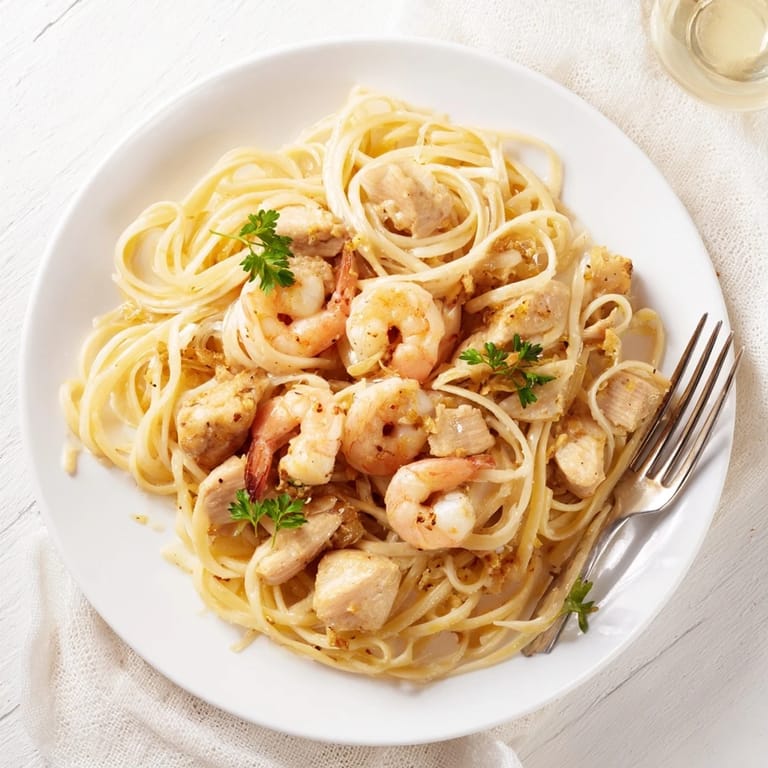
Pin There was a night last winter when I made this for a friend going through a rough time, and we didn't talk much, just ate and listened to the rain. She said it tasted like hope, which sounds dramatic, but I understood what she meant. Food has this way of saying things when words don't work, and this dish, with its bright lemon and tender shrimp, felt like a small kindness we both needed. I've made it a dozen times since, and every time I squeeze that lemon, I think of her sitting at my table, twirling pasta and smiling for the first time in weeks.
How to Get the Best Sear
The secret to restaurant-quality color on your shrimp and chicken is a screaming hot pan and patience. I used to move things around constantly, worried they'd burn, but that just steams the proteins and turns them gray. Let them sit undisturbed for at least a minute, and you'll hear that sizzle deepen into a sear. When the edges turn golden and release easily from the pan, that's when you flip. The fond, those caramelized bits stuck to the skillet, will become the backbone of your sauce, so don't wipe the pan between proteins.
Making It Your Own
I've made this with whatever I had on hand more times than I can count. Once I was out of shallots and used a small yellow onion, and it was still delicious, just a little more assertive. Another time I added a handful of spinach at the end, and it wilted right into the sauce, adding color and a bit of earthiness. You can swap the chicken for more shrimp if you're feeding someone who doesn't eat poultry, or use all chicken if shellfish isn't your thing. The formula is flexible, and that's what makes it a keeper.
Storing and Reheating
Leftovers keep in the fridge for up to two days, though the pasta will soak up some of the sauce as it sits. When you reheat it, add a splash of broth or water to a skillet over medium-low heat and gently warm it through, stirring often so the shrimp don't turn rubbery. I don't recommend freezing this one because seafood and pasta don't always come back with the same texture, but if you do, undercook the pasta slightly and freeze the sauce separately.
- Reheat gently and add liquid to bring the sauce back to life.
- Store in an airtight container and eat within two days for the best texture.
- A squeeze of fresh lemon right before serving makes leftovers taste almost as bright as the first time.
 Pin
Pin This is the kind of recipe that makes you feel capable, even on days when everything else feels hard. It's fast, it's forgiving, and it tastes like you care, because you do.
Recipe Q&A
- → Can I prepare this dish ahead of time?
You can prepare the ingredients in advance, but it's best to cook and serve immediately for optimal flavor and texture. The pasta absorbs sauce quickly, so reheating may require additional liquid.
- → What's the best way to avoid rubbery shrimp?
Cook shrimp just 1-2 minutes per side until they turn pink and opaque. Overcooking toughens them quickly. Pat them dry before cooking for better browning.
- → Can I use frozen shrimp and chicken?
Yes, but thaw them completely and pat dry before cooking. This ensures even cooking and proper browning of the proteins.
- → How do I make this dish gluten-free?
Simply substitute gluten-free pasta for regular linguine or spaghetti. The rest of the ingredients are naturally gluten-free, though always verify labels if you have severe sensitivities.
- → What should I do with the reserved pasta water?
Add it gradually to the finished dish to adjust consistency. The starch helps the sauce cling to the pasta and creates a silky coating without needing cream.
- → Can I substitute the white wine?
Yes, you can skip it or replace it with extra chicken broth or a splash of lemon juice for acidity. The wine adds depth but isn't essential to the dish.