 Pin
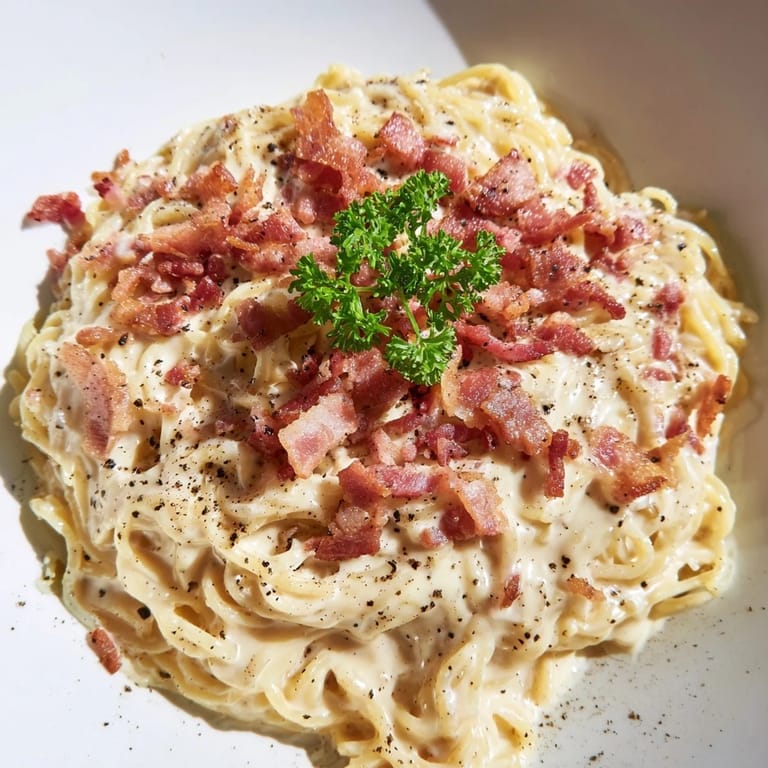
Pin One late night, I was craving carbonara but only had a packet of instant ramen in the cupboard. What started as a desperate improvisation turned into something ridiculously good—creamy, salty, deeply satisfying in a way that felt almost wrong coming from ramen noodles. The magic happened when I whisked an egg and Parmesan together and let the heat of the noodles create this silky sauce that clung to every strand. It's become my go-to when I want something luxurious in fifteen minutes.
I made this for a friend who swore they hated ramen, and watching their face change after that first forkful was priceless. They kept asking how something so simple could taste so restaurant-quality. That's when it clicked for me—this isn't a shortcut or a hack in a lazy way. It's actually a clever collision of two cuisines that just works.
Ingredients
- 1 packet instant ramen: Skip the flavor packet entirely—the cheese and egg are all the seasoning you need, and the plain noodles actually absorb the sauce better.
- 1 large egg: This is where the creaminess lives; use a really fresh one if you can.
- 1/3 cup grated Parmesan cheese: Buy a wedge and grate it yourself right before cooking—pre-grated versions have anti-caking agents that interfere with the sauce's silkiness.
- 2 tablespoons heavy cream: Optional but worth it; it's your insurance against the sauce breaking if the heat gets too high.
- 1 clove garlic, minced: Adds a whisper of depth without overpowering the delicate sauce.
- 1/4 teaspoon black pepper and a pinch of salt: Freshly cracked pepper makes a real difference here.
- 2 strips cooked bacon or pancetta, chopped: If you're not vegetarian, this is the salty anchor that ties everything together.
- Fresh parsley and extra Parmesan to finish: These aren't just garnish—they're the final flourish that makes it feel intentional.
Tired of Takeout? 🥡
Get 10 meals you can make faster than delivery arrives. Seriously.
One email. No spam. Unsubscribe anytime.
Instructions
- Boil the noodles until just tender:
- Bring water to a rolling boil and cook the ramen for exactly the time on the package—usually three minutes. You want them cooked through but with a tiny bit of bite left. Drain them well, but keep that hot water nearby; you'll need a couple tablespoons to finish the sauce.
- Mix your sauce while the noodles cook:
- Whisk the egg, grated Parmesan, cream if using, minced garlic, pepper, and salt together in a bowl until completely smooth. This only takes a minute, but do it thoroughly so there are no floury bits of cheese.
- Toss the hot noodles with the sauce:
- Return the drained noodles to the pot while it's still warm but off the heat—this is crucial. Pour the egg mixture over them immediately and toss like you mean it, constantly moving the noodles around. The residual heat will cook the egg into a silky coating rather than scrambled bits.
- Loosen with reserved pasta water:
- Add a splash of that hot cooking water, a tablespoon at a time, tossing between additions. Watch how the sauce transforms from thick and clingy to glossy and flowing. Stop when it feels like liquid velvet clinging to the noodles.
- Finish and serve:
- Stir in the bacon if you're using it, transfer to a bowl, and top with a shower of fresh Parmesan and chopped parsley. Eat it immediately while everything is still hot and the sauce is at its silkiest.
 Pin
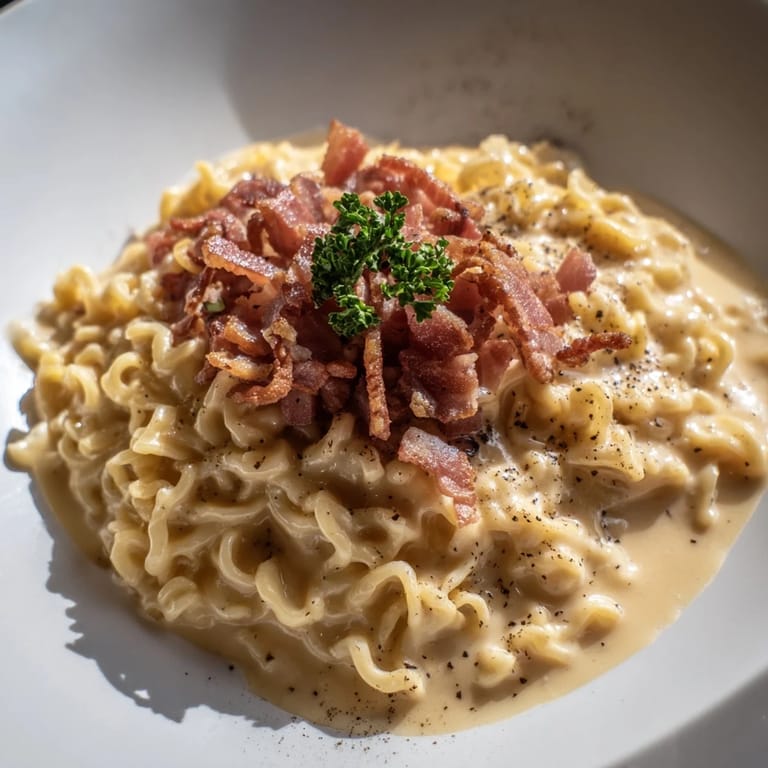
Pin There's a moment, right when you add that final bit of pasta water and the sauce suddenly shifts from thick to silky, that feels almost like magic. It's such a small thing, but it's the moment when you realize this really isn't a hack at all—it's just carbonara, simplified and sped up.
The Egg and Cheese Philosophy
Real carbonara has always been about trusting a few quality ingredients to do their job, and this version follows that same logic. The egg is your emulsifier, the Parmesan is your flavor and body, and the heat is the only technique you really need. There's no cream in the original Roman version, though I include it here as an optional safety net—it prevents the sauce from breaking if things get too hot, which matters when you're working at speed on the stovetop.
Making It Your Own
The beauty of this recipe is how much room it gives you to improvise. The vegetarian version with sautéed mushrooms works because mushrooms have that umami depth that bacon brings—sauté them with a little garlic and thyme first, then toss them in at the end. Some people add a squeeze of lemon juice right before serving, which brightens everything, or a small pinch of red pepper flakes if they want heat. I once tried crispy sage instead of parsley and it was unexpectedly good, almost nutty against the creamy cheese.
Why This Works as a Weeknight Dinner
The entire thing comes together in fifteen minutes, which means you can make it on a Tuesday night without any planning. It's rich enough to feel like a treat but light enough that it doesn't leave you sluggish, and it's the kind of dish that tastes so deliberately composed that people think you put in way more effort than you actually did. Serving it with a crisp white wine, something like Pinot Grigio, elevates it past quick weeknight energy into actual entertaining territory.
- Make sure your pot is completely dry before returning the noodles to it, or you'll end up with excess liquid.
- If your kitchen is cold, warm the bowl you'll serve in with hot water first—it keeps the sauce glossy longer.
- Leftovers don't really work here, so make only what you'll eat immediately and savor it at its peak.
 Pin
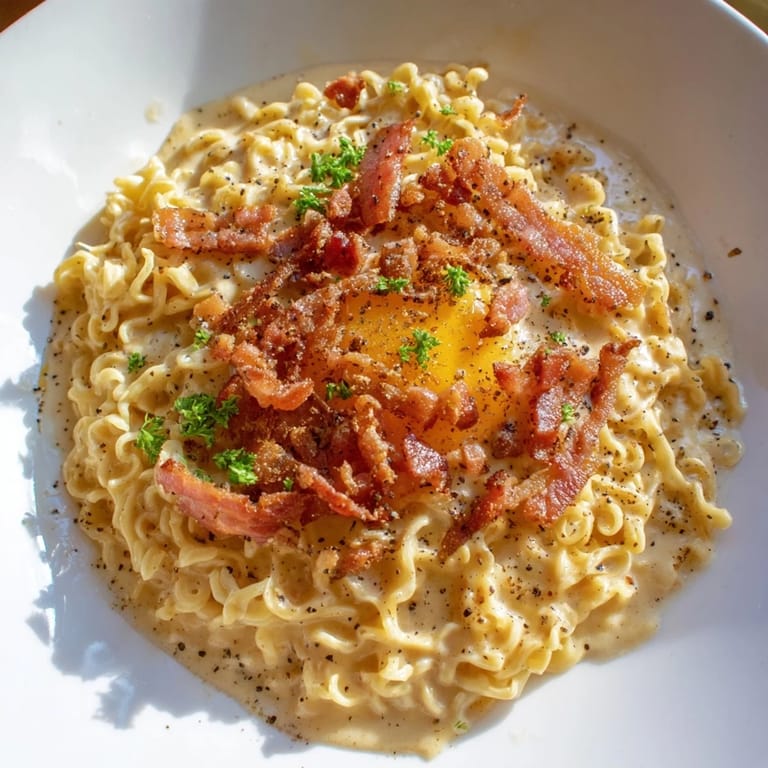
Pin This recipe taught me that sometimes the best things come from working with what you have rather than waiting for perfect ingredients. Every time I make it, I'm reminded that comfort and elegance aren't mutually exclusive—they just need the right moment and the right handful of good things.
Recipe Q&A
- → Can I make this without meat?
Yes, simply omit bacon or pancetta and add sautéed mushrooms or roasted vegetables for a vegetarian option.
- → How do I get a creamy sauce without scrambling the egg?
Remove the pot from heat before mixing the egg and cheese mixture with hot noodles, tossing quickly to create a smooth, silky coating.
- → What kind of cheese works best?
Freshly grated Parmesan or Pecorino Romano provides the ideal sharpness and creaminess for the sauce.
- → Can I use fresh noodles instead of instant ramen?
Yes, fresh noodles can be used but adjust cooking time accordingly to maintain the correct texture.
- → Is heavy cream necessary in the sauce?
Heavy cream is optional; it adds richness and extra creaminess but the sauce is still delicious without it.