 Pin
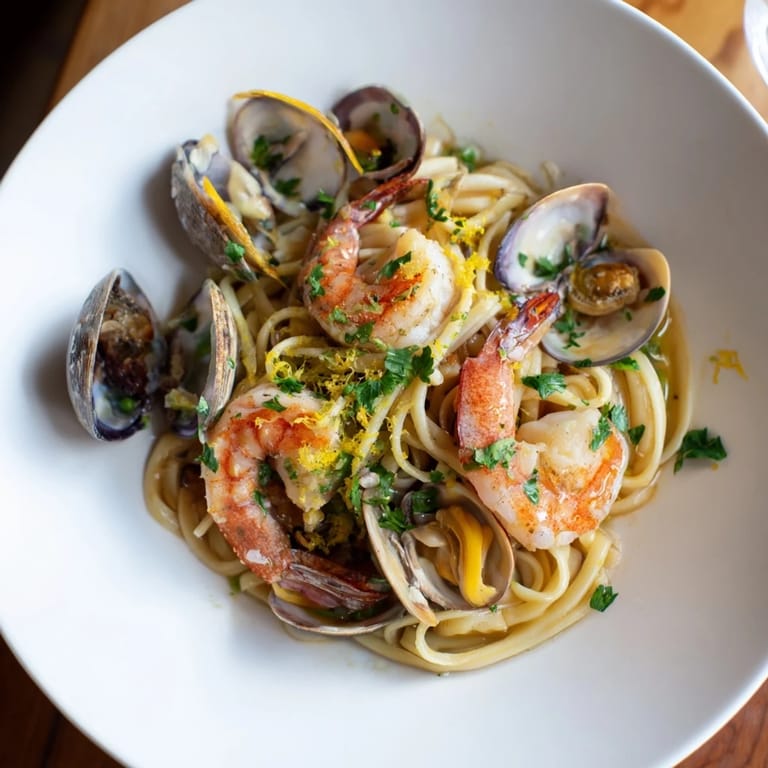
Pin There's something about standing at the stove with the smell of garlic hitting hot olive oil that makes you feel like you're cooking in a small trattoria instead of your kitchen. The first time I made seafood linguine, I was trying to impress someone who actually knew Italian food, which meant I couldn't hide behind shortcuts. What started as nervous chopping turned into something almost meditative—the garlic sizzling, the wine hitting the pan with a satisfying hiss, and then suddenly those clams and mussels began opening like little gifts. It became one of those dishes I reach for whenever I want to feel a little less ordinary about dinner.
I remember cooking this for my sister's birthday dinner, and my nephew asking what the shells were for. When I explained they were literally the delivery system for the best part, he decided shellfish were okay after all. That's when I realized seafood linguine isn't just about eating well—it's about the moment when someone tries something unfamiliar and suddenly gets it. Now whenever we gather, someone asks if we're having the linguine again.
Ingredients
- Large shrimp, peeled and deveined (200 g): Shrimp cook fast, which is exactly why they work here—don't overthink it or they'll turn rubbery, but a minute per side gets them to that perfect pink where they're still tender.
- Fresh clams, scrubbed (250 g): Buy them the same day you're cooking and keep them cold; they need to be alive when they hit the pan, and that's how you know the final dish will taste like the ocean.
- Fresh mussels, scrubbed and debearded (250 g): The debearding part sounds fancier than it is—just pull out that little seaweed-looking thread if it's there, and rinse them under cold water before cooking.
- Dried linguine (400 g): Don't reach for the whole wheat version unless you really want to; the delicate sauce deserves pasta that won't overpower it.
- Extra virgin olive oil (3 tbsp): This is where you use the good stuff you wouldn't fry potatoes in—it's the foundation of the whole flavor, so don't settle.
- Garlic cloves, thinly sliced (4): Slice them thin so they cook evenly and disappear into the oil rather than turning bitter and hard.
- Shallot, finely chopped (1 small): The shallot brings sweetness that rounds out the wine and stock—it's the quiet ingredient that people taste but can't quite name.
- Red pepper flakes (½ tsp, optional): A tiny pinch if you like warmth without real heat, but honestly skip it if you prefer letting the seafood shine.
- Dry white wine (200 ml): Use something you'd actually drink; the cooking mellows it out, but cheap wine tastes cheap no matter how long it simmers.
- Fish or chicken stock (250 ml): Fish stock is ideal if you can find it, but don't stress if you can't—chicken stock works beautifully here too.
- Unsalted butter (2 tbsp): Added at the end to finish the sauce with richness and shine; it's the final touch that makes it feel complete.
- Lemon zest and juice (½ lemon total): The acid cuts through everything and reminds you why seafood and lemon were made for each other.
- Salt and black pepper: Taste as you go because seafood is forgiving, and you know better than any recipe what your seasoning preference is.
- Fresh parsley, chopped (3 tbsp): The green at the end isn't decoration—it adds brightness and a hint of freshness that makes the whole thing feel alive.
- Lemon wedges for serving: People always squeeze these over their bowls without thinking, and that extra shot of acid is what makes them go back for more.
Tired of Takeout? 🥡
Get 10 meals you can make faster than delivery arrives. Seriously.
One email. No spam. Unsubscribe anytime.
Instructions
- Get your pasta going:
- Fill your pot generously with salted water—it should taste like the sea—and let it heat while you prep everything else. Once it's rolling, the linguine only takes about the time it takes to make the sauce, so timing works out naturally.
- Start the foundation:
- Pour olive oil into your skillet and let it warm over medium heat until it shimmers slightly. Add your garlic and shallot, and the moment the smell hits you'll know why people say Italian cooking is about simplicity—just let them soften together for a couple minutes.
- Give the shrimp a quick sear:
- Turn the heat up, add the shrimp, and resist the urge to move them around constantly. Ninety seconds per side and they're done, still sweet and tender, then move them to a plate while you work on the rest.
- Open the clams and mussels:
- Pour in your white wine, add the shellfish, cover the skillet, and wait. You'll hear them before you see them—little clicks as the shells open—and it's oddly satisfying when they do exactly what they're supposed to.
- Build the broth:
- Add your stock, let it come to a simmer, and let those flavors marry for a couple minutes. This is when the kitchen starts to smell incredible and you remember why you love cooking.
- Bring everything together:
- Return the shrimp, add your drained linguine and a splash of that reserved pasta water, then add butter and lemon zest. Toss everything gently so the pasta gets coated and every bite has sauce and seafood.
- Finish and serve:
- Taste it, adjust your salt and pepper, then get it onto plates or a serving bowl immediately while everything's hot. Shower it with parsley and set those lemon wedges nearby so people can squeeze them to taste.
 Pin
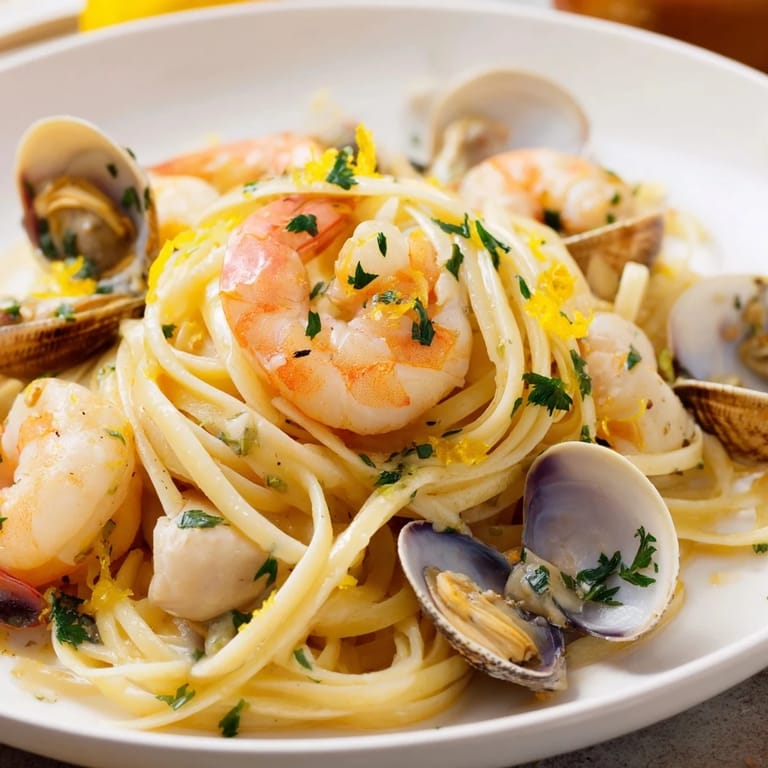
Pin What got me about this dish was realizing it's not intimidating at all—it's just a bunch of good ingredients that know how to share a pan. The moment you understand that seafood linguine is more about listening to your ingredients than following a checklist, it stops being a recipe and becomes something you make whenever you want to feel a little sophisticated.
Why Fresh Seafood Makes All the Difference
The secret that took me a few attempts to learn is that seafood linguine lives or dies on the quality of what you start with. When your clams and mussels are truly fresh, they bring their own briny sweetness to the sauce—the stock and wine are just there to support them, not mask any off flavors. Visit a seafood counter where the person behind it seems to actually care, ask them what came in that morning, and trust their recommendation over what looks prettiest. That small decision changes everything about how the dish tastes.
The Pasta Water Secret
Reserving pasta water sounds like a small thing until you realize it's what transforms this from a collection of ingredients into something that tastes like one dish. The starch in that water creates an emulsion that helps the sauce coat the linguine evenly and stick around instead of pooling at the bottom of the bowl. I started doing this after noticing restaurant versions always seemed silkier than mine, and suddenly I understood why—they weren't using more sauce, they were using smarter sauce.
Wine and Acid Do the Heavy Lifting
The best part about this dish is that you don't need cream or complicated techniques because the white wine and lemon juice do all the seasoning work. The wine brings depth and a subtle sweetness that rounds out the briny seafood, while the lemon juice cuts through everything and keeps it feeling bright. When you taste as you go and adjust these two elements, you end up with sauce that tastes like it spent hours simmering when really it took minutes.
- Don't skip the zest alongside the juice—the oils in the peel add a floral note that juice alone won't give you.
- If you accidentally add too much wine early, just cook it down a bit longer before adding the stock.
- Taste the sauce several times during cooking and never be shy about adding more lemon or salt—your palate is the final judge.
 Pin
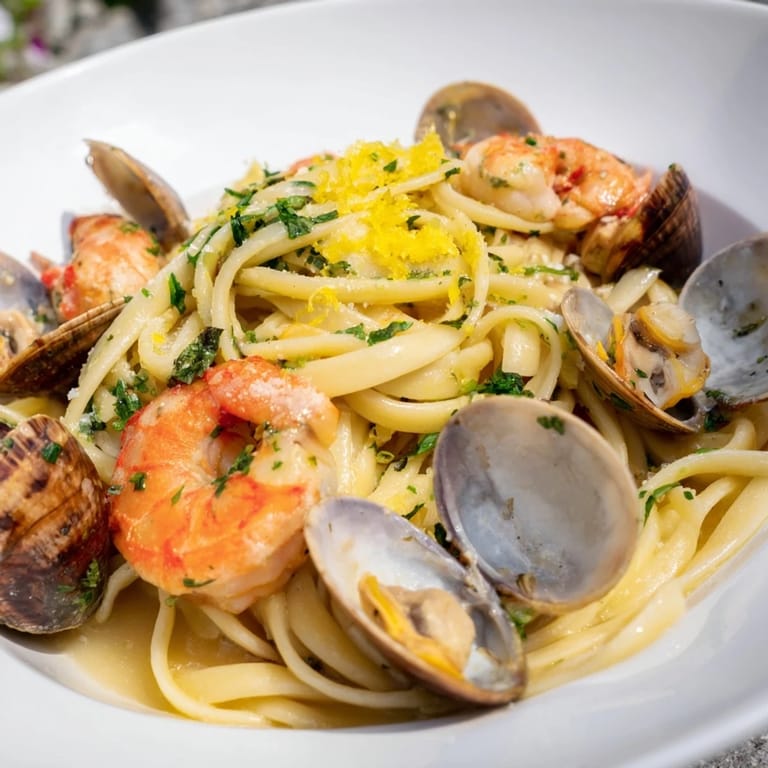
Pin This is the kind of meal that makes cooking feel less like a chore and more like something you actually want to do. It's simple enough to pull off on a random Tuesday, but special enough that people still talk about it.
Recipe Q&A
- → What type of pasta is best used for this dish?
Linguine is ideal as its flat profile holds the delicate white wine sauce well and pairs nicely with shellfish.
- → How can I tell when the clams and mussels are fully cooked?
They are done once their shells open wide; discard any that remain closed after cooking as they may be unsafe to eat.
- → Can I substitute the shellfish in this dish?
Yes, calamari or scallops can be added or substituted to vary the seafood flavors and texture.
- → What wine pairs well with this seafood pasta?
A crisp Italian Pinot Grigio or Vermentino complements the lemony white wine sauce and seafood beautifully.
- → Is there a way to add extra creaminess to the sauce?
A splash of cream stirred in at the end enriches the sauce without overpowering the delicate seafood flavors.