 Pin
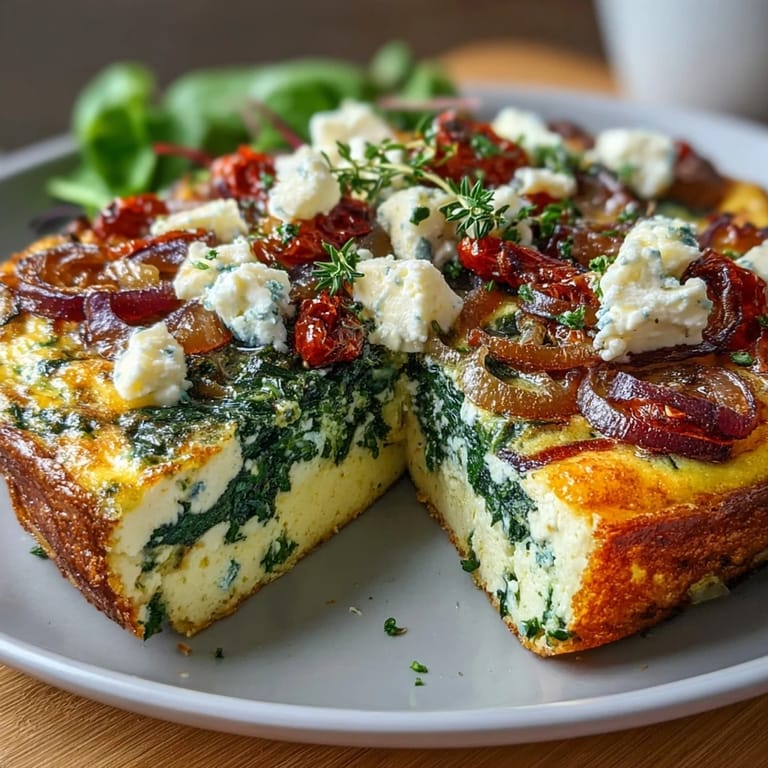
Pin There's something magical about the moment when a skillet moves from stovetop to oven, and you catch that first whiff of eggs beginning to set with the aroma of sun-dried tomatoes rising up. My neighbor knocked on the door one Saturday morning asking what smelled so good, and I realized this spinach and feta frittata had become my go-to answer for brunch without the fuss. It's the kind of dish that looks more impressive than it actually is, which I've learned is the best type of cooking.
I made this for my sister during a particularly chaotic Tuesday when she needed dinner that didn't feel like a quick fix, and watching her close her eyes after the first bite while the kids played in the other room reminded me that simple food shared with someone you care about is really all that matters. She's made it three times since then.
Ingredients
- Fresh baby spinach (2 cups, 60 g): Baby spinach wilts quickly and evenly without the bitterness of larger leaves, making it perfect for this dish. Roughly chop it just before adding to avoid unnecessary moisture loss.
- Sun-dried tomatoes (1/2 cup, 60 g): The oil-packed variety adds richness and flavor that dried tomatoes can't match; drain them well but don't rinse away all the oil flavor.
- Yellow onion (1 small): Yellow onions caramelize slightly and add natural sweetness that balances the tanginess of the feta.
- Garlic (1 clove): One clove is enough to add depth without overpowering the delicate egg base.
- Large eggs (6): Room temperature eggs blend more smoothly, creating a creamier frittata texture than cold ones.
- Whole milk (1/4 cup, 60 ml): The milk creates an airier, fluffier frittata than using cream alone.
- Feta cheese (1/2 cup, 75 g): Crumble it by hand rather than processing it to maintain distinct cheese pockets throughout the frittata.
- Parmesan cheese (1/4 cup, 25 g): Grated Parmesan adds a sharp note that prevents the frittata from tasting one-dimensional.
- Dried oregano (1/2 tsp): This Mediterranean herb ties all the ingredients together without requiring fresh herbs to be on hand.
- Black pepper and salt (to taste): Add these gradually as you cook since both the cheeses and sun-dried tomatoes contribute their own saltiness.
- Olive oil (2 tbsp, 30 ml): Use a good quality oil; you'll taste it in the final result.
Tired of Takeout? 🥡
Get 10 meals you can make faster than delivery arrives. Seriously.
One email. No spam. Unsubscribe anytime.
Instructions
- Heat your oven and prepare the pan:
- Preheat to 375°F (190°C) before you start cooking so the skillet has a hot oven waiting for it. An ovenproof skillet is essential here because you'll be moving it directly from stovetop to oven without any awkward transfers.
- Build the aromatic base:
- Heat olive oil over medium heat and add the chopped onion, letting it soften for 3 to 4 minutes until it's translucent at the edges. Add the minced garlic and cook for exactly one more minute—any longer and it begins to taste sharp and burnt.
- Wilt the greens and add brightness:
- Stir in the spinach and let it release its moisture and darken in about 2 minutes, then add the sun-dried tomatoes and cook for 1 minute more to let their flavors meld with the vegetables.
- Combine the egg mixture:
- In a separate bowl, whisk together the eggs, milk, oregano, salt, and pepper until well combined but not foamy. Fold in the crumbled feta and Parmesan so the cheeses stay in distinct pieces rather than getting fully beaten in.
- Bring it together on the stovetop:
- Pour the egg mixture over the vegetables in the skillet and gently stir once or twice to distribute everything evenly. Cook untouched for 2 to 3 minutes until you see the edges starting to set while the center remains loose and shiny.
- Finish in the oven:
- Transfer the skillet to the oven and bake for 10 to 12 minutes until the center is just set—it should still have a slight jiggle when you gently shake the pan, not be completely firm. The top will be pale gold, not deeply browned.
- Rest and serve:
- Let the frittata cool for a few minutes in the pan before slicing, which gives it time to set completely and makes portioning much cleaner. It's equally delicious warm, room temperature, or chilled from the refrigerator.
 Pin
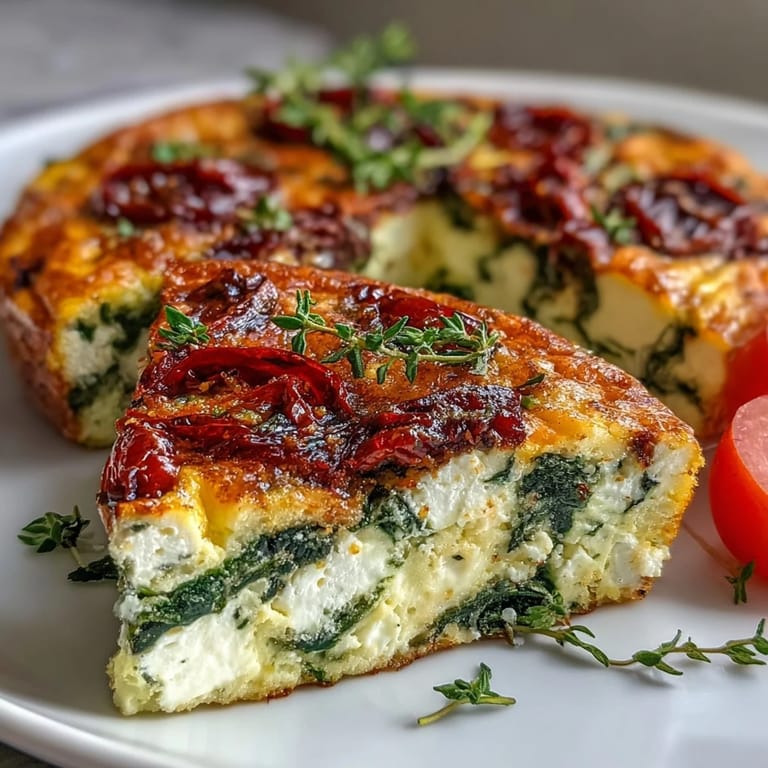
Pin There was an evening when I brought this to a potluck where everyone else had made complicated dishes, and mine disappeared first while people were still on their first helpings of other food. That's when I understood the real power of cooking: sometimes the most beloved dishes are the ones that don't announce themselves loudly but instead whisper that you can make something nourishing and beautiful without stress.
Make It Your Own
The beauty of a frittata is its flexibility—this Mediterranean version is just the beginning. I've swapped the spinach for sautéed mushrooms and caramelized onions on evenings when I wanted something earthier, and I've added roasted red peppers when I had them on hand and fresh tomatoes felt too watery. The structure stays exactly the same, which means once you understand how a frittata works, you become the kind of cook who can improvise based on what's in your refrigerator.
Serving Suggestions and Pairings
Serve this warm with a simple arugula salad dressed in lemon vinaigrette to add a fresh, peppery contrast, or let it come to room temperature and pair it with crusty bread for an impromptu outdoor lunch. A crisp white wine like Sauvignon Blanc or even a light rosé cuts through the richness of the eggs and cheese and makes the meal feel effortless and summery, even on a Tuesday night in February.
Storage and Make-Ahead Tips
This frittata actually improves when made a day ahead because the flavors have time to meld, and it's one of those rare dishes that doesn't suffer from refrigeration. You can slice it, wrap individual pieces in parchment paper, and grab them for a protein-packed breakfast or lunch throughout the week.
- Store the leftover frittata in an airtight container for up to four days, and it tastes just as good cold or reheated gently in a low oven.
- You can assemble the skillet with all ingredients the night before, cover it with plastic wrap, and bake it straight from the refrigerator in the morning—just add 2 to 3 minutes to the baking time.
- Freeze individual slices wrapped well in foil for up to a month, and reheat them slowly to prevent the eggs from becoming tough.
 Pin
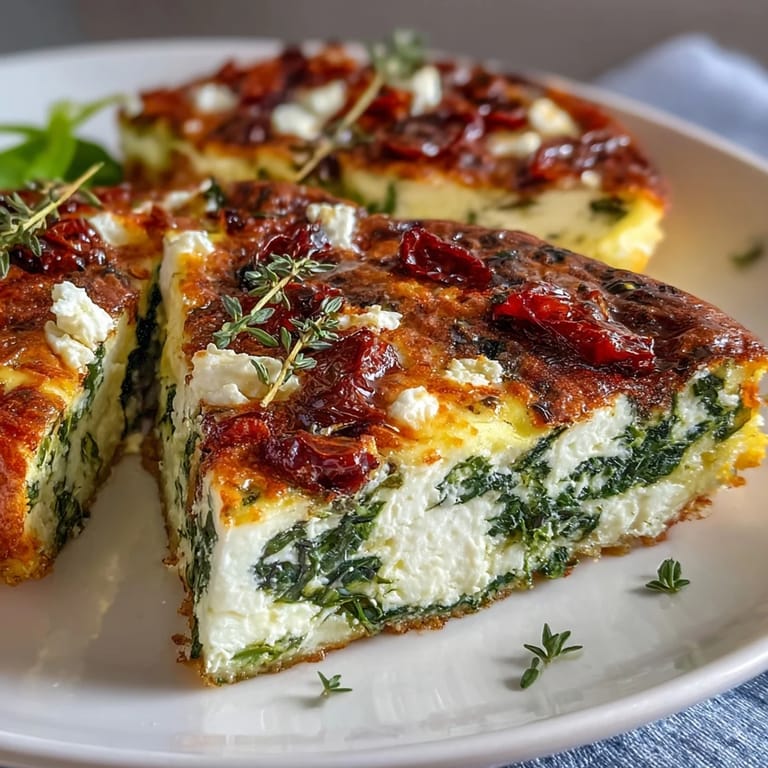
Pin This frittata has become my quiet answer to the question of what's for dinner when time is short but hunger is real. It reminds me that the best meals are the ones you can make without fussing, shared with people you want to feed well.
Recipe Q&A
- → Can I use frozen spinach instead of fresh?
Yes, thawed and well-drained frozen spinach works well and retains the dish’s flavor and texture.
- → What is the best cheese alternative for a dairy-free option?
Plant-based feta substitutes can be used, while Parmesan should be omitted or replaced with a suitable vegan cheese.
- → How do I prevent the frittata from becoming soggy?
Drain excess moisture from spinach and sun-dried tomatoes, and avoid overcooking to maintain a light texture.
- → Can this dish be served cold or at room temperature?
Yes, the frittata is delicious warm or at room temperature, making it versatile for various occasions.
- → What wine pairs well with this dish?
A crisp white wine like Sauvignon Blanc complements the tangy feta and sun-dried tomatoes wonderfully.