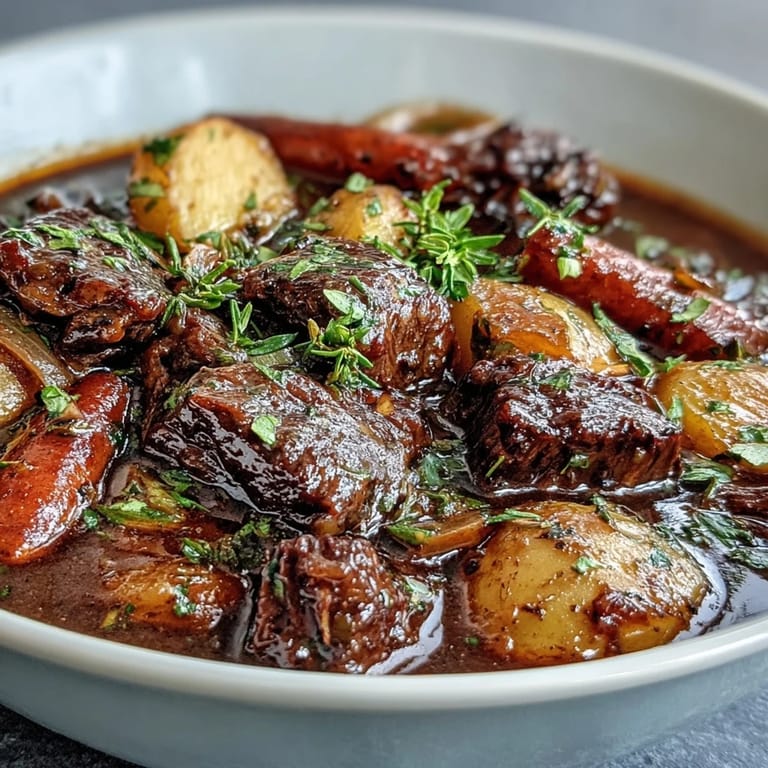
 Pin
Pin There's something about the sound of beef hitting a hot skillet that signals the start of something good. My kitchen was already warming up on a gray October afternoon when I decided to make this stew—the kind of day where you know dinner needs to be the kind of meal that makes you forget about the weather outside. One sear at a time, the meat browned while I stood there with my coffee, already imagining how tender everything would become by evening. The slow cooker would do all the heavy lifting while I went about my day, and by dinner time, the whole house would smell like comfort itself.
I made this for my sister's first winter in her new house, when she admitted she'd been eating takeout every night because cooking felt overwhelming. Watching her take that first spoonful and then immediately reach for more bread told me everything I needed to know. She's made it four times since, and now it's the thing she cooks when she wants to feel like she has her life together. That's when I realized this stew does something beyond feeding people—it reminds them they're capable of creating something nourishing and real.
Ingredients
- Beef chuck (2 lbs, cut into 1.5-inch cubes): This cut has enough marbling and connective tissue to become incredibly tender during the long simmer, breaking down into something almost silky while keeping its meaty flavor.
- Kosher salt and black pepper (1/2 tsp each): Don't skip seasoning the raw beef—it creates a flavorful crust during searing and builds the foundation for everything that follows.
- Carrots (3 large, cut into 1-inch pieces): They sweeten naturally as they cook low and slow, adding body to the broth without needing any added sugar.
- Parsnips (2, peeled and sliced): If you've never cooked with these before, they're your secret weapon—earthier and subtly sweet in ways regular potatoes aren't.
- Yukon Gold potatoes (2 large, chopped into chunks): These hold their shape better than russets and have a naturally buttery flavor that enriches the whole stew.
- Yellow onion (1 large, diced): It practically dissolves into the broth, thickening it naturally while adding sweetness and depth.
- Celery stalks (3, sliced): This is your aromatics helper—it won't announce itself, but the stew tastes noticeably flatter without it.
- Garlic (3 cloves, minced): Add it after searing the meat so the heat doesn't turn it bitter, letting it perfume everything gently.
- Tomato paste (2 tbsp): A small amount goes a long way, adding umami depth and a subtle acidity that brightens the broth.
- Worcestershire sauce (1 tbsp): This is the ingredient people can't quite identify but makes them say the stew tastes like something from a proper kitchen.
- Bay leaf (1), dried thyme (1 tsp), dried rosemary (1 tsp): These herbs work together to create a warm, savory backbone that feels classic and comforting without ever tasting like overcooked herbs.
- Beef broth (4 cups): Use a good quality broth if you can—it becomes the foundation of everything, so thin or weak broth means a thin-tasting stew.
- Dry red wine (1 cup): The alcohol cooks off but leaves behind a richness and slight complexity that makes the broth taste less one-dimensional.
- Cornstarch (2 tbsp) mixed with cold water (2 tbsp): This slurry thickens the stew in the final minutes, transforming it from soupy to silky without any flour taste.
Tired of Takeout? 🥡
Get 10 meals you can make faster than delivery arrives. Seriously.
One email. No spam. Unsubscribe anytime.
Instructions
- Season and sear the beef:
- Pat your beef cubes dry and season them generously with salt and pepper right before hitting the skillet—this creates a flavorful brown crust that tastes infinitely better than unseasoned meat. Work in batches so you're not crowding the pan, letting each piece spend about three minutes getting golden on the sides.
- Build your slow cooker base:
- Transfer the browned beef to your slow cooker, then layer in all your cut vegetables and the onion. The order doesn't matter much, but keeping everything in one vessel means less cleanup later and helps the flavors meld as they cook.
- Add your aromatics and seasonings:
- Stir in the minced garlic, tomato paste, Worcestershire sauce, bay leaf, and dried herbs, making sure the tomato paste gets distributed throughout. This is your chance to make sure nothing gets missed and everything coats the vegetables evenly.
- Pour in the broth and wine:
- Add your beef broth and red wine, then stir gently to combine everything without breaking apart the vegetables. At this point, you're basically done with active cooking—the slow cooker handles the rest.
- Let time do the work:
- Cover and cook on low for eight hours, which seems like forever until you realize you haven't thought about dinner once. The beef will transform from sturdy chunks into something so tender it falls apart at the gentlest nudge, and the vegetables soften into the broth until they're almost creamy.
- Create the thickening slurry:
- Near the end of cooking time, mix your cornstarch and cold water in a small bowl until smooth, stirring it gently into the hot stew. Increase the heat to high and cook uncovered for about fifteen minutes, watching as the broth thickens into something luxurious and coating.
- Final check and serve:
- Remove the bay leaf, taste everything, and adjust salt and pepper if needed—sometimes the long cooking means flavors have mellowed and you want to brighten them back up. Serve in deep bowls with crusty bread or over mashed potatoes to catch every drop of that rich broth.
 Pin
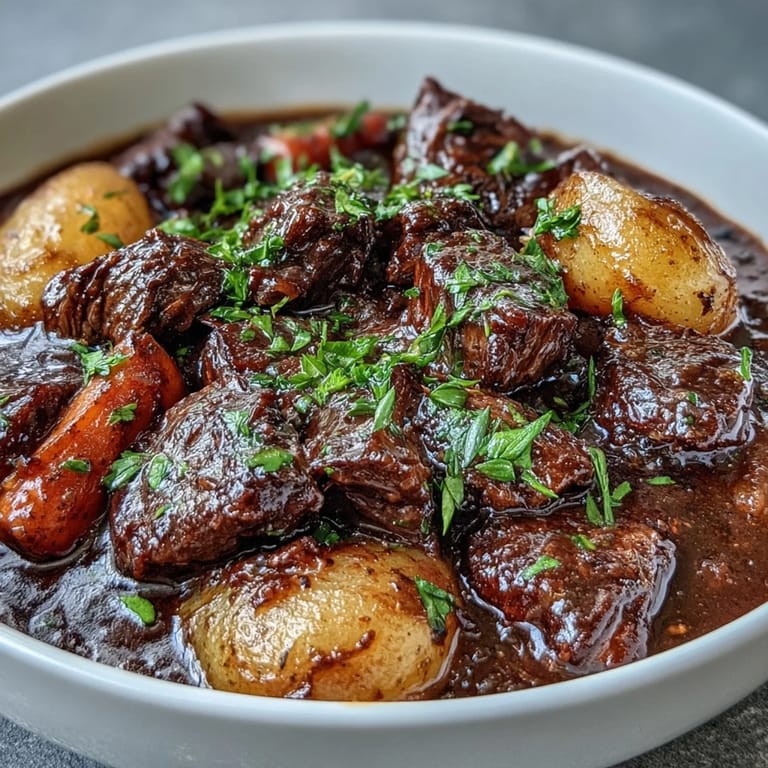
Pin What stays with me most is how this stew transformed an ordinary Tuesday night into something my family actually gathered around. My youngest asked for seconds without being asked, which in the context of a ten-year-old's typical dinner attitude felt like winning the lottery. That moment reminded me that the best meals aren't always complicated—they're just the ones made with enough time and patience that you can taste the care.
The Magic of Low and Slow Cooking
The slow cooker isn't just a convenient tool here—it's actually the reason this stew tastes so good. Low heat over many hours allows the beef's connective tissues to break down into gelatin, creating that silky mouthfeel that short-cooking can never achieve. The vegetables don't just soften; they gradually release their sugars and flavors into the broth, building a depth that feels earned rather than rushed.
Customizing Your Stew Without Losing Its Soul
I've made this stew at least a dozen different ways now, and it's forgiving enough to handle real-life substitutions. Some nights I've added mushrooms in the last hour because they were in my fridge, other times I've swapped in sweet potatoes when regular ones ran out. The basic formula—good beef, enough vegetables, the herb and wine base, and patient cooking—stays constant while you adjust around what you actually have.
Serving and Storing Your Stew
This stew actually tastes better the next day once all the flavors have had more time to get to know each other, so don't hesitate to make it a day ahead. Store it in an airtight container in the refrigerator for up to four days, or freeze it for up to three months—just thaw it overnight and gently reheat on the stovetop rather than in the microwave so the vegetables don't get mushy.
- Crusty bread, mashed potatoes, or egg noodles all make perfect companions to soak up every drop of broth.
- A simple green salad alongside cuts through the richness and gives your palate a little break between bites.
- Leftovers transform beautifully into a pot pie filling or a base for beef and vegetable soup if you thin it with extra broth.
 Pin
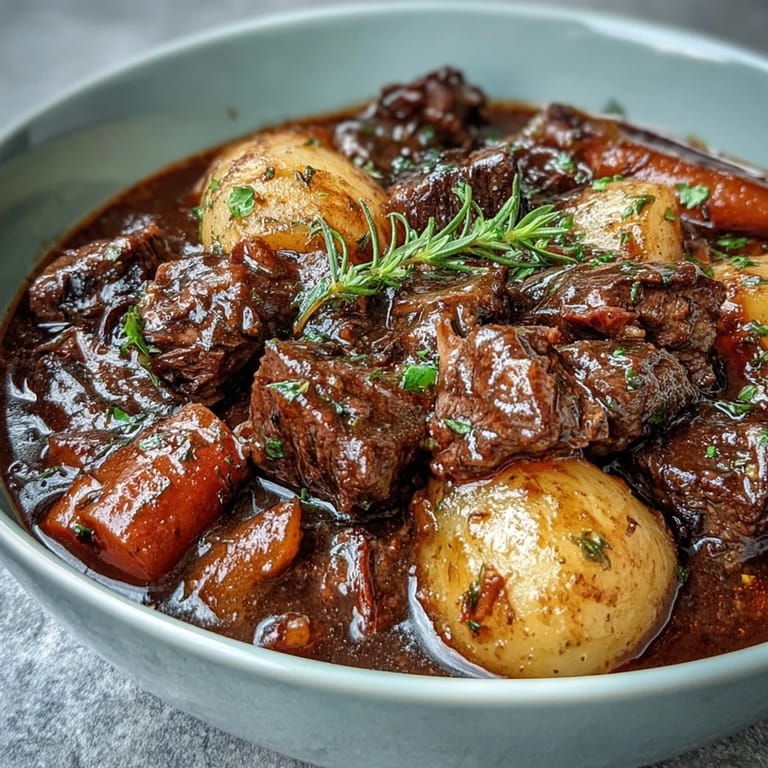
Pin This stew became the meal I reach for when I need to prove to myself that good food doesn't require stress or complexity. Every time someone takes their first spoonful and their shoulders drop a little, I remember why slow cooking exists at all.
Recipe Q&A
- → Can I use a different cut of beef?
Yes, chuck is preferred for tenderness during slow cooking, but brisket or short ribs also work well.
- → How can I thicken the stew without cornstarch?
You can use flour mixed with cold water or reduce the broth by simmering uncovered to achieve thickness.
- → Is it possible to prepare this on the stove instead of a slow cooker?
Yes, simmer the ingredients in a heavy pot over low heat for 3-4 hours, stirring occasionally until tender.
- → What can I substitute for red wine?
Use additional beef broth or a splash of balsamic vinegar for depth without alcohol.
- → Are the vegetables interchangeable?
Root vegetables like turnips or sweet potatoes can replace or complement carrots, parsnips, and potatoes for varied flavors.
- → How do I ensure the broth is gluten-free?
Check labels on beef broth and Worcestershire sauce for gluten content or use certified gluten-free alternatives.