 Pin
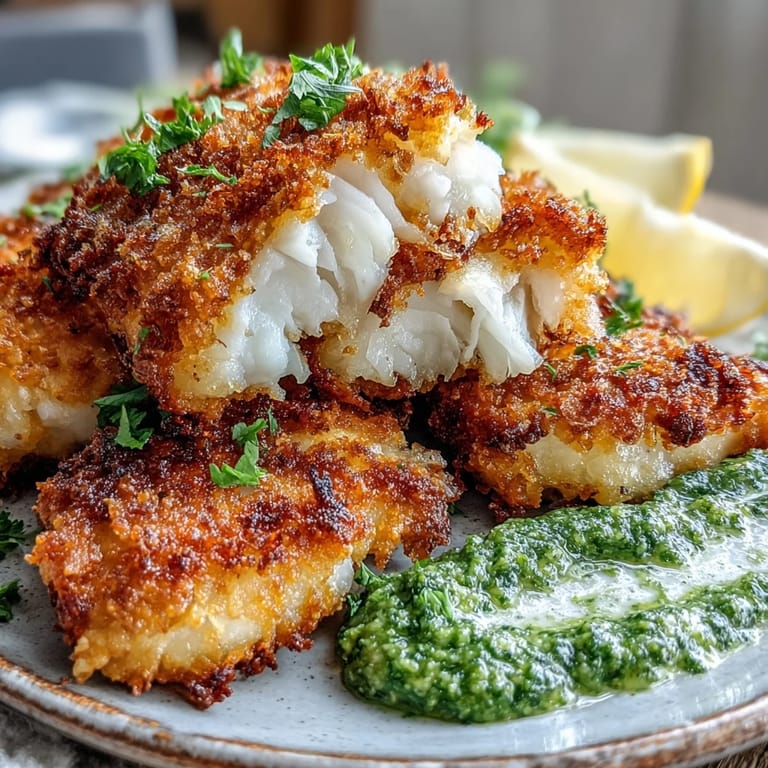
Pin My mum used to make fish fingers on Friday nights, those frozen rectangles that tasted mostly of breadcrumbs and regret. One evening I had some beautiful haddock fillets on the counter and thought, what if I actually made them properly? I dredged them in flour, egg, and a mixture I'd whisked together with Parmesan and panko, then baked them until they were golden and shattering at the edges. The smell alone felt like an apology to every Friday of my childhood.
I made these for a dinner party where I was secretly nervous about cooking fish for people who actually knew what they were doing. One guest cut into a goujon, and it crackled so loudly everyone looked up. That single sound, that promise of crispness, made the whole thing worthwhile. They came back for seconds and asked for the pesto recipe, which is when I realized I'd accidentally created something that felt proper.
Ingredients
- Skinless haddock fillets, 500g: Cut these into finger-sized strips roughly the length of your index finger; they cook evenly this way and feel nice to eat without being fussy about it.
- Plain flour, 60g: This is your first coat, the glue that helps everything else stick and creates a seal around the fish.
- Eggs, 2 large: Beat them well so they're uniform; they're the bridge between flour and crumb, essential and often forgotten.
- Panko breadcrumbs, 80g: Japanese panko stays crisper longer than regular breadcrumbs because of its irregular flake structure, which is the whole point here.
- Parmesan cheese, 50g finely grated: Use a microplane if you have one; it melts into the crust and adds this nutty, umami depth that elevates everything.
- Freshly ground black pepper and sea salt, ½ tsp each: Don't skip freshly grinding the pepper; pre-ground tastes tired by comparison.
- Smoked paprika, ½ tsp optional: It adds a whisper of warmth and color, though the dish is stunning without it.
- Frozen peas, 200g: They're picked and frozen at peak ripeness, so they're actually fresher than fresh peas sitting in the shop.
- Fresh basil leaves, 30g: Tear them gently by hand rather than chopping; it bruises less and tastes brighter.
- Parmesan cheese for pesto, 25g: A separate measure because pesto needs enough to emulsify and carry flavor through the sauce.
- Pine nuts, 30g: Toast them lightly in a dry pan first if you have time; it wakes them up and deepens their sweetness considerably.
- Extra-virgin olive oil, 4 tbsp: This is not the place to economize; good oil makes the pesto silky and delicious.
- Lemon juice from ½ lemon: The acid keeps everything tasting bright and prevents the pesto from sitting heavy.
- Lemon wedges for serving: They're not just decoration; a squeeze over the hot fish brings the whole thing into focus.
Tired of Takeout? 🥡
Get 10 meals you can make faster than delivery arrives. Seriously.
One email. No spam. Unsubscribe anytime.
Instructions
- Set your oven and prepare:
- Heat your oven to 200°C (180°C fan) or 400°F, and line a baking sheet with parchment paper so nothing sticks and cleanup is merciful. This temperature is hot enough to crisp the coating without drying the fish inside.
- Arrange your coating station:
- Pour flour into one shallow bowl, beaten eggs into another, and combine panko, Parmesan, pepper, salt, and paprika in a third. Having everything lined up means you can move quickly and stay tidy.
- Coat each strip carefully:
- Take a haddock strip and dredge it in flour, shaking off excess, then dip it completely in egg, and finally roll it through the panko mixture, pressing gently so the crumbs adhere. Place each one on your prepared baking sheet, leaving a little space between them so heat circulates.
- Add a drizzle of oil:
- Lightly spray or drizzle each goujon with olive oil; this is what creates the golden, crispy exterior without deep frying. Don't skip this step or they'll bake pale and disappointing.
- Bake until golden:
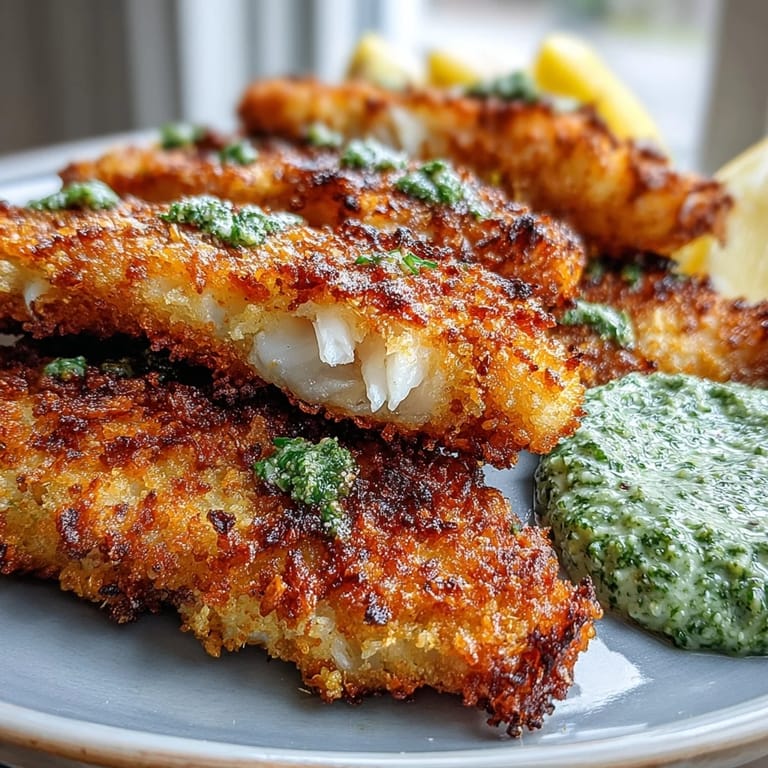
- Bake for 15 to 20 minutes, turning them halfway through so both sides catch the heat evenly. They're done when the coating is deep golden and sounds hollow when you tap it.
- Make the pea pesto while they cook:
- Blanch frozen peas in boiling water for just 2 minutes, then drain and plunge them into cold water to stop them cooking and preserve their bright color. Add them to a food processor along with basil, Parmesan, garlic, pine nuts, olive oil, and lemon juice, then blitz until mostly smooth but still textured enough that you can see flecks of pea and basil.
- Season and taste:
- Add salt and pepper to your pesto and taste it; you should feel the brightness of lemon and basil, the slight sweetness of peas, and the salt holding it all together. Adjust as needed because seasoning is personal.
- Plate and serve:
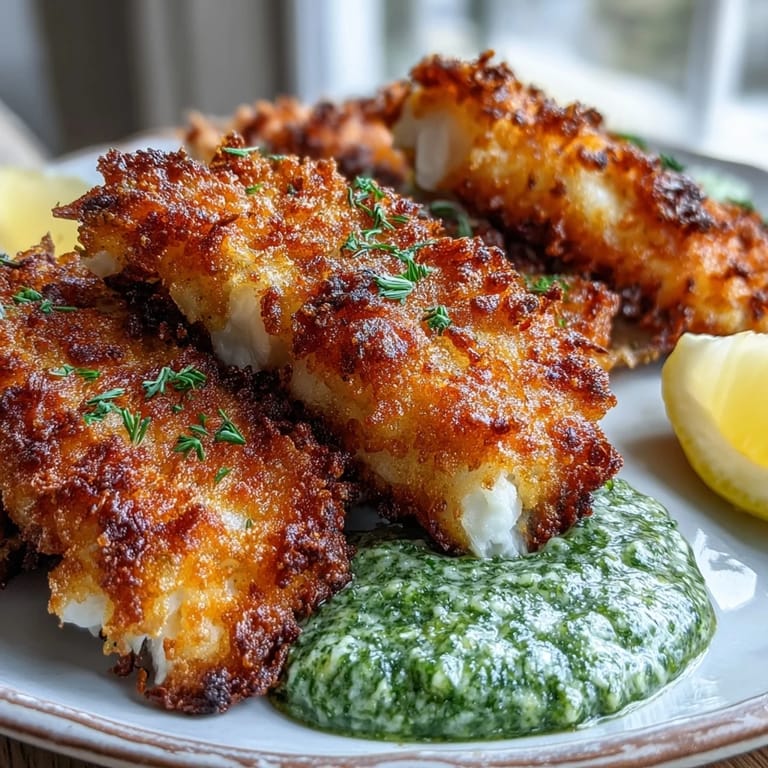
- Arrange hot goujons on plates, add a generous spoonful of pea pesto alongside, and scatter lemon wedges and salad leaves if you're using them. Eat while the coating is still crackling.
 Pin
Pin What struck me most was when my seven-year-old nephew picked one up and actually said it was better than shop-bought fish fingers, which somehow felt like winning at life. Food that makes people genuinely happy, especially when they expected something ordinary, is the whole reason any of us cook at all.
Why Panko and Parmesan Make All the Difference
The combination of panko and Parmesan does something magical that regular breadcrumbs never achieve. Panko's larger, airier flakes create pockets that crisp up in the oven, while Parmesan adds a salty, umami depth and helps everything brown evenly. I once tried regular breadcrumbs out of laziness and the result was dense, pale, and forgettable. After that I understood why certain combinations become classics; they work because they actually work.
The Pea Pesto Advantage
Most people serve fish with tartare sauce or mushy peas, both wonderful but predictable. This pea pesto arrived in my kitchen almost by accident one afternoon when I had leftover basil and frozen peas and was tired of the same old condiments. The sweetness of peas against fresh basil and the bite of lemon creates a sauce that feels bright and alive, not heavy or monotonous. It pairs with the crispy fish like they were meant to find each other.
Timing, Temperature, and the Truth About Oven Variation
Every oven behaves differently, and pretending yours is average will disappoint you. The first time you make these, watch them closely after 12 minutes; some ovens brown things in 15 minutes while others need the full 20. That moment when you lift the parchment and see the coating has turned that deep, shimmering gold is what you're aiming for, and it matters more than any timer.
- If your oven runs hot, check at 12 minutes and don't walk away; burnt coating tastes acrid and ruins everything.
- Turning them halfway isn't optional; it's the difference between one golden side and two, which changes the entire eating experience.
- Cold fish fresh from the coating goes into a hot oven better than room-temperature fish, so don't let them sit around after breading.
 Pin
Pin These goujons feel elegant enough for dinner guests yet simple enough that you can make them on a Tuesday without fussing. Once you understand how this recipe works, you'll find yourself making it again and again because it's proof that good food doesn't require complexity, just attention and a few ingredients that actually matter.
Recipe Q&A
- → Can I use a different type of fish?
Yes, cod or pollock work excellently as substitutes for haddock. Choose firm white fish fillets that will hold their shape when cut into strips.
- → How do I make this gluten-free?
Simply swap the plain flour for gluten-free flour and use gluten-free breadcrumbs in place of panko. The Parmesan crust will still be deliciously crispy.
- → Can I make the pea pesto ahead of time?
Absolutely. The pea pesto can be prepared up to 2 days in advance and stored in an airtight container in the refrigerator. Stir well before serving.
- → What can I use instead of pine nuts?
Toasted sunflower seeds make an excellent nut-free alternative and provide similar texture and richness to the pesto without compromising on flavor.
- → Can I fry these instead of baking?
Yes, you can shallow fry the goujons in vegetable oil over medium heat for 3-4 minutes per side until golden. Drain on paper towels before serving.
- → How do I keep the goujons crispy?
Ensure the oven is fully preheated and don't overcrowd the baking sheet. The light oil spray helps achieve a golden, crispy crust. Serve immediately for best texture.