 Pin
Pin A friend brought a bottle of Rioja to dinner one evening and mentioned she'd just returned from Seville, where she'd eaten the most extraordinary pork fillet that tasted somehow buttery and complex at once. She described how the meat had been marinating for hours before roasting, infused with rosemary and smoked paprika until it smelled like a Spanish kitchen at dusk. I became obsessed with recreating that moment, and after a few attempts, I realized the secret wasn't just the cut of meat—it was patience, a proper overnight marinade, and treating the whole dish like a small ceremony rather than just dinner.
I made this for my partner's parents last spring, and I remember standing at the stove hearing the pork sizzle in the hot pan—that sharp, promising sound that tells you something good is about to happen. The whole apartment filled with rosemary and paprika smoke, and when I pulled the skillet from the oven, the kitchen went quiet for a second. That's when you know you've done something right.
Ingredients
- Ibérico pork fillet (solomillo), 600 g: This is the star, and it's worth seeking out—the marbling in Ibérico means it stays juicy even if you accidentally cook it a minute longer than planned.
- Extra virgin olive oil, 3 tbsp: Use something you actually like tasting; cheap oil will betray you here.
- Garlic, 3 cloves minced: Mince it fine so it distributes into every corner of the marinade and doesn't leave harsh chunks.
- Fresh rosemary, 2 tbsp finely chopped: Strip it from the stems yourself—pre-chopped can be dusty and loses aromatics.
- Smoked paprika (pimentón), 1 tbsp: This is what gives the dish its Spanish soul; don't skip it or substitute regular paprika.
- Lemon zest and juice, from 1 lemon: The brightness cuts through the richness and keeps everything feeling alive.
- Sea salt, 1 tsp and black pepper, ½ tsp: Season boldly—timid seasoning is the enemy of good pork.
- Small new potatoes, 700 g quartered: Waxy potatoes hold their shape better than floury ones when roasting.
- Fresh thyme leaves, 1 tbsp: Another Spanish touch that pairs perfectly with the paprika.
- Red bell peppers, 2 large seeded and stripped: Sweet peppers are forgiving; they caramelize beautifully and taste even better the next day.
Tired of Takeout? 🥡
Get 10 meals you can make faster than delivery arrives. Seriously.
One email. No spam. Unsubscribe anytime.
Instructions
- Build your marinade the evening before:
- Combine olive oil, minced garlic, finely chopped rosemary, smoked paprika, lemon zest, lemon juice, salt, and pepper in a bowl—stir until it looks like a loose paste. The aromatics bloom as you mix, and you'll smell that Spanish kitchen starting to form.
- Coat and refrigerate your pork:
- Roll your pork fillet in the marinade until every side is coated, then cover the bowl and let it sit overnight in the fridge. This isn't wasted time; the acid from the lemon gently tenderizes the meat while the herbs infuse every fiber.
- Preheat and organize:
- Set your oven to 220°C (425°F) about 15 minutes before you're ready to cook. Have two baking trays ready and an ovenproof skillet nearby—mise en place saves you from panicking later.
- Get the potatoes roasting:
- Toss your quartered potatoes with olive oil, salt, pepper, smoked paprika, and thyme, then spread them across a baking tray in a single layer. Roast for 35–40 minutes, stirring halfway through, until they're golden and crispy at the edges—this is when they taste best.
- Roast the peppers alongside:
- On a second tray, toss pepper strips with olive oil, sliced garlic, and a pinch of salt. Roast for 20–25 minutes until the edges begin to char and the peppers soften into something sweet and almost jammy.
- Sear and finish the pork:
- Remove the pork from the marinade and pat it dry with paper towels—moisture on the surface prevents browning. Heat 1 tbsp olive oil in your ovenproof skillet over medium-high heat until it shimmers, then sear the pork for 2–3 minutes per side until deeply browned on all surfaces. Transfer the whole skillet to the oven and roast for 12–15 minutes until the internal temperature reaches 63°C (145°F)—use a meat thermometer if you have one.
- Rest and slice:
- Remove the pork and let it rest on a warm plate for 5 minutes; this allows the juices to redistribute, keeping the meat tender rather than dry. Slice against the grain into pieces about 1 cm thick.
- Plate and serve:
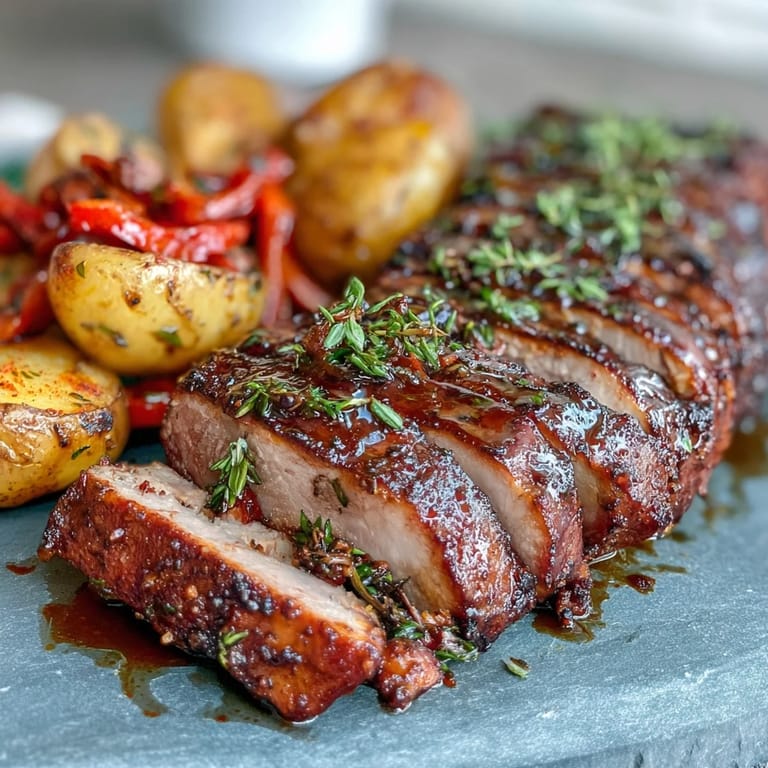
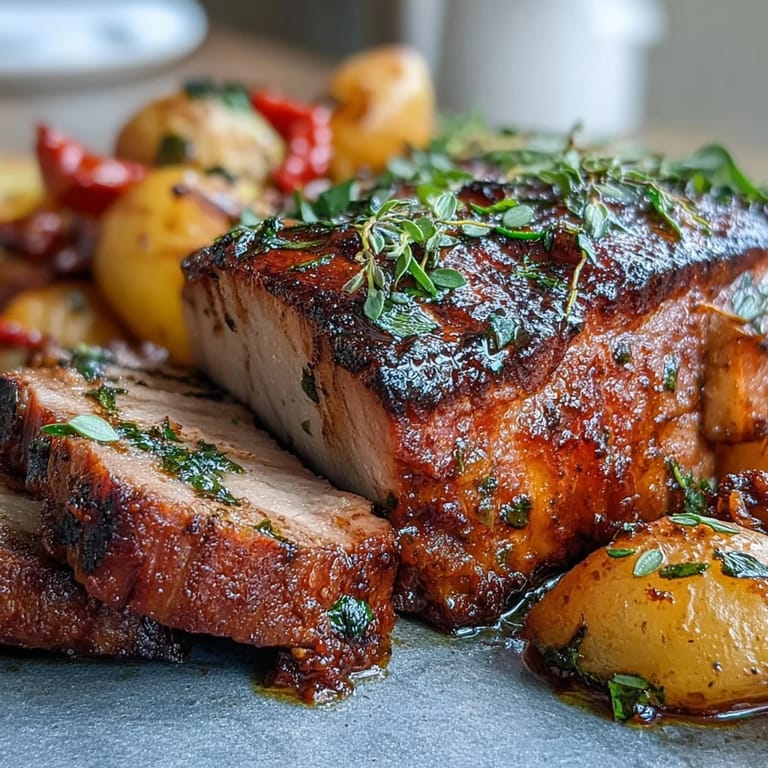
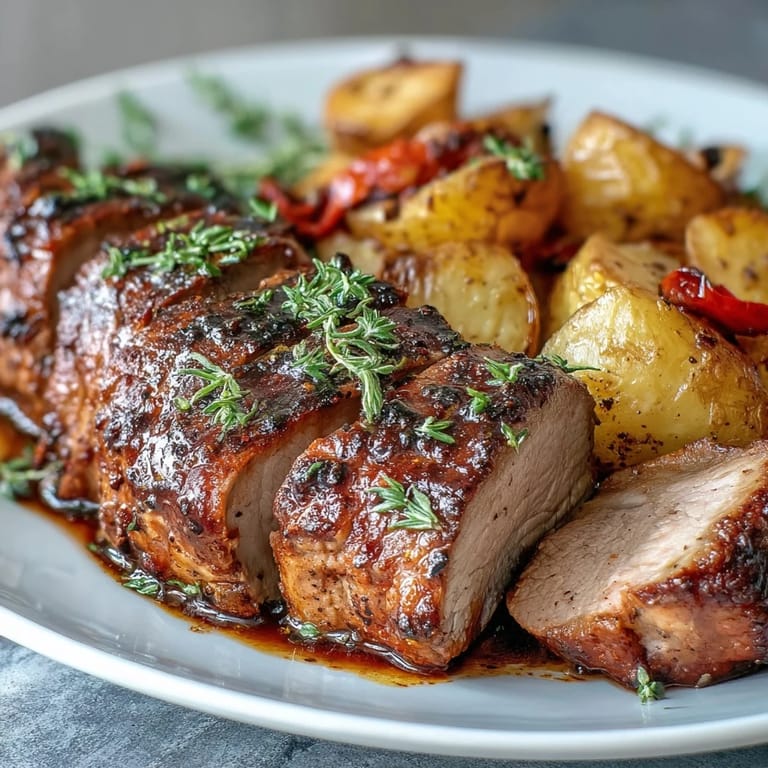
- Arrange sliced pork on plates, add a generous handful of roasted potatoes and peppers to each, then drizzle with the pan juices if there are any. A glass of Spanish red wine beside the plate is not optional.
 Pin
Pin The real magic of this dish is how it turns a weeknight into something that feels ceremonial. My grandmother used to say that good food is the only language that needs no translation, and when you watch someone's face light up over a plate of perfectly cooked Ibérico pork with crispy potatoes, you understand exactly what she meant.
Why Overnight Marinating Changes Everything
I used to think marinating was just about flavor, but I learned it's actually about transformation. The lemon juice's acidity begins breaking down muscle fibers, while the salt dissolves into the meat and helps it retain moisture during cooking. By morning, what started as a raw fillet has become something with depth—the aromatics have infused into every layer, not just sitting on the surface. The overnight wait isn't an inconvenience; it's the reason this dish tastes like restaurant-quality pork instead of something you rushed through.
The Spanish Spice Drawer Secret
Smoked paprika is the backbone of this dish, and I can't stress this enough—it's not the same as regular paprika, and it's worth keeping a tin in your cabinet at all times. The smoking process gives it this deep, almost smoky-sweet character that tastes like it's been kissed by oak and time. When you taste it raw from a spoon, it might seem intense, but once it's in the marinade and coated on the pork, it becomes rounded and complex. That's when you realize why Spanish cooking relies on it so heavily.
Timing and Temperature
This dish works because everything finishes at roughly the same moment—the potatoes and peppers are done in about 35–40 minutes, and the pork only needs 12–15 minutes in the oven after searing. The key is starting everything at the right time so nothing sits around getting cold while you're waiting for something else. I learned this the hard way when I had beautiful rested pork waiting for tepid potatoes, and it taught me to think backwards from when I want to plate.
- Start potatoes first since they take the longest and tolerate sitting in a warm oven without suffering.
- Add peppers about 15 minutes after the potatoes go in so everything finishes together.
- Sear and roast your pork last, timing it so it comes out of the oven just as the sides are done.
 Pin
Pin This is a dish that proves good cooking isn't about complicated techniques—it's about respecting your ingredients and giving them time to become themselves. Make it for someone you want to impress, or make it for yourself on a night when you need to remember that ordinary ingredients deserve extraordinary care.
Recipe Q&A
- → Can I use regular pork tenderloin instead of Ibérico?
Yes, regular pork tenderloin works well as a substitute. Keep in mind that cooking times may vary slightly, so always check the internal temperature reaches 63°C (145°F) for food safety.
- → How long should I marinate the pork fillet?
For best results, marinate the pork overnight or for at least 8 hours. This allows the flavors to penetrate deeply and tenderize the meat, creating a more flavorful and succulent result.
- → What type of potatoes work best for roasting?
Small new potatoes are ideal as they become crispy on the outside while staying creamy inside. Yukon Gold or red potatoes also work excellently when quartered to similar sizes for even cooking.
- → Can I prepare any components ahead of time?
The pork can be marinated up to 24 hours in advance. You can also prep the vegetables and store them covered in the refrigerator, then roast everything fresh on serving day for optimal texture.
- → What wine pairs well with this dish?
A Spanish Rioja or Tempranillo pairs beautifully with the smoky paprika and rich pork. Alternatively, try a medium-bodied red like Garnacha or even a full-bodied rosé for a lighter option.
- → How do I know when the pork is perfectly cooked?
Use a meat thermometer to check the internal temperature reaches 63°C (145°F). The pork should be slightly pink in the center and very juicy. Always let it rest for 5 minutes before slicing to retain moisture.