 Pin
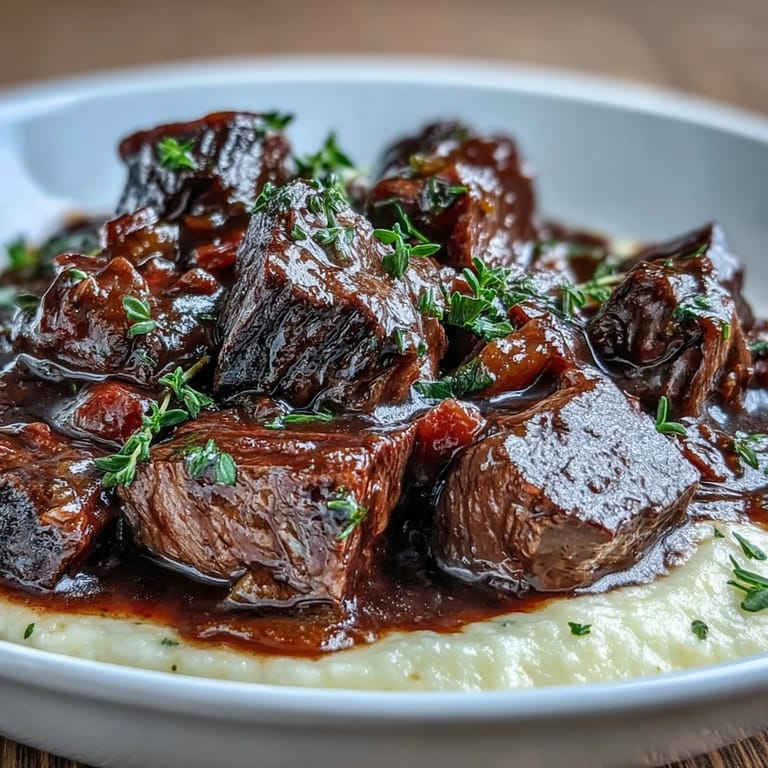
Pin A mate handed me a bottle of sloe gin at a winter farmers market, insisting I had to do something brave with it. That night, I stood in my kitchen with venison shoulder and suddenly understood what he meant—this wasn't about making something delicate. It was about building layers of warmth into a bowl, letting game meat and that mysterious berry liqueur speak to each other over hours of gentle heat. The polenta came later, almost as an afterthought, but it became the whole reason people came back for seconds.
I made this for my partner's parents who claimed they didn't eat game, and watched their skepticism melt somewhere between the first spoonful and the gentle clink of their spoons on empty bowls. My mum asked for the recipe, which felt like a small victory because she's not one for complicated cooking.
Ingredients
- Venison shoulder, 800 g cut into 3 cm cubes: This is your main event—choose stewing venison because it gets gloriously tender over time, not dry like a lean cut would.
- Olive oil, 2 tbsp: Just enough to get a proper brown on each piece of meat without drowning it.
- Onion, 1 large finely chopped: The foundation that sweetens as it cooks, balancing all that rich game flavor.
- Carrots, 2 sliced: These soften into the sauce and add natural sweetness that works with the sloe gin beautifully.
- Celery stalks, 2 diced: The quiet player that adds depth without announcing itself.
- Garlic cloves, 2 minced: Don't skip this or rush it—it blooms into something fragrant when you cook it with the tomato paste.
- Tomato paste, 2 tbsp: This deepens everything, giving the sauce real body and a slight tang.
- Sloe gin, 150 ml: The star ingredient that brings berry notes and subtle spice; if you can't find it, port works but tastes different.
- Beef or game stock, 400 ml: Use game stock if you can—it understands venison in a way beef stock only approximates.
- Redcurrant jelly, 1 tbsp: A small spoonful that rounds everything out with gentle fruitiness and helps bind the sauce.
- Bay leaves, 2: Traditional and essential—they perfume the whole pot.
- Fresh thyme sprigs, 2: Use fresh if possible because dried thyme can taste dusty against the delicate gin.
- Juniper berries, 1 tsp lightly crushed: These are crucial for game—they echo what's in the sloe gin and make you taste the woodland.
- Salt and freshly ground black pepper, to taste: Season at the end when you can taste what you've actually made.
- Whole milk, 750 ml: The richness that makes polenta feel like a hug.
- Water, 250 ml: This tempers the milk so the polenta doesn't break.
- Polenta, 150 g quick-cooking or regular: Quick-cooking saves you time; regular takes longer but tastes slightly deeper.
- Unsalted butter, 40 g: Stir this in at the end so it melts into the polenta rather than cooking out.
- Grated Parmesan cheese, 50 g: Fresh grated is worlds different from pre-packed; it melts smoother.
Tired of Takeout? 🥡
Get 10 meals you can make faster than delivery arrives. Seriously.
One email. No spam. Unsubscribe anytime.
Instructions
- Brown the venison properly:
- Heat your oil until it's almost smoking, then work in batches so you actually brown each piece instead of steaming it. This takes patience but it's where the flavor begins—don't rush it.
- Build your aromatics:
- Once the meat's out, lower the heat slightly and add onion, carrots, and celery together, letting them soften for five to seven minutes until they're golden at the edges. Stir in the garlic and tomato paste and let it cook just long enough to smell incredible.
- Deglaze with sloe gin:
- Pour the gin into the hot pan and watch it bubble and reduce for two minutes—you're cooking off the harsh alcohol but keeping all that berry magic. It'll smell like autumn in a good way.
- Build the stew:
- Return the venison, add your stock, redcurrant jelly, bay leaves, thyme, and juniper berries, then season conservatively because you'll taste again later. Bring it to a bare simmer, cover, and let time do the work for two hours.
- Make the polenta while you wait:
- Heat milk and water until tiny bubbles form at the edges, then whisk in your polenta slowly so no lumps form—this is the only tricky part. Stir constantly over low heat for five to ten minutes until it's thick enough that your spoon leaves a trail.
- Finish both components:
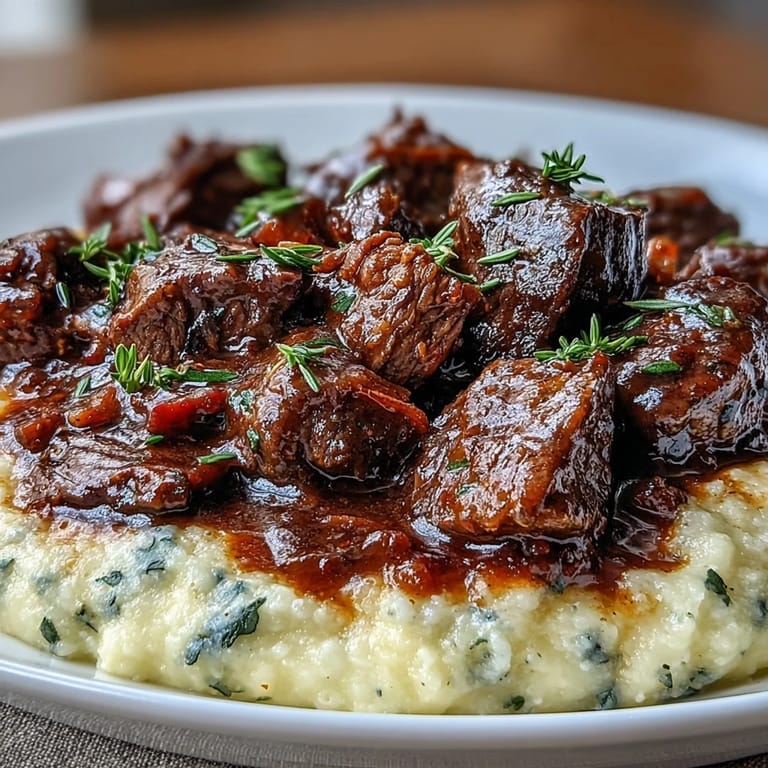
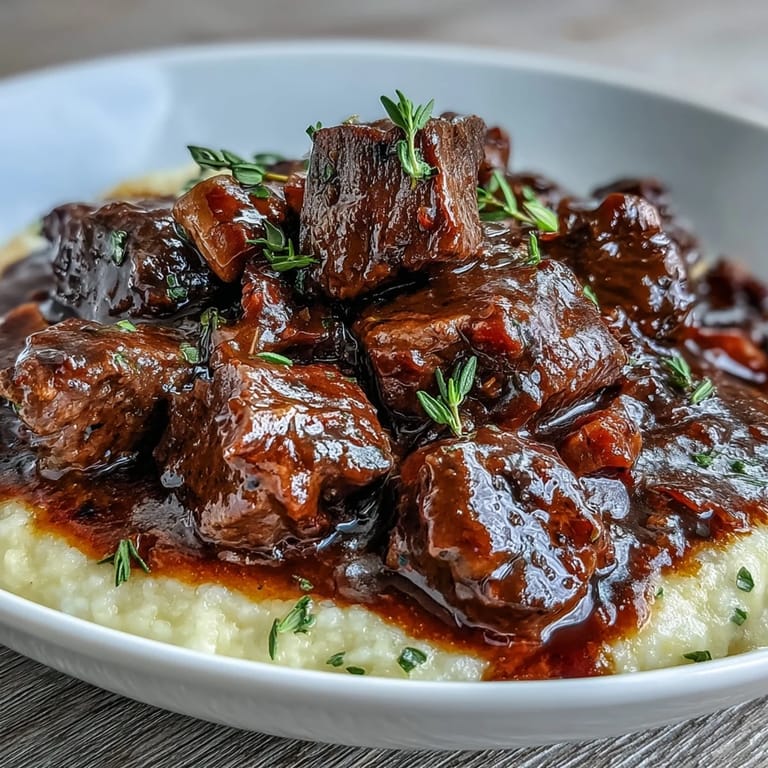
- Stir butter and Parmesan into the polenta, taste the stew and adjust seasoning, remove your bay leaves and thyme sprigs, then serve the stew hot over creamy polenta.
 Pin
Pin There's a moment near the end of cooking when you lift the lid and the smell hits you—game and berries and earth and herbs all speaking at once—and you know it's going to be good. That's when you stop wondering if venison was the right choice and start feeling glad.
About Sloe Gin and Game
Sloe gin isn't just a festive drink—it's actually perfect for cooking with venison because the berries have a natural affinity with game. The gin brings brightness without tasting boozy, and the sloe berries add a subtle tannin that echoes the juice of the meat itself. If you genuinely can't find sloe gin, port works acceptably, but it tastes heavier and less woodland-like.
Polenta Done Right
Polenta gets a reputation for being fussy, but it's really just about patience and constant stirring over low heat. The moment you stop stirring, it sticks to the pan and scorches at the bottom while staying lumpy on top—which I've done exactly twice. Once you get past that initial stage and it starts pulling away from the sides of the pan slightly, you know you've made it.
How to Make It Your Own
This stew is forgiving enough to invite your own choices, which is part of why I love it. Some people add a splash of red wine alongside the gin for more body, others swap the redcurrant jelly for blackberry jam if that's what they have. You can garnish with fresh parsley or thyme, and it pairs beautifully with a robust red wine like Shiraz or Cabernet Sauvignon if you want to continue the theme of the sloe gin into dinner.
- Make it the day before and reheat gently—it actually tastes better as the flavors settle and marry overnight.
- If you cook for vegetarians, substitute venison with mushrooms and use vegetable stock, though it becomes a different dish.
- Leftover stew freezes well for up to three months, which means you can be tactical about cooking this on a Sunday.
 Pin
Pin This is the kind of recipe that justifies owning a good heavy-based casserole, because it genuinely transforms a winter evening into something worth remembering. Make it for people you want to impress or for yourself on a day when you need the kitchen to smell like home.
Recipe Q&A
- → Can I substitute the venison with another meat?
Yes, you can use beef chuck, lamb shoulder, or wild boar as alternatives. Adjust cooking time as needed—beef may require an additional 30 minutes to become tender.
- → What can I use instead of sloe gin?
Port, red wine, or berry liqueurs like cassis work well. For a non-alcoholic option, use grape juice with a splash of balsamic vinegar to mimic the sweet-tart flavor.
- → Can I make this ahead of time?
Absolutely. The stew tastes even better the next day as flavors develop. Store covered in the refrigerator for up to 3 days. Reheat gently and prepare fresh polenta when serving.
- → How do I know when the venison is tender enough?
The meat should easily fall apart when pressed with a fork. If still tough after 2 hours, continue simmering in 15-minute intervals, checking regularly and adding liquid if needed.
- → Can I use instant polenta instead of regular?
Yes, quick-cooking polenta works perfectly and saves time. Follow package directions, typically 5-10 minutes of stirring. Regular polenta takes 30-40 minutes but offers slightly better texture.
- → What sides pair well with this dish?
Roasted root vegetables, steamed green beans, or a simple arugula salad complement the rich stew beautifully. Crusty bread is also excellent for soaking up the flavorful sauce.