 Pin
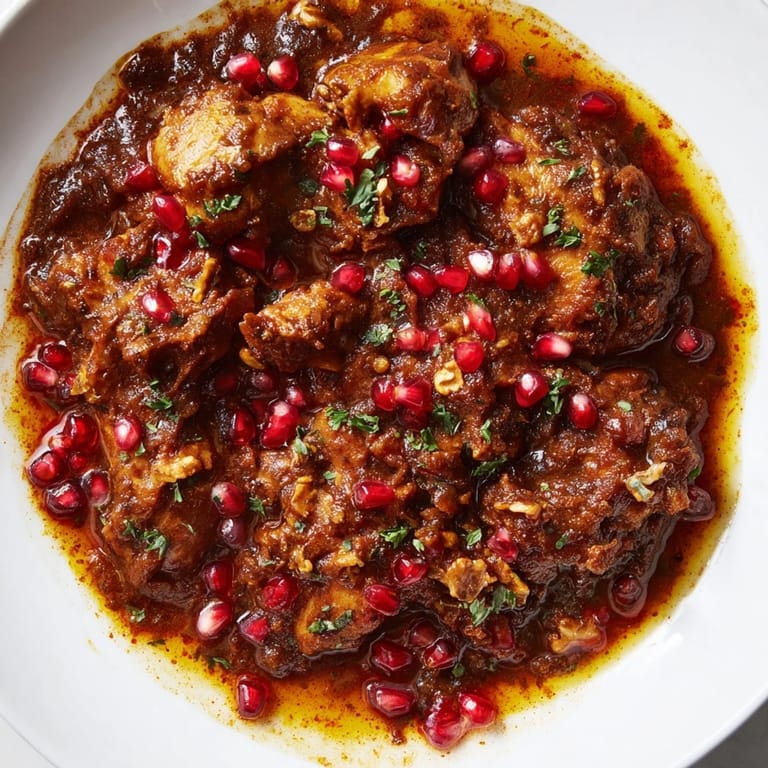
Pin There's a particular kind of quiet that settles over the kitchen when you're making fesenjan for the first time—the kind where you're waiting to see if this balance of pomegranate and walnut will actually work the way you've heard about. I was skeptical, honestly, standing in front of my pot with what looked like a muddy brown paste and wondering if I'd made a terrible mistake. Then the smell hit me: deep, warm, with this sharp-sweet edge that made me lean closer. By the time the meat was tender and the sauce had turned glossy, I understood why people talk about this dish like it's something sacred.
I made this for my sister's birthday dinner, partly because I wanted to impress her and partly because I needed to prove to myself that I could pull off something from her favorite Persian restaurant at home. She took one bite and got quiet—the good kind of quiet—and then asked for the recipe before she'd even finished her plate. Cooking this dish that night felt like I was saying something I didn't have the words for, and she understood it completely.
Ingredients
- Boneless chicken thighs or duck (700 g): Dark meat stays tender and flavorful through the long simmer, which is why it's so much better than chicken breasts here—the fat keeps everything moist and rich.
- Salt and black pepper: Don't skip seasoning the meat first; it makes all the difference in how the flavors build.
- Vegetable oil (2 tbsp): You need enough to brown the meat properly without it sticking or burning.
- Large onion, finely chopped: The onions are your flavor base, so take time to let them turn golden and sweet rather than rushing them.
- Ground walnuts (250 g): Toast them lightly before grinding if you can—it deepens the flavor and adds a subtle nuttiness that raw walnuts won't give you.
- Pomegranate molasses (500 ml): This is the soul of the dish; it gives you that distinctive sour-sweet punch, and it's worth finding the real thing in specialty stores.
- Water (500 ml): This dilutes the intensity slightly and gives the sauce room to develop.
- Sugar (2 tbsp): Start conservative and adjust once you taste it; different pomegranate molasses brands have varying sweetness.
- Ground cinnamon, turmeric, and cardamom: These warm spices tie everything together and add a layer of complexity that makes people ask what your secret ingredient is.
- Pomegranate seeds and fresh parsley for garnish: These aren't just decoration—the bright acidity of fresh pomegranate and the herbaceous parsley cut through the richness and make each bite feel fresh.
Tired of Takeout? 🥡
Get 10 meals you can make faster than delivery arrives. Seriously.
One email. No spam. Unsubscribe anytime.
Instructions
- Season your meat:
- Pat the chicken or duck dry with paper towels and season generously with salt and pepper on all sides. This helps the meat brown better and flavors it from the inside out.
- Build your flavor base:
- Heat the oil in your pot over medium heat until it shimmers, then add the onions. Let them cook slowly, stirring occasionally, until they're golden and soft—about 8 to 10 minutes. You'll smell when they're right, that sweet caramelized aroma.
- Brown the meat:
- Increase the heat slightly and add the meat in a single layer, leaving it undisturbed for a few minutes so it develops a proper golden crust. Don't crowd the pot; if needed, do this in batches. Once everything's browned (it'll take about 5 to 7 minutes), move to the next step.
- Toast the walnuts in the pot:
- Add the ground walnuts and stir constantly for 2 to 3 minutes. You're looking for them to deepen slightly in color and smell toasty—this prevents them from tasting raw and adds depth to the final sauce.
- Build the sauce:
- Pour in the pomegranate molasses, water, sugar, cinnamon, turmeric, and cardamom if using. Stir everything together until the sauce is smooth and the spices are evenly distributed. Taste a tiny spoonful and remember this flavor—it'll guide your final adjustments.
- Simmer gently:
- Bring the pot to a gentle boil, then immediately reduce the heat to low. Cover with a lid and let it simmer quietly for 1 hour, stirring occasionally to make sure nothing sticks to the bottom. The kitchen will smell incredible, and that's when you know it's working.
- Finish and thicken:
- Remove the lid and simmer for another 30 minutes, stirring more frequently now. The sauce will reduce, darken, and eventually oil from the walnuts will rise to the top—that's your signal you're almost done. Once you see that glossy layer, taste it and adjust the sugar and salt to your preference.
- Serve with intention:
- Spoon the stew over steamed basmati rice and scatter pomegranate seeds and fresh parsley on top. The contrast between the warm, rich stew and the cool, bright garnish is part of what makes this dish so beautiful.
 Pin
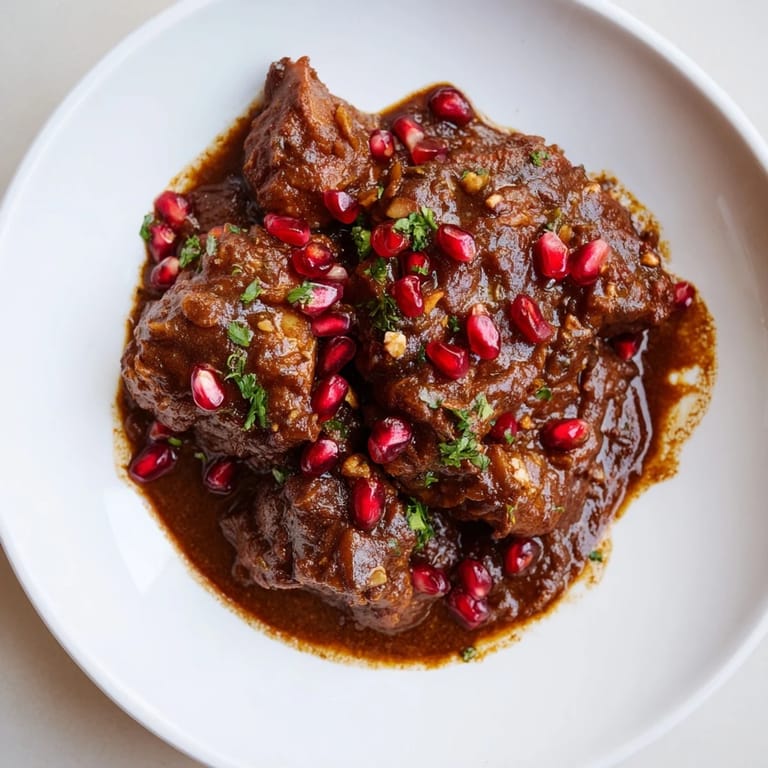
Pin There's a moment during the second simmer when you lift the lid and that wallop of concentrated pomegranate and walnut hits you—it's almost overwhelming at first, but you realize that's exactly what should happen. My partner walked into the kitchen during that moment and just stood there breathing it in, and I knew this recipe was going to become part of our regular rotation. Some dishes feed you; this one feeds something quieter.
The Beauty of Pomegranate Molasses
Pomegranate molasses isn't pomegranate juice—it's something entirely different, and that distinction matters more than you'd think. The molasses is reduced juice with a deep, concentrated flavor that's both tart and faintly sweet, almost wine-like in its complexity. Once you start cooking with it, you'll find yourself reaching for it in other dishes, from marinades to dressings, because it has this way of making everything taste more intentional.
Why This Stew Tastes Better the Next Day
Fesenjan is one of those rare dishes that actually improves as it sits in the refrigerator, because all those spices and the pomegranate molasses have time to meld together and get to know each other. I've learned to make it the day before I need it, which takes all the pressure off timing and lets me reheat it gently right before serving. The flavors deepen, the sauce becomes silkier, and somehow it tastes more like itself.
Variations and Flexibility
While this recipe is traditionally made with duck or chicken, there's actually more room to play than you might expect. I've had versions with eggplant instead of meat that were absolutely stunning, with the eggplant soaking up the sauce like it was made for this purpose. You can also adjust the thickness of your sauce depending on preference—some people like it more brothy, others prefer it thick enough to cling to the rice, and both are completely valid.
- For vegetarian versions, try eggplant cut into thick rounds or hearty mushrooms that won't dissolve into the sauce.
- If you want it richer, use duck instead of chicken, and don't drain any of the fat—let it be part of the luxury.
- Leftover sauce freezes beautifully, so you can make extra and use it again in weeks to come.
 Pin
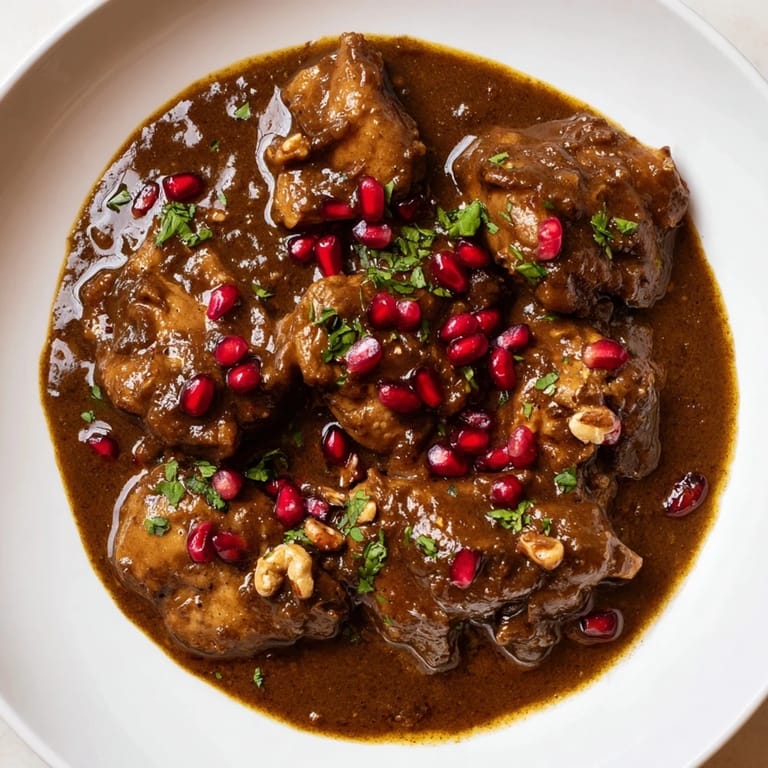
Pin This is the kind of dish that stops conversations at the dinner table and makes people ask for seconds before they've finished their first bite. Making it at home transforms it from restaurant-special into something that belongs to you.
Recipe Q&A
- → What meat works best for this stew?
Traditionally duck is used for a rich flavor, but boneless chicken thighs are a convenient and tender alternative.
- → How do ground walnuts affect the dish?
Ground walnuts thicken the sauce and add a creamy, nutty richness essential to the dish’s signature texture and depth.
- → Can this be made vegetarian?
Yes, mushrooms or eggplant can replace meat, absorbing the sauce’s flavors while keeping the dish hearty.
- → What role does pomegranate molasses play?
Pomegranate molasses provides a balanced tangy sweetness that defines the stew’s unique flavor profile.
- → How long should the stew simmer?
Simmering for about 1.5 hours allows the flavors to meld and the sauce to thicken, creating a rich and aromatic finish.