 Pin
Pin My first encounter with kabsa was at a family gathering where the entire kitchen seemed to shimmer with cardamom and cinnamon before a single grain of rice touched the pot. A cousin's husband stood guard over a massive heavy-bottomed pot, occasionally lifting the lid just enough for the steam to escape, filling the hallway with a fragrance so insistent it pulled everyone toward the dining room before the food was ready. That day, I learned that kabsa isn't just rice and meat—it's an entire sensory experience that announces itself before you can even taste it.
I made this for my roommate's birthday dinner after she'd spent weeks talking about craving something that reminded her of her grandmother's kitchen. Watching her face when she tasted it—that moment when recognition and comfort wash over someone at the same time—that's when I understood why people pass these recipes down like secrets.
Ingredients
- Lamb or chicken pieces (1 kg, bone-in): Bone-in meat stays tender and releases flavor into the broth; don't skip this for boneless cuts.
- Vegetable oil (1 tbsp): Just enough to build the foundation without overwhelming the spices.
- Onion (1 large, finely sliced): The caramelized onion becomes the bridge between the meat and spices.
- Garlic (3 cloves, minced): Add it after the onion softens so it doesn't burn and turn bitter.
- Ground cumin (2 tsp): The warm, earthy backbone of the entire dish.
- Ground coriander (2 tsp): Citrusy notes that keep the spice blend from feeling heavy.
- Ground cinnamon (1½ tsp): The sweetness here is subtle but unmistakable once you know to listen for it.
- Ground black pepper (1½ tsp): Don't use pre-ground if you can help it; the freshness matters.
- Ground turmeric (1 tsp): More than just color—it adds earthiness and a gentle warmth.
- Ground cardamom (1 tsp): This is where the magic happens; if you've never used it, start here.
- Ground cloves (½ tsp): A pinch of this goes a long way; too much and it dominates everything else.
- Ground allspice (½ tsp): The unsung hero that ties the whole spice profile together.
- Dried bay leaves (2): Remove these before serving; they're flavor contributors, not something to eat.
- Dried black lime—loomi (1, pierced): Optional but transforms the dish into something authentically complex; pierce it so the flavor releases slowly.
- Tomatoes (2 medium, chopped): Fresh tomatoes add brightness and slight acidity to balance the richness.
- Carrot (1 medium, grated): Grated carrots dissolve into the broth, adding sweetness without texture.
- Basmati rice (3 cups, rinsed and soaked): Soaking prevents mushiness and allows the rice to stay separate and fluffy.
- Chicken or lamb stock (5 cups): Homemade is better, but good quality store-bought works fine.
- Golden raisins (½ cup): They plump up beautifully and add pockets of sweetness throughout.
- Slivered almonds, toasted (½ cup): Toast them yourself if you have time; the difference is noticeable.
- Fresh parsley (¼ cup, chopped): A final whisper of green freshness.
- Salt (to taste): Adjust at the end after the rice has absorbed the liquid.
Tired of Takeout? 🥡
Get 10 meals you can make faster than delivery arrives. Seriously.
One email. No spam. Unsubscribe anytime.
Instructions
- Build your foundation with golden onions:
- Heat oil in your pot over medium-high heat and add sliced onions. Don't rush this—let them turn deep golden and slightly caramelized, about 8-10 minutes. You'll smell them transforming, and that's exactly what should happen.
- Wake up the garlic and sear the meat:
- Once the onions are golden, add minced garlic and cook for just a minute until fragrant. Then add your meat pieces and let them brown on all sides without moving them around too much—this takes about 8 minutes and builds flavor through the browning process.
- Bloom the spices into life:
- Stir in all the spices, bay leaves, and the pierced black lime if using. The kitchen will fill with an aroma so intoxicating you'll understand why this dish is reserved for celebrations. Let them toast together for 1-2 minutes.
- Deepen the flavor with vegetables:
- Add your chopped tomatoes and grated carrot, stirring occasionally for 4-5 minutes. The tomatoes will start to break down and marry with all those spices.
- Simmer the meat until it surrenders:
- Pour in your stock and bring everything to a boil, then lower the heat, cover, and let it simmer gently. If you're using chicken, this takes 35-40 minutes; lamb needs closer to 60 minutes. The meat should be so tender it wants to fall apart when you touch it.
- Prepare the rice for its moment:
- Carefully remove the cooked meat and set it aside somewhere warm. The broth left behind is now infused with all that meaty, spicy flavor—this is what makes the rice extraordinary.
- Marry the rice with the broth:
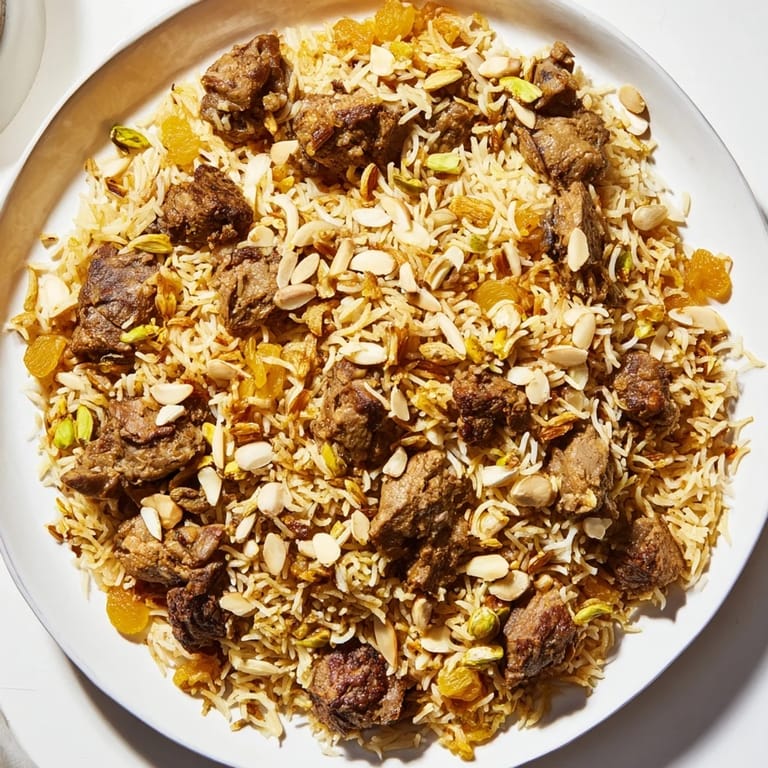
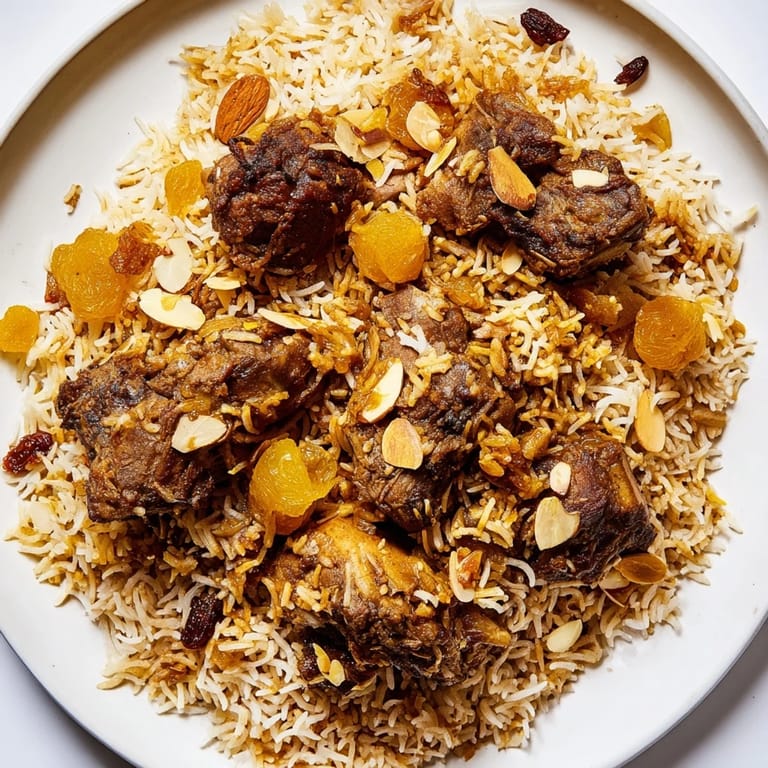
- Stir your drained, soaked rice and salt into the hot broth. Nestle the meat pieces back into the rice, distributing them so everyone gets some in their bowl. Scatter the raisins over the top—they'll plump up as everything cooks together.
- Let everything finish together:
- Cover the pot and reduce heat to low. Let it cook undisturbed for 25-30 minutes. You'll hear a gentle sizzle at the edges—that's the rice finishing and the liquid getting absorbed. When you lift the lid, the rice should be fluffy and the meat warm.
- Discard and fluff to finish:
- Remove and discard the bay leaves and black lime. Use a fork to gently fluff the rice, being careful not to mash the grains. Transfer everything to a serving platter.
- Crown it with the final touches:
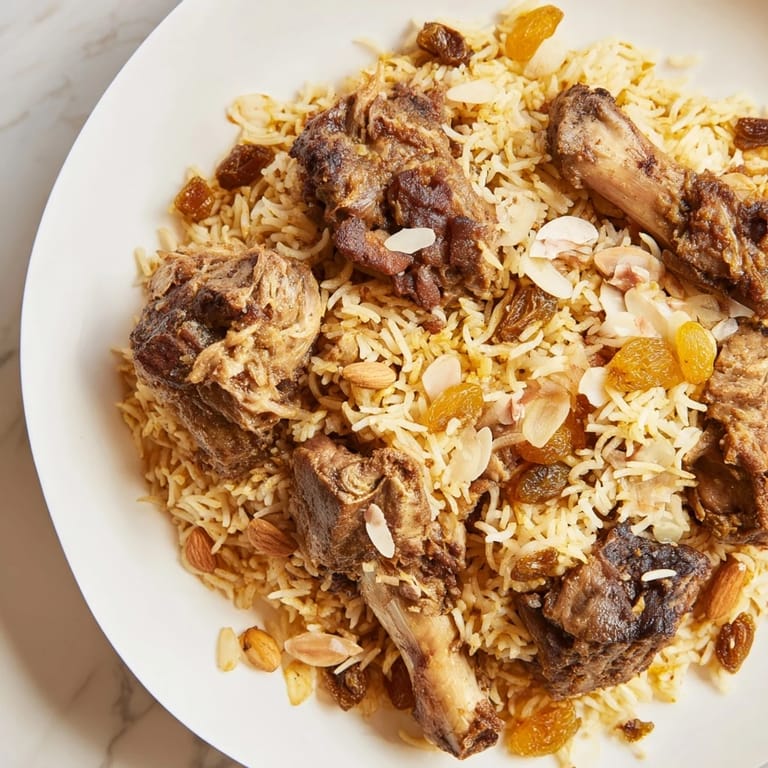
- Scatter your toasted almonds and fresh parsley over the top. This is where the dish becomes a feast for the eyes as well as the stomach.
 Pin
Pin There's a moment, usually about halfway through cooking, when someone walks into the kitchen and just stops. They don't say anything—they just stand there breathing it in. That's the moment you know you're making something that transcends the ordinary.
Why This Dish Travels Well Across Tables
Kabsa has a way of making any occasion feel special without demanding perfection. It's forgiving enough for a weeknight attempt but impressive enough to serve guests who have high standards. The one-pot nature means you're not juggling multiple pans and timers, yet everyone still gets that luxurious feeling of eating something that took time and care.
The Spice Blend: Your Secret Weapon
This particular combination of eight spices might seem like a lot, but each one plays a specific role. Cumin and coriander are the main players, with cinnamon adding warmth without sweetness, cardamom introducing a floral note, and cloves providing depth. Together, they create something that tastes complicated but comes together with surprising ease. If you ever need to memorize one spice blend, make it this one—you'll use it again and again.
Make It Your Own
The beauty of kabsa is its flexibility. Some families use beef instead of lamb, others add a handful of nuts beyond almonds, and plenty of versions include a touch of honey or pomegranate molasses. The framework stays the same; the variations are just different ways of showing love through spice choices. Your version will be as authentic as anyone else's the moment you make it with intention.
- If black lime feels too exotic on your first try, add a squeeze of fresh lemon juice to the broth instead—it won't be identical, but it will still be delicious.
- Toasting your own almonds takes five minutes and transforms them from background notes to something people actually notice and comment on.
- Leftover kabsa is somehow even better the next day when the flavors have had time to settle and deepen.
 Pin
Pin This is the kind of dish that lingers in memory long after the meal ends, the kind that makes people ask for the recipe and then actually cook it. Make it once and you'll understand why families have been making it for generations.
Recipe Q&A
- → What type of meat is best for Saudi Kabsa?
Lamb or chicken are traditionally used. Lamb offers richer flavor, while chicken cooks faster and can be substituted easily.
- → How do the spices affect the dish's flavor?
A mix of cumin, coriander, cinnamon, cardamom, and cloves creates a warm, aromatic profile essential to the dish's signature taste.
- → Can I prepare the dish without dried black lime (loomi)?
Yes, loomi adds a unique tangy note but can be omitted without compromising the overall flavor.
- → What is the purpose of soaking the basmati rice beforehand?
Soaking rice removes excess starch, helping it cook evenly and achieve a fluffy texture.
- → How are the golden raisins used in the dish?
They are scattered atop the rice before the final cooking, providing bursts of sweetness that balance the spices.