 Pin
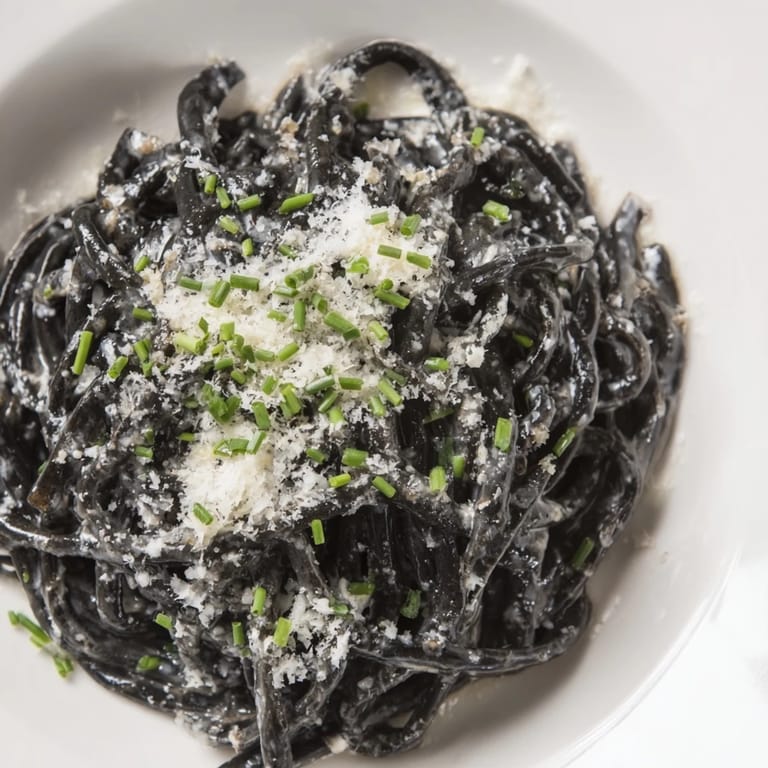
Pin The first time I served squid ink pasta, my dinner guests fell silent for a moment—not because anything was wrong, but because the plate was so dramatically black it looked almost unreal. I'd been nervous about the color, worried it might seem more theatrical than delicious, but that silky cream sauce coating each strand proved the drama was entirely intentional. What started as curiosity about an ingredient I'd never used before became the dish I make whenever I want to feel like I'm cooking something genuinely special.
I remember making this on a Tuesday evening when I wanted to turn an ordinary weeknight into something memorable, and it worked. My partner walked into the kitchen mid-cook, saw the jet-black pasta water draining and just laughed—"Are we making something from a gothic cookbook?" By the time we sat down to eat, that same skepticism had turned into asking for seconds. Sometimes the best meals are the ones that look impossible until you taste them.
Ingredients
- Squid ink pasta (400 g): This is the star, so buy quality dried or fresh pasta—the color and flavor difference matters more than you'd think.
- Unsalted butter (2 tablespoons): The foundation of your sauce; unsalted lets you control the seasoning and tastes cleaner than salted.
- Shallot (1 small, finely chopped): Sweeter and more delicate than onion, shallots dissolve almost completely into the cream, adding whisper-soft flavor.
- Garlic (2 cloves, minced): Just enough to give presence without overwhelming the squid ink's subtle brininess.
- Dry white wine (150 ml): The acidity cuts through the richness and the alcohol burns off, leaving only elegant flavor behind.
- Heavy cream (250 ml): Use real cream, not half-and-half; the fat is what makes the sauce silky and luxurious.
- Lemon zest (1 teaspoon): A brightness that lifts everything, especially important with such a dark dish.
- Salt and freshly ground black pepper: Taste constantly—this sauce needs proper seasoning to sing.
- Parmigiano-Reggiano (50 g, grated): The umami finish that makes people pause between bites.
- Chives (1 tablespoon, finely chopped): A gentle onion note and color pop; parsley works if that's what you have.
Tired of Takeout? 🥡
Get 10 meals you can make faster than delivery arrives. Seriously.
One email. No spam. Unsubscribe anytime.
Instructions
- Set the stage with salted water:
- Bring a large pot of properly salted water to a rolling boil—it should taste like the sea. Add your squid ink pasta and cook until it's al dente, with just a little resistance when you bite it. The moment it's ready, scoop out about half a cup of that starchy cooking water (this liquid gold will help finish your sauce later), then drain everything else.
- Build your sauce foundation:
- In a large skillet over medium heat, melt butter slowly until it's foaming gently. Add your finely chopped shallot and let it soften for 2–3 minutes until it becomes translucent and releases its sweet aroma—don't rush this part, it's where flavor begins.
- Add fragrance and brightness:
- Add the minced garlic and cook for just 30 seconds until the kitchen smells incredible; any longer and it starts to turn bitter. Pour in your white wine immediately—you'll hear it sizzle, and that's exactly right.
- Let the wine reduce and marry:
- Simmer for 2–3 minutes while the alcohol evaporates and the mixture becomes slightly thicker and more concentrated. Watch as the wine reduces; you're essentially making the foundation taste more of itself.
- Introduce the cream gently:
- Turn the heat down to low and add your heavy cream along with the lemon zest, stirring slowly. Simmer gently for 2–3 minutes—you're looking for the sauce to thicken just slightly, never boil, which would make it break. Season carefully with salt and pepper, tasting as you go.
- Marry the pasta and sauce:
- Add your drained squid ink pasta to the skillet and toss everything together, coating each strand in that creamy sauce. If it looks too thick, add your reserved pasta water a tablespoon at a time until it's silky and glossy, clinging to the pasta rather than puddling at the bottom.
- Finish and serve immediately:
- Remove from heat and plate right away while everything is hot. Top each serving with grated Parmigiano-Reggiano, a scatter of fresh chives, and a squeeze of lemon if you like that brightness.
 Pin
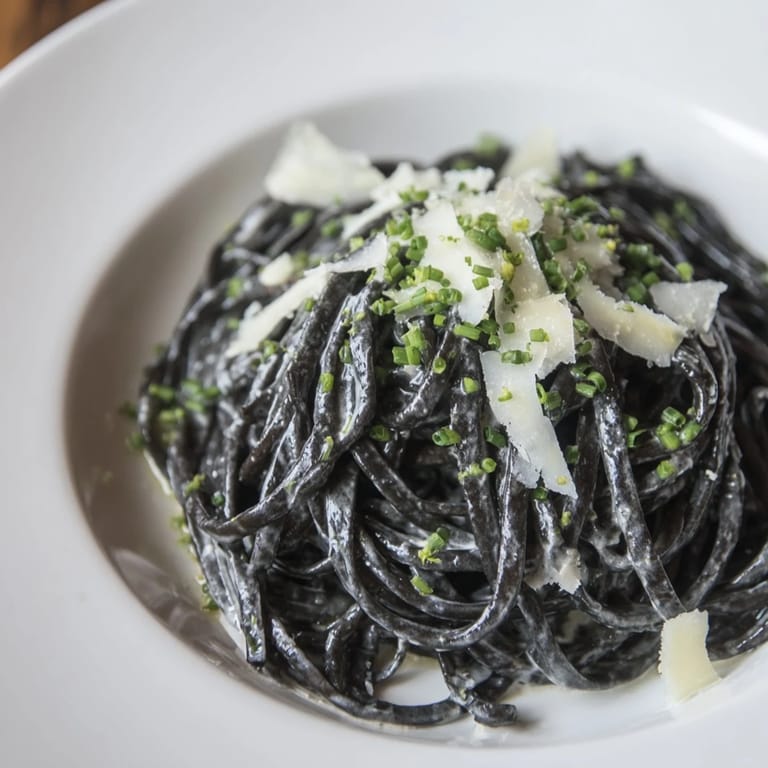
Pin There was a moment when a friend took her first bite and just closed her eyes—not being dramatic, but genuinely experiencing something that surprised her. That's when I realized this dish is about more than just looking elegant; it's about creating a moment where people slow down and really taste what's in front of them.
When to Serve This
This pasta is naturally elegant enough for dinner parties, but I've learned it's just as lovely on a quiet Friday night when you want to feel fancy without effort. It works for date nights, small celebrations, or honestly just because you want to eat something that looks like it came from a restaurant kitchen but tastes like it was made with care. The black-and-white presentation photographs beautifully if that matters to you, but the real appeal is how the flavors come together—there's nothing pretentious about it once you take a bite.
Making It Your Own
While the cream sauce is perfect as is, I've experimented with variations that work beautifully. Adding sautéed shrimp or calamari turns it into something even more luxurious, though keep the squid ink pasta as your centerpiece because that's what makes it memorable. A splash of cognac instead of all white wine creates deeper, rounder flavors if you're feeling adventurous. The lemon zest is non-negotiable—it's the brightness that prevents the dark colors from feeling heavy.
Pairing and Serving Suggestions
A crisp Italian white wine like Pinot Grigio or Vermentino is the perfect companion—the acidity matches the lemon and wine in the sauce while staying light enough not to overshadow the delicate squid ink flavor. Serve this as a main course with a simple green salad on the side; nothing heavy or complicated should share the plate because this pasta deserves to be the focus. If you want bread, skip saucy dips and just serve it plain or lightly toasted so the plate stays visually striking.
- The drama of the presentation is half the appeal, so serve it on white or light-colored plates to make the black pasta pop even more.
- Have extra lemon wedges at the table because some guests will want that bright squeeze of acidity.
- Don't let the pasta sit once it's sauced—squid ink pasta is best eaten immediately while everything is hot.
 Pin
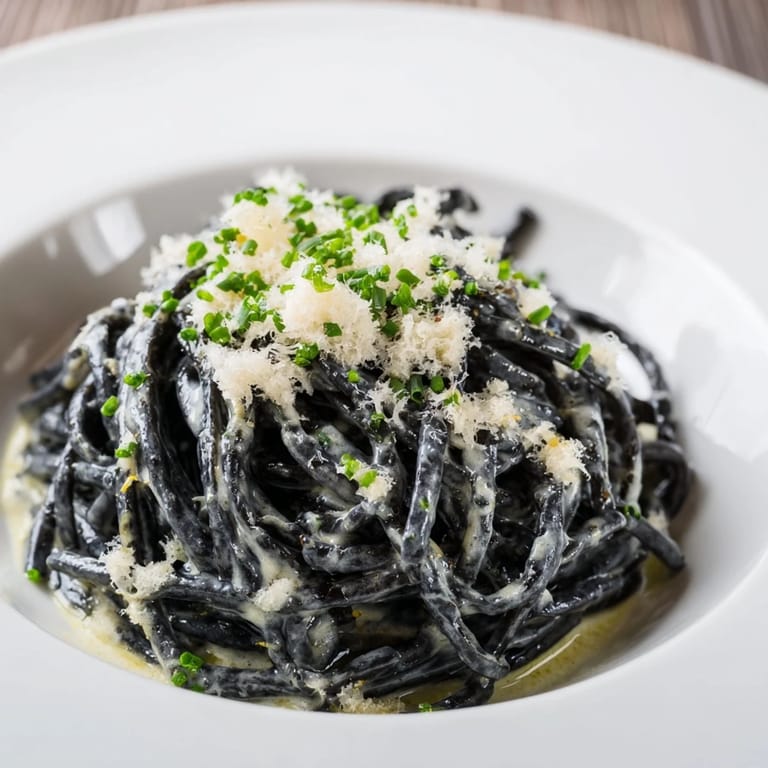
Pin This dish taught me that sometimes the most memorable meals are the ones that look a little unexpected. There's something wonderful about serving food that makes people pause and smile before they've even tasted it, then surprises them with how refined and delicious it actually is.
Recipe Q&A
- → How do I prevent the pasta from sticking?
Use plenty of salted boiling water and stir occasionally during cooking to keep the pasta separate and prevent sticking.
- → Can I substitute the cream for a lighter option?
Light cream or half-and-half can be used but may result in a thinner sauce consistency.
- → What is the best way to enhance the sauce flavor?
Sautéing the shallots and garlic gently before adding wine helps build depth, while a touch of lemon zest brightens the sauce.
- → How should leftover pasta be stored?
Store cooled pasta separately from sauce in airtight containers in the refrigerator up to two days. Reheat gently to preserve texture.
- → Can I add seafood to this dish?
Yes, sautéed shrimp or calamari can be added to the cream sauce to complement the squid ink pasta's flavors.