 Pin
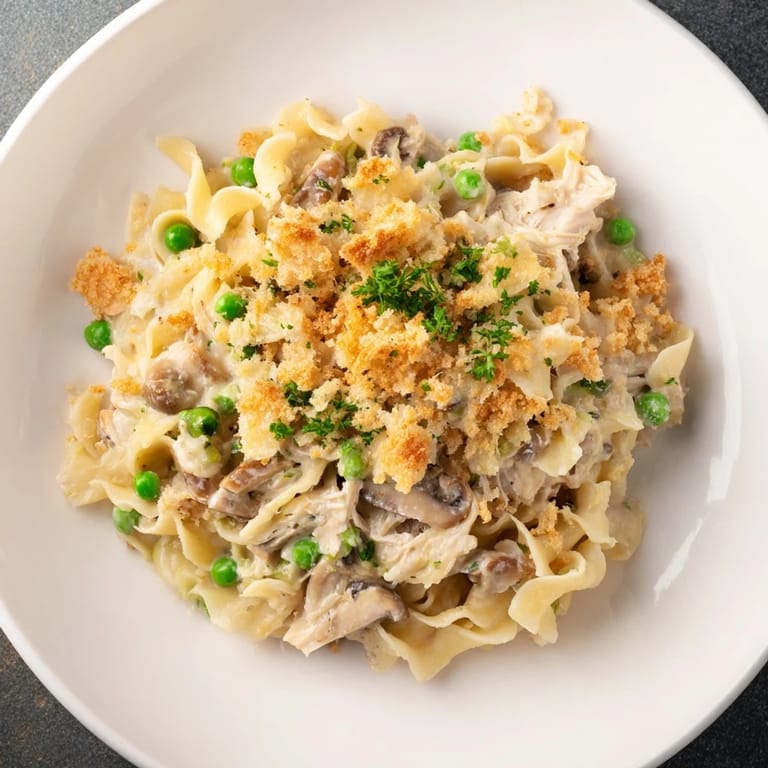
Pin My mom called me panicked one weeknight, saying she'd promised her book club a casserole but her usual go-to felt tired. I found myself rummaging through her pantry at 6 PM, and somehow tuna noodle casserole felt like the answer, except I wanted to make it feel less like a relic and more like something we'd actually want to eat. The creamy sauce, fresh mushrooms, and that crispy panko top turned it into something that tasted like comfort food had finally caught up with us.
I made this for my neighbor who'd just moved in, and watching her face when she took that first bite—where the creamy sauce met the crunch—made me realize this dish does something special. It's the kind of thing that feels homey without trying too hard, and somehow it made her feel welcomed in a way words couldn't quite manage.
Ingredients
- 12 oz egg noodles: Egg noodles hold sauce better than regular pasta, and cooking them just to al dente keeps them from turning mushy in the oven.
- 2 cans solid white tuna in water, drained: Two cans matters—one would make this feel sparse, three would overpower everything else.
- 1 cup frozen peas, thawed: Thawing them first prevents that icy shock when you bite down.
- 1 cup sliced mushrooms: Cremini or white varieties give you earthiness without taking over the dish.
- 1 small yellow onion, finely chopped: Cooking it down properly means no sharp onion bite in the finished casserole.
- 1 cup diced celery: This adds a whisper of something herbaceous that people taste but never quite name.
- 2 cloves garlic, minced: Garlic goes in after the softer vegetables so it doesn't burn and turn bitter.
- 3 tbsp unsalted butter: Use unsalted so you control the salt; salted butter can sneak up on you.
- 3 tbsp all-purpose flour: This is your thickener; it needs to cook into the butter before you add liquid, or you'll end up with lumps.
- 2 cups low-sodium chicken or vegetable broth: Low-sodium lets you taste the actual sauce, not just salt.
- 1 cup whole milk: Whole milk creates that silky texture that makes people linger over forkfuls.
- 1/2 cup sour cream: Added off heat so it doesn't break and separate into watery streaks.
- 1/2 tsp kosher salt, 1/2 tsp freshly ground black pepper, 1/2 tsp Dijon mustard: These three wake up the sauce so it tastes like something you meant to make, not something that happened by accident.
- 3/4 cup panko breadcrumbs: Panko stays crispy longer than regular breadcrumbs, which is everything for a casserole topping.
- 1/2 cup grated parmesan cheese: Freshly grated parmesan browns better and tastes sharper than pre-grated versions.
- 2 tbsp melted butter: This tossed with panko and parmesan is what turns the topping from sad to golden.
- 2 tbsp fresh parsley, optional: A sprinkle at the end adds color and a green note that brightens everything.
Tired of Takeout? 🥡
Get 10 meals you can make faster than delivery arrives. Seriously.
One email. No spam. Unsubscribe anytime.
Instructions
- Get your oven and dish ready:
- Preheat to 400°F and grease a 9x13-inch baking dish so your casserole doesn't stick to the edges and dry out. This small step saves you from scrubbing later.
- Cook the noodles until just al dente:
- They'll cook a bit more in the oven, so stop them before they feel fully tender. Drain them well and set aside.
- Sauté the aromatics and mushrooms:
- Melt butter in a large skillet over medium heat, then add onion and celery for about three minutes until they begin to soften. Add mushrooms and let them release their moisture and brown slightly, another four minutes, then stir in garlic and cook for just one minute until fragrant.
- Build your sauce base:
- Sprinkle flour over everything and stir until the vegetables are coated and it smells a bit nutty. Gradually pour in the broth, stirring constantly so no lumps form—this is where patience matters.
- Bring the sauce to a simmer and thicken:
- Add milk and let it bubble gently, stirring occasionally, until it coats the back of a spoon and looks silky, about three to four minutes. You'll feel it happen under your spoon before you see it.
- Finish the sauce with creaminess and tang:
- Pull it off heat and stir in sour cream, Dijon mustard, salt, and pepper. The sour cream goes in off heat because heat can make it separate into a grainy, watery mess.
- Fold everything together:
- Add drained tuna, thawed peas, and cooked noodles, stirring gently until the sauce coats every strand and morsel evenly. This is when it starts to feel like an actual casserole.
- Transfer to your baking dish:
- Pour the whole thing into your prepared dish and smooth the top so it bakes evenly.
- Make the crispy topping:
- In a small bowl, mix panko, parmesan, and melted butter until it looks like coarse sand. Sprinkle it evenly over the casserole—uneven topping means some bites are crunchy and some are soft.
- Bake until golden and bubbling:
- Twenty to twenty-five minutes at 400°F gives you a golden, crispy top with sauce that's just starting to bubble at the edges. You'll smell when it's almost done.
- Rest and serve:
- Let it sit for five minutes—this helps it set slightly so it doesn't collapse on the plate. Sprinkle with fresh parsley if you have it, and serve while it's still steaming.
 Pin
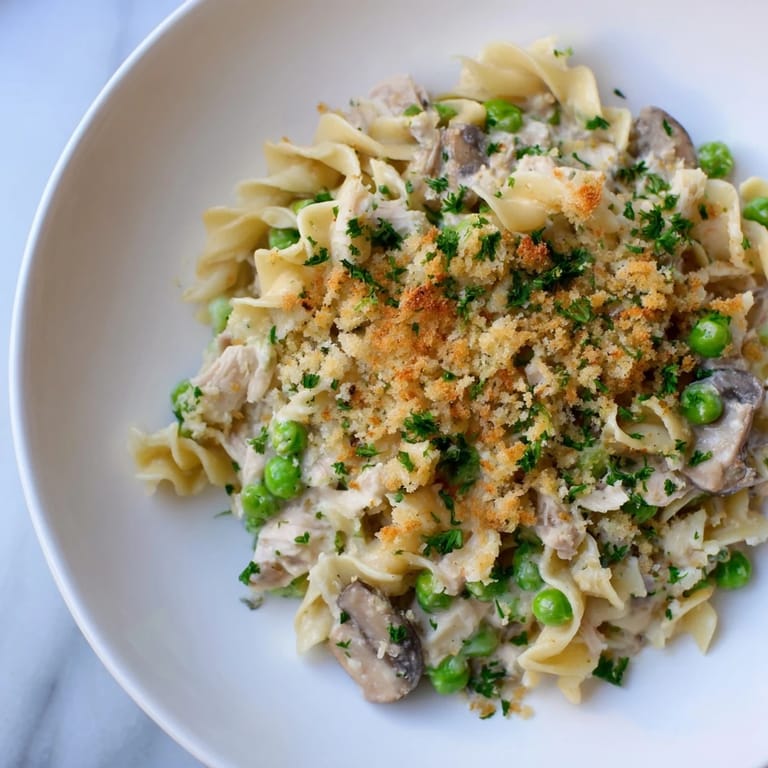
Pin I served this to my sister right after she'd had her third child, when the last thing she wanted to think about was cooking but she was too tired to call for takeout. Watching her sit down to a warm plate while I held the baby felt like the dish had done something bigger than just feed her—it gave her a moment to breathe.
How to Keep It From Drying Out
The enemy of casseroles is overbaking, which dries out the noodles and makes the sauce break and split. Setting your oven timer and checking at the twenty-minute mark means you catch it the moment the top turns golden instead of watching it turn brown. If your oven runs hot, you might finish closer to eighteen minutes, and if it runs cool, you might need the full twenty-five—know your oven like an old friend.
Ways to Personalize It
This recipe is forgiving enough to bend to what's in your fridge and what you're craving. I've added a handful of shredded cheddar to the sauce for extra richness, swapped half the sour cream for Greek yogurt to lighten it, and once stirred in some fresh dill because I had it and it worked beautifully. The structure stays strong no matter what small changes you make, which is why this dish has lasted so long in American kitchens—it adapts without breaking.
What to Serve Alongside
This casserole is heavy and creamy enough that it doesn't need much accompaniment, but a crisp white wine like Sauvignon Blanc cuts through the richness and makes the whole meal feel lighter. A simple green salad with sharp vinaigrette wakes up your palate between bites, and crusty bread is never unwelcome for soaking up any remaining sauce. If you're feeding a crowd, roasted green beans or a quick cucumber salad rounds everything out without competing for attention.
- A cold, slightly acidic white wine like Sauvignon Blanc makes every bite taste better.
- Don't skip the salad—the acid and crunch matter more than you'd think.
- Crusty bread is optional until you taste the sauce and realize you need it.
 Pin
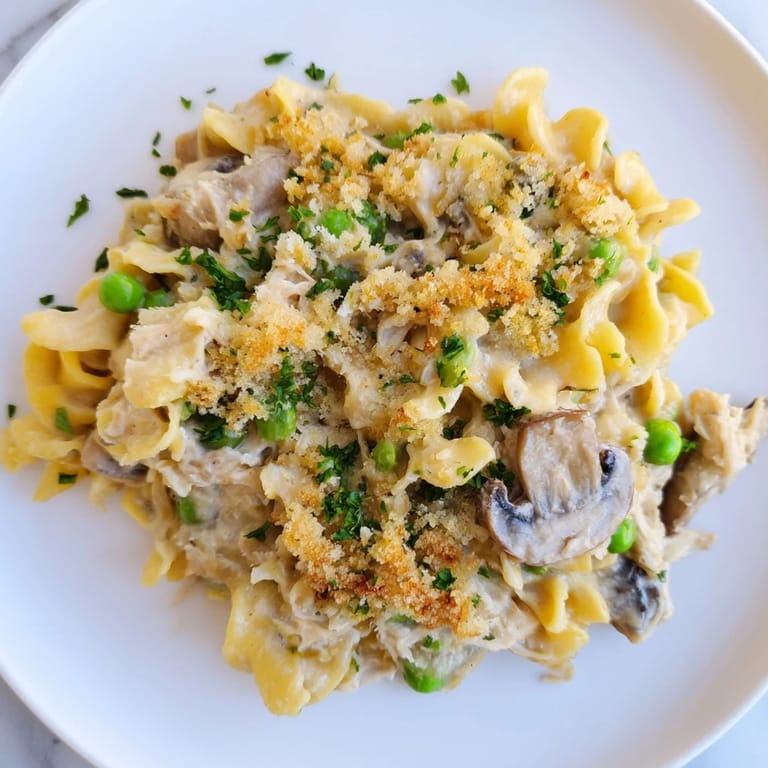
Pin This casserole has earned its place in my rotation because it tastes like someone cared enough to spend time on dinner, even when the total effort is less than an hour. It's the kind of food that nourishes more than just hunger.
Recipe Q&A
- → What type of noodles work best?
Egg noodles are ideal, cooked al dente to maintain a pleasant texture that holds up to baking.
- → Can I use fresh tuna instead of canned?
While canned solid white tuna works best for consistency, fresh tuna can be poached and flaked before combining.
- → How do I ensure the topping is crispy?
The panko breadcrumbs mixed with melted butter and parmesan cheese create a crunchy, golden crust when baked.
- → What vegetables complement this dish?
Peas, mushrooms, onion, celery, and garlic provide balance and fresh flavors in the creamy base.
- → Can I substitute sour cream with something else?
Greek yogurt is a good alternative offering a lighter tang without compromising creaminess.