 Pin
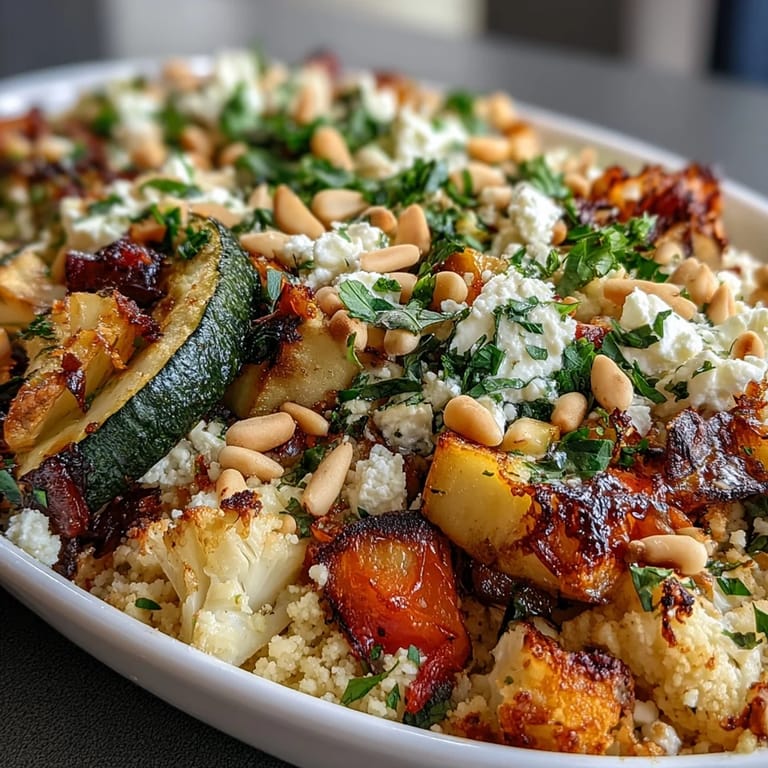
Pin There's something about the smell of roasted vegetables that makes a kitchen feel instantly alive. I discovered this bake on a lazy Sunday afternoon when I had a crisper drawer full of peppers and zucchini that needed rescuing, plus a block of feta begging to be melted into something warm. The combination felt natural—Mediterranean flavors without fuss—and by dinner, my partner was already asking when I'd make it again. It's become one of those dishes I reach for when I want something that feels special but doesn't demand much from me.
I made this for a dinner party last spring when a friend mentioned she'd recently gone vegetarian, and I wanted something that didn't feel like a compromise. Watching everyone go back for seconds, including the meat-loving guests, felt like a small victory in the kitchen. That's when I realized this dish has a quiet confidence to it—it doesn't announce itself, but it wins people over.
Ingredients
- Zucchini and eggplant: These soak up all the roasting heat and turn almost buttery inside, but don't skip the halfway stir or they'll stick and scorch on one side.
- Bell peppers (red and yellow): They add sweetness and color, and I've learned that mixing colors makes the final dish look vibrant enough that people assume you fussed over it.
- Red onion: Keeps its sharp edge even when roasted, which balances the richness of the feta beautifully.
- Olive oil: Use something you actually enjoy tasting, not the cheapest bottle on the shelf—it's the foundation of every flavor here.
- Dried oregano: A full teaspoon matters; it's the backbone that ties everything to the Mediterranean.
- Couscous: The fluffy texture contrasts perfectly with the soft vegetables, and it absorbs all the vegetable juices as it sits in the baking dish.
- Vegetable broth: Boiling hot is non-negotiable—cold liquid means dense, undercooked couscous every time.
- Lemon zest: Adds brightness that keeps the dish from feeling heavy, even when served warm.
- Fresh parsley: Stir some into the couscous and save the rest for garnish; it tastes fresher than if you just dump it all in at once.
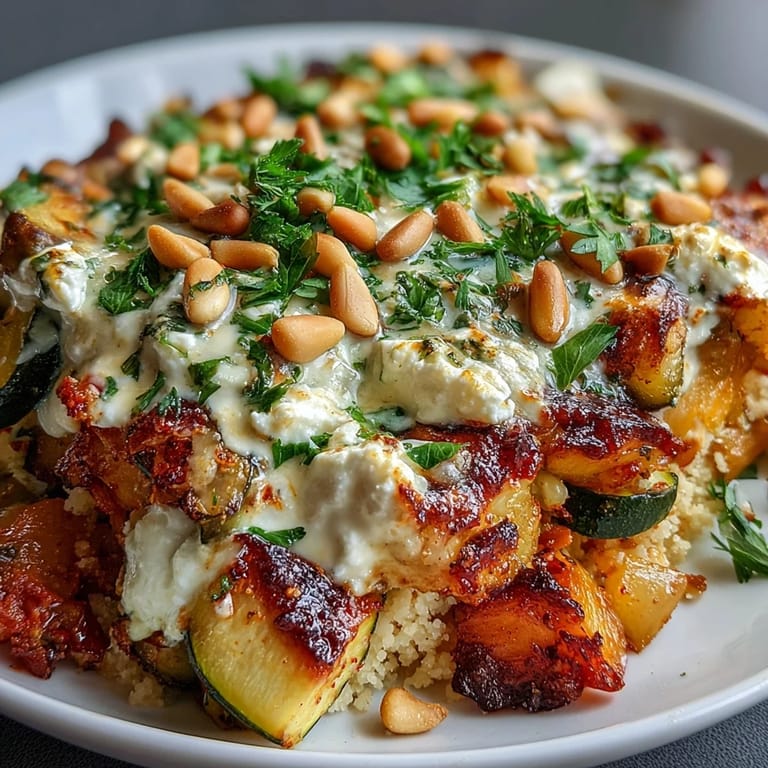
- Feta cheese: Divide it intentionally—some mixed in keeps the couscous creamy, the rest on top gets that golden, slightly crispy edge.
- Pine nuts and chili flakes: Optional but worth it; they add texture and a subtle heat that makes the whole dish feel finished.
Tired of Takeout? 🥡
Get 10 meals you can make faster than delivery arrives. Seriously.
One email. No spam. Unsubscribe anytime.
Instructions
- Heat your oven and prep the vegetables:
- Set the oven to 220°C (425°F) and while it preheats, cut your vegetables into roughly the same size so they roast evenly. You want them to have room to caramelize, not steam, so use a large baking tray.
- Roast until golden:
- Toss everything with olive oil, oregano, salt, and pepper, spread it out, and roast for 20–25 minutes, stirring halfway through. You're looking for the edges to turn golden and the vegetables to soften enough that a fork goes through easily.
- Prepare the couscous:
- While the vegetables roast, place couscous in a heatproof bowl and pour boiling vegetable broth over it, add the olive oil, cover tightly, and wait exactly 5 minutes. This isn't a suggestion; it's how couscous gets fluffy instead of gummy.
- Fluff and flavor:
- After 5 minutes, uncover and fluff with a fork, breaking up any clumps. Stir in the lemon zest and fresh parsley while everything's still warm so the flavors bloom.
- Lower the oven and combine:
- Drop the temperature to 190°C (375°F). In a large bowl, gently combine the roasted vegetables with the fluffed couscous and about half the crumbled feta, mixing just until everything is distributed—don't overstir or the vegetables will break down.
- Transfer and top:
- Spread the mixture into a lightly greased baking dish and top with the remaining feta, pine nuts, and chili flakes if you're using them. The feta will look sparse, but it spreads as it melts.
- Bake until bubbly:
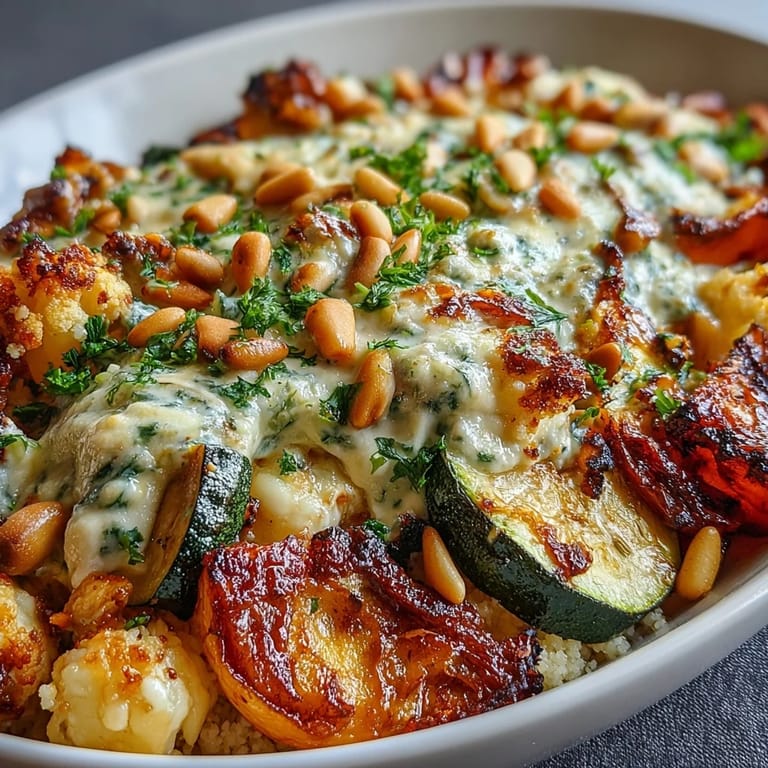
- Bake for 12–15 minutes until the feta turns golden and you see bubbling around the edges. Don't skip this step even though the dish is technically already cooked—this is where the magic happens.
- Rest and serve:
- Let it sit for a minute or two before serving so it holds together better. A final scatter of fresh parsley makes it look like something from a magazine.
 Pin
Pin There was a moment last winter when I served this to my grandmother, who's been cooking Mediterranean food her whole life, and she asked for the recipe with a look of genuine surprise. That's when I understood this dish had moved beyond just being convenient—it had become something I was genuinely proud to put on a table. It's one of those rare recipes that works as a side dish with grilled fish, as a vegetarian main, or as leftovers you're actually excited to reheat.
Why This Works as Vegetarian Comfort Food
The secret is that this dish doesn't try to replicate anything—it's entirely itself. The roasted vegetables are the star, the couscous is the supporting actor that makes it feel substantial, and the feta is the warm, creamy finish that ties it all together. When you're cooking vegetarian, that clarity of purpose matters because you're not hiding behind meat; you're celebrating what's actually in the bowl.
Customizing Based on What You Have
I've made this with cherry tomatoes instead of bell peppers, with spinach mixed into the couscous, with halloumi instead of feta when someone wanted something grilled. The framework stays solid because the roasting temperature, the couscous-to-liquid ratio, and the baking time are what matters. Everything else bends to what you have in your kitchen or what you're craving that day.
Serving and Storage Wisdom
This dish is wonderful fresh from the oven, but it's equally good at room temperature the next day, which makes it ideal for meal prep or bringing to a potluck. The flavors actually deepen overnight as everything sits together, and I've found it reheats beautifully in a 160°C oven for about 10 minutes if you want it warm again.
- Leftovers keep for up to three days in an airtight container in the fridge, and the feta stays creamy even when cold.
- If you're serving it at a picnic or lunch box, let it cool to room temperature first so the texture is better.
- Pair it with a simple green salad and crusty bread if you're making it the main event, or serve alongside grilled fish or chicken for something lighter.
 Pin
Pin This is the kind of recipe that grows on you, the one you end up making more often than you planned because it's approachable but never boring. I hope it becomes one of your reliable go-to dishes too.