 Pin
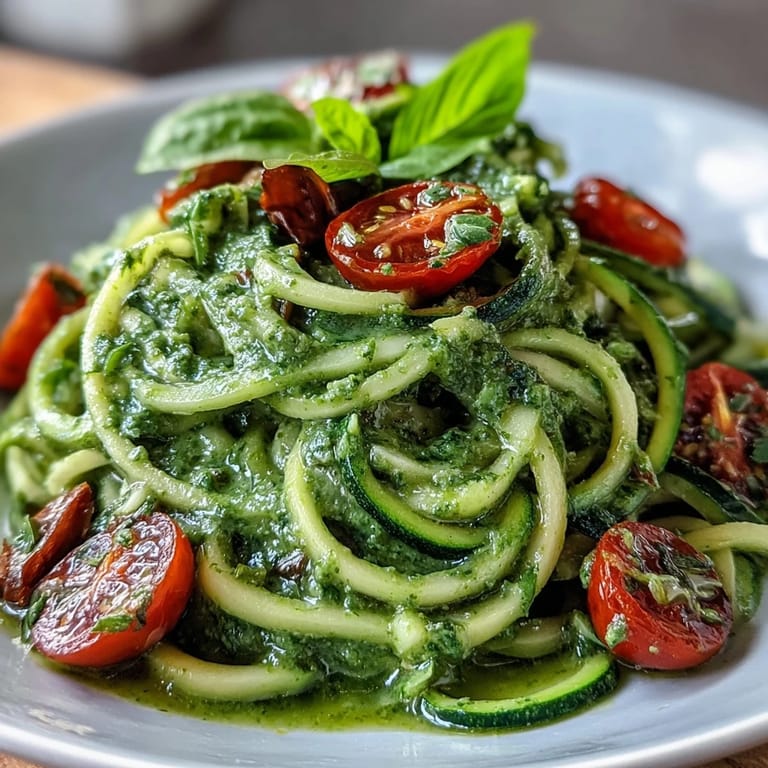
Pin Last summer, I was standing in my kitchen on one of those unbearably hot afternoons, staring at a bunch of zucchini that had practically multiplied overnight in my garden. My friend Maya was visiting, and she mentioned she'd gone vegan, so I couldn't exactly serve her my usual pasta. That's when I remembered a jar of pumpkin seeds sitting in my pantry, left over from some autumn baking project, and something just clicked. Within minutes, we were blending them with basil and garlic, and the smell that came from the food processor was so unexpectedly green and nutty that we both just stood there inhaling it like we'd discovered something secret. Turns out, spiralizing zucchini with a vibrant, creamy pesto made from seeds instead of cheese wasn't just a workaround for her dietary needs, it became something we both craved.
I made this for a small potluck on a Friday evening where half the guests had some dietary restriction or another, and I was nervous it would feel like compromise food. Instead, people kept coming back for seconds, asking what was in the pesto with such genuine curiosity that I ended up writing down the recipe on the back of a napkin. One woman told me it tasted like summer in a bowl, which honestly made my whole week.
Ingredients
- Raw pumpkin seeds (1 cup): These are your anchor, delivering an earthy nuttiness and a dose of protein that makes this feel like a real meal, not just vegetables. Buy them raw and unsalted so you control the flavor completely.
- Fresh basil leaves (2 cups, packed): The fresher the better, because basil is what transforms this from simple to special. If your basil is looking tired, don't use it, because it'll taste tired too.
- Garlic (2 cloves): Use fresh garlic that you peel yourself, not the pre-minced stuff. The difference in brightness is honestly shocking.
- Extra-virgin olive oil (1/3 cup): This carries all the flavor forward, so spend the extra dollar on oil you'd actually want to drizzle on bread.
- Lemon juice (2 tbsp): Squeeze it fresh from half a lemon just before making the pesto, because bottled lemon juice has a flat, almost metallic taste that dims everything around it.
- Nutritional yeast (2 tbsp): This gives umami depth and a subtle cheesy note without any dairy. It's not a substitute for cheese, it's its own thing entirely.
- Sea salt and black pepper: Start with what the recipe says, then taste and adjust because your salt and pepper might behave differently than mine.
- Water (2-4 tbsp): Add this gradually while pulsing, because once you overshoot the consistency, there's no going back.
- Medium zucchini (4, spiralized): Pick zucchini that feel firm and not too bulbous at the ends, and spiralize them as close to serving time as possible so they don't weep liquid into your bowl.
- Cherry tomatoes and fresh basil for garnish: These aren't just decoration, they're reminders that you made something intentional and thoughtful.
Tired of Takeout? 🥡
Get 10 meals you can make faster than delivery arrives. Seriously.
One email. No spam. Unsubscribe anytime.
Instructions
- Build your pesto in stages:
- Throw your pumpkin seeds, basil, garlic, olive oil, lemon juice, nutritional yeast, salt, and pepper into the food processor and pulse until it looks like a thick, coarse paste with actual texture to it. Start pulsing the water in one tablespoon at a time, and stop before you think you're done, because the pesto will continue to break down slightly as you work with it.
- Spiralize your zucchini:
- Use a spiralizer or a julienne peeler to transform your zucchini into noodles. If you're feeling fancy, you can do this hours ahead, but honestly, the closer to serving time the better.
- Choose your temperature:
- For raw noodles, pat them completely dry with paper towels and transfer to a bowl, because excess moisture is the enemy here. If you prefer them warm, heat a tablespoon of olive oil in a large skillet over medium heat, add your noodles, and sauté just until they're warmed through and slightly softened, about two to three minutes total.
- Bring it all together:
- Toss your zucchini noodles with the pesto until every strand is coated with that gorgeous green, and do this gently because zucchini noodles break easily and you want them to stay intact. Serve immediately while everything is still bright and fresh.
 Pin
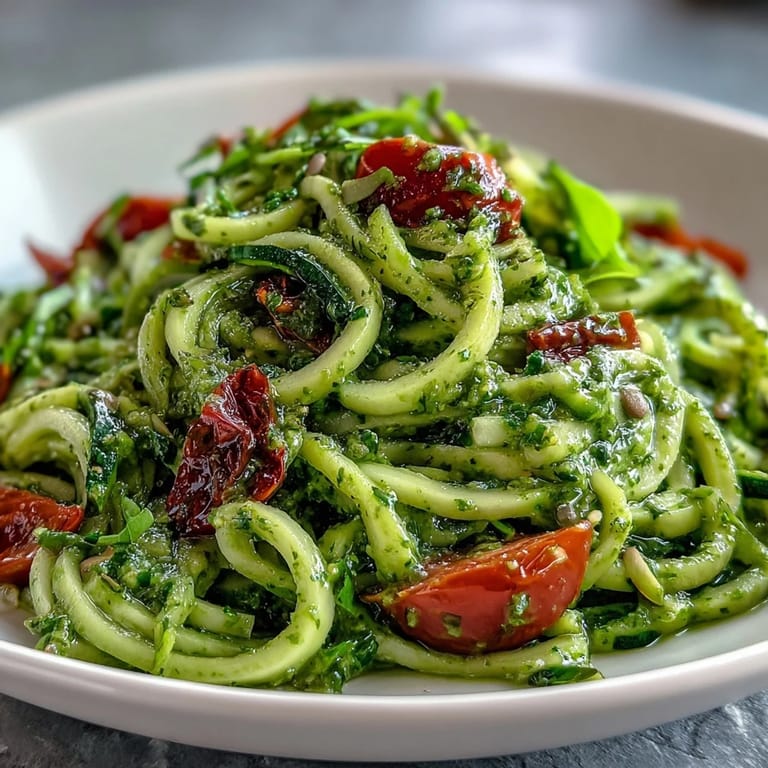
Pin There's something about serving a plate of zucchini noodles draped in green pesto to someone who's been thinking they'd have to settle for salad that transforms both the meal and the moment. It stopped being about accommodation and started being about abundance.
When to Go Raw Versus Warm
Raw zucchini noodles stay crisp and bright, almost snappy between your teeth, which is stunning in the summer when heat is the last thing you want radiating from your plate. Warm noodles, even just slightly warmed, have a silkier texture and feel more like comfort food, which matters when the weather turns or you're eating this as dinner rather than lunch. I've found that my mood and the time of year dictate which version I make, and honestly, both are equally good reasons to spin up this dish.
Variations That Actually Work
I've swapped the pumpkin seeds for sunflower seeds on days when I didn't have pepitas, and the pesto becomes slightly lighter and more delicate, which is beautiful in its own way. Adding half an avocado to the pesto creates something almost creamy without needing any dairy, and I found that adding it directly to the food processor rather than blending it separately keeps the texture more cohesive and less separated. Chickpeas stirred in at the end add protein and substance if you're feeding someone who needs more calories, and white beans work beautifully if you want something that disappears into the sauce rather than announces itself.
- Try adding a handful of spinach or arugula to the pesto for extra greens and a whisper of peppery edge.
- Toast your pumpkin seeds before using them if you want deeper, more concentrated flavor.
- A pinch of red pepper flakes in the pesto adds a gentle heat that wakes up everything around it.
 Pin
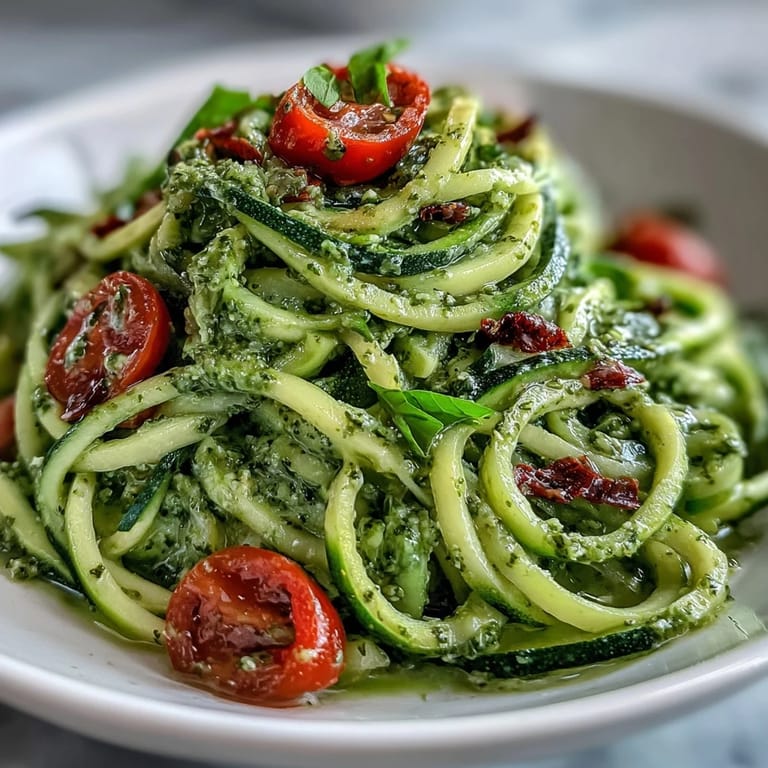
Pin This dish became my answer to the question of what to cook when you want something that feels special but takes no time, that nourishes you without weighing you down. Make it once and it'll become yours too.
Recipe Q&A
- → Can I make the pesto ahead of time?
Yes, prepare the pesto up to 5 days in advance and store in an airtight container in the refrigerator. The flavors actually develop and intensify over time.
- → What can I substitute for pumpkin seeds?
Sunflower seeds, walnuts, or cashews work beautifully as alternatives. Each brings a slightly different flavor profile while maintaining that creamy, nutty texture.
- → How do I prevent zucchini noodles from becoming watery?
Pat spiralized zucchini dry with paper towels before tossing with pesto. For best results, lightly salt the noodles and let them sit for 10 minutes, then drain excess liquid.
- → Is this dish suitable for meal prep?
Absolutely. Store the pesto and zucchini noodles separately in the refrigerator. Combine just before serving to maintain optimal texture and prevent sogginess.
- → Can I cook the zucchini noodles?
Yes. Sauté in olive oil over medium heat for 2–3 minutes until just tender. Avoid overcooking as they'll release excess water and become mushy rather than al dente.
- → What adds protein to this dish?
Pumpkin seeds provide 11g protein per serving. For more, toss in cooked chickpeas, white beans, or serve alongside grilled tofu or tempeh.