 Pin
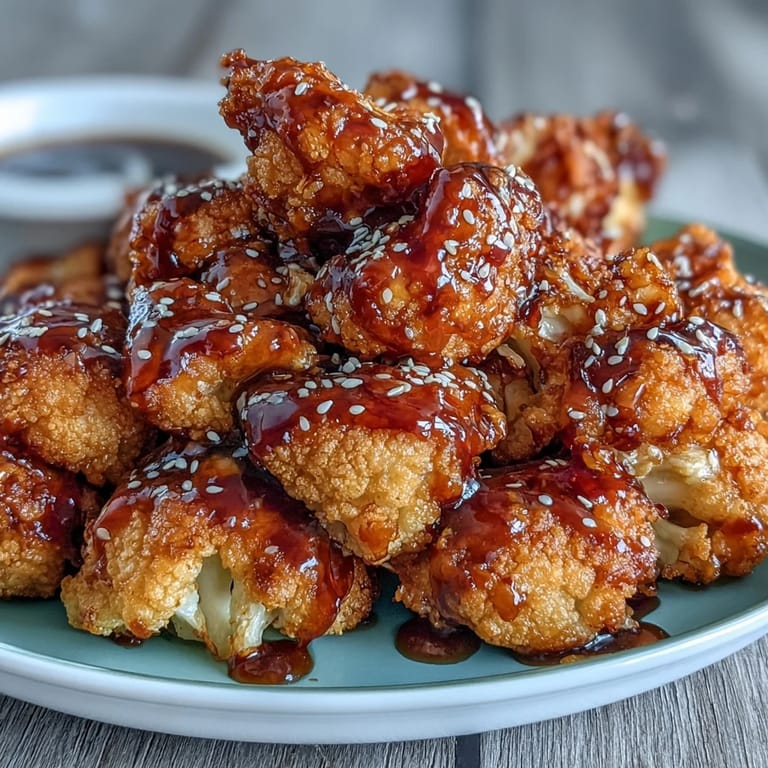
Pin My air fryer changed everything the night I stopped trying to deep fry at home and started experimenting with vegetables instead. A friend brought over a container of takeout General Tso's chicken, and I found myself wondering if I could capture that same sticky-sweet heat with cauliflower—something lighter, less messy, but just as craveable. Twenty minutes later, golden florets emerged from my air fryer basket, and I tossed them in a sauce that tasted like restaurant quality without the oil splatters all over my stovetop.
I made this for a small dinner party last month when someone mentioned they were trying to eat less meat, and I watched the skeptics become converts the moment they tasted it. One guest went back for thirds and asked if I'd consider catering her book club meetings—all because crispy cauliflower surprised everyone that night.
Ingredients
- Cauliflower: One large head cut into bite-sized florets works best; they cook evenly and create that perfect sauce-to-vegetable ratio.
- All-purpose flour: Use 2/3 cup as your batter base for structure and crispiness.
- Cornstarch: 1/3 cup adds extra crunch and keeps the coating from getting soggy.
- Baking powder: 1 teaspoon leavens the batter, creating those delicate crispy edges.
- Salt: 1/2 teaspoon seasons the coating; don't skip this.
- Garlic powder: 1/2 teaspoon builds umami into the batter itself.
- Ground white pepper: 1/2 teaspoon adds subtle heat without visible speckles.
- Cold water: 3/4 cup creates a smooth, clingy batter—use it straight from the tap.
- Low-sodium soy sauce: 1/3 cup gives you control over saltiness since you'll adjust other seasonings.
- Rice vinegar: 1/4 cup brightens the sauce with gentle acidity.
- Sugar: 1/3 cup balances heat and tang—this is what makes it addictive.
- Hoisin sauce: 2 tablespoons adds depth and that restaurant-quality complexity.
- Cornstarch slurry: 1 tablespoon mixed with 1/2 cup water thickens the sauce to coat the florets properly.
- Garlic: 2 cloves minced bring fresh bite when raw, then mellow as they cook.
- Fresh ginger: 1 teaspoon grated wakes up the whole sauce with warmth and slight heat.
- Chili garlic sauce: 1–2 teaspoons adjusts your heat level, so taste and go easy if you're sensitive to spice.
- Toasted sesame oil: 1 tablespoon added at the end—never cook with it, just finish with it.
- Scallions: 2 sliced thin add freshness and a sharp onion note at the end.
- Toasted sesame seeds: 1 teaspoon scattered over top gives you texture and nutty aroma.
Tired of Takeout? 🥡
Get 10 meals you can make faster than delivery arrives. Seriously.
One email. No spam. Unsubscribe anytime.
Instructions
- Heat your air fryer:
- Set it to 400°F (200°C) and let it preheat for a few minutes—this matters more than you'd think for even cooking.
- Mix the batter:
- In a large bowl, whisk together flour, cornstarch, baking powder, salt, garlic powder, and white pepper until combined. Pour in cold water and whisk until you have a smooth batter with no lumps—think pancake batter consistency.
- Coat the cauliflower:
- Toss your florets in the batter, working in batches if needed, until each piece is fully covered with a thin, clingy coating. Don't skip any nooks and crannies.
- Prepare the air fryer basket:
- Give it a light spray of oil, then arrange the battered florets in a single layer without crowding. Work in batches if your basket feels tight—they need space for air to circulate.
- Air fry until golden:
- Cook for 15–18 minutes, stopping halfway through to shake the basket gently so they crisp evenly. They're done when they're deep golden brown and you can hear them rattle slightly.
- Make the sauce while they cook:
- In a small bowl, mix cornstarch with 1/2 cup water until smooth with no lumps—this prevents clumping when you add it to the hot sauce.
- Build the sauce:
- In a saucepan over medium heat, combine soy sauce, rice vinegar, sugar, hoisin sauce, minced garlic, ginger, and chili garlic sauce. Let it come to a gentle simmer and watch as the sugar dissolves completely.
- Thicken the sauce:
- Stir in your cornstarch slurry slowly while whisking constantly, and you'll feel it transform from thin to glossy and coat-friendly in about 1–2 minutes. Remove from heat immediately.
- Finish with sesame oil:
- Stir in the toasted sesame oil last—never cook it, just fold it in for that signature nutty finish.
- Toss and serve:
- Transfer hot cauliflower to a large bowl, pour the sauce over it, and toss gently until every floret is shiny and coated. Scatter scallions and sesame seeds on top and serve immediately while everything's still warm.
 Pin
Pin There's something almost magical about watching someone bite into a piece of cauliflower they were skeptical about, then watching their expression shift from polite to genuinely surprised. This dish does that every time—it transforms something humble into something people actually crave.
The Secret to Crispy Cauliflower
The real trick is the cornstarch in the batter—it's not just filler, it's your golden ticket to that shattering crispness. I learned this by accident when I ran out of flour and improvised with half cornstarch out of desperation, and the result was so crackling and light that I never went back. The batter needs to be thin enough to cling but thick enough to coat, and room temperature water mixed into cold ingredients keeps everything working together smoothly.
Sauce Timing and Flavor Balance
The sauce is where patience pays off—don't rush the simmer, and definitely don't skip tasting as you go. I've made this with too much chili garlic sauce and it dominated everything, and I've made it without enough sugar and it tasted aggressive instead of balanced. The magic is when sweet, sour, spicy, and savory dance together equally, so start conservative with the heat and add more if your palate wants it.
Serving Styles and Customization
This works beautifully as a weeknight main dish over steamed rice, as an appetizer on its own, or even as a vegetable side alongside grilled proteins. I've also tossed it with noodles, served it over cauliflower rice for a lower-carb twist, and even packed it cold in lunch containers for the next day, though it's always best fresh and warm. The beauty of this recipe is how adaptable it is to what you're craving.
- For extra vegetables, steam some broccoli or bell pepper strips separately and toss them in with the cauliflower at the end.
- If gluten is an issue, swap regular flour for a gluten-free blend and use tamari instead of soy sauce.
- Leftover sauce keeps in the fridge for three days and works beautifully on roasted vegetables or rice bowls.
 Pin
Pin This is the kind of recipe that makes you feel clever for thinking it up, even though you didn't really invent anything—you just combined things in the right way. Once you've made it once, you'll find yourself craving it, and that's when you know you've found something worth keeping around.
Recipe Q&A
- → Can I make this dish gluten-free?
Yes, substitute all-purpose flour with gluten-free flour and use tamari instead of soy sauce to make the dish gluten-free without compromising flavor.
- → How do I adjust the spice level?
Modify the amount of chili garlic sauce in the sauce to increase or decrease heat according to your preference.
- → What is the best way to achieve crispy coating?
Ensure the cauliflower florets are evenly coated in the batter and air fry at the recommended temperature, shaking the basket halfway through to crisp all sides.
- → Can I use other vegetables instead of cauliflower?
Yes, steamed broccoli or bell peppers can be added or substituted to vary the vegetable mix while maintaining the dish’s flavor profile.
- → What are good serving suggestions?
Serve with steamed rice or as a flavorful appetizer, garnished with scallions and toasted sesame seeds for added texture and aroma.