 Pin
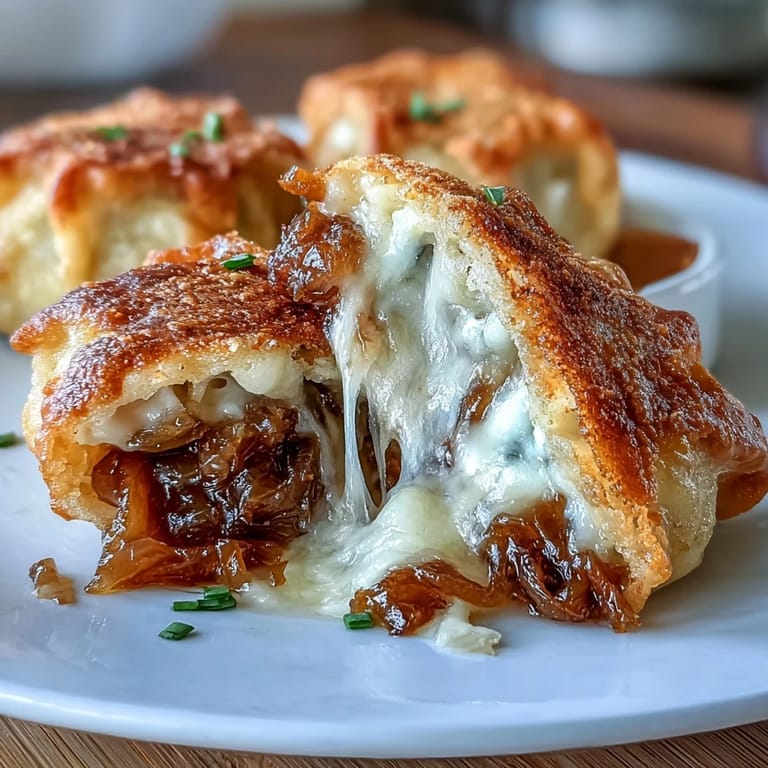
Pin Last winter, I was scrolling through my phone at a café when I stumbled on a photo of French onion soup paired with an Asian dumpling platter, and something just clicked. That night, I couldn't stop thinking about how those two worlds could collide on a single bite—the deep, honeyed sweetness of caramelized onions wrapped in a delicate, crispy skin. What started as a wild kitchen experiment became something I now make whenever I want to impress people without making them wait hours. These little parcels somehow taste both elegant and playful, like a chef's inside joke shared with everyone at the table.
I made these for my neighbor's dinner party on a whim, not entirely sure they'd work. When everyone grabbed three at once and started asking what was in them, I realized I'd stumbled onto something special—it was that hushed moment where the room quiets because the food is genuinely surprising. One guest kept coming back to the kitchen asking if I could teach her, and suddenly these dumplings felt like more than appetizers; they were conversation starters.
Ingredients
- Yellow onions (3 large, thinly sliced): The backbone of everything—their natural sugars are what create that deep caramel color, so don't skimp or rush this step.
- Unsalted butter and olive oil (2 tbsp each): Butter gives richness while oil prevents burning; using both together is non-negotiable for even caramelization.
- Salt and pepper (1/2 tsp each): Season early so the onions release moisture and concentrate their flavor as they cook down.
- Sugar (1 tsp): A tiny amount accelerates caramelization without making things taste sweet—it's about chemistry, not dessert.
- Fresh thyme (2 tsp, or 1 tsp dried): The herbaceous note that ties everything back to classic French onion soup; dried works fine if that's what you have.
- Dry sherry or white wine (2 tbsp): This adds complexity and brightness; the alcohol cooks off but the flavor lingers beautifully.
- Balsamic vinegar (1 tsp): A splash of acidity cuts through the richness and adds a subtle sweetness that rounds out the filling.
- Dumpling wrappers (24 round): Gyoza or wonton style both work; store-bought saves time and tastes just as good as homemade.
- Gruyère cheese (1 cup, finely grated): The melting star—its nutty, complex flavor is exactly why French onion soup is famous, so don't substitute lightly.
- Parmesan cheese (1/4 cup, grated): This adds a salty punch and helps the cheese brown beautifully on the outside.
- Fresh chives (2 tbsp, finely chopped): A whisper of onion flavor and a pop of color that makes these look intentional.
- Egg (1, lightly beaten): Your edible glue for sealing dumplings; a little goes a long way.
- Vegetable oil (for frying): High heat and neutral flavor mean nothing competes with your filling.
- Rich vegetable or beef broth (1/2 cup): This becomes a silky drizzle that tastes like the soul of French onion soup condensed into spoonfuls.
- Worcestershire sauce (1/2 tsp): A umami bomb that deepens the broth without announcing itself.
Tired of Takeout? 🥡
Get 10 meals you can make faster than delivery arrives. Seriously.
One email. No spam. Unsubscribe anytime.
Instructions
- Start your onion journey:
- Heat butter and oil together in a large skillet over medium heat until the mixture is shimmering and smells toasty. Add your onion slices with salt and pepper, stirring often as they soften into translucent ribbons over about ten minutes—this is when your kitchen starts to smell like something good is happening.
- Surrender to low and slow:
- Sprinkle in sugar and thyme, then lower the heat and let time do the work for fifteen to twenty minutes, stirring frequently so nothing sticks or burns. You're waiting for that magical moment when the onions turn deep golden brown and smell almost caramel-like; resist the urge to rush or crank the heat.
- Add depth and brightness:
- Pour in your sherry and balsamic vinegar, letting them sizzle and reduce for two to three minutes until the liquid nearly disappears. The mixture will smell like a French wine cellar in the best way possible.
- Cool and prepare your canvas:
- Let the caramelized onions cool completely to room temperature so they won't make your dumpling wrappers soggy when you assemble. This is a good moment to gather your other fillings and clear a clean workspace.
- Assemble with intention:
- Place each dumpling wrapper in front of you and add one generous teaspoon of onion mixture in the very center, leaving a border around the edges. Top with a small pinch of Gruyère, Parmesan, and chives—you're not overstuffing, just layering flavors.
- Seal the deal:
- Brush the edges with beaten egg and fold into a half-moon or gather the edges into a little purse shape, pleating as you go. Your hands will remember the motion after a few, and these little dumplings will start to look charmingly imperfect and handmade.
- Create the crispy bottom:
- Heat a thin layer of oil in a nonstick skillet over medium-high heat until it shimmers, then carefully place dumplings flat-side down in a single layer without crowding. Let them sear undisturbed for two to three minutes until the bottoms turn golden and crispy.
- Steam them tender:
- Pour in a quarter cup of water, immediately cover the skillet, and let steam do its magic for three to four minutes so the wrappers become tender and the filling heats through. You'll hear a gentle hiss and see moisture beading on the lid—this is exactly what you want.
- Finish with one more crisp:
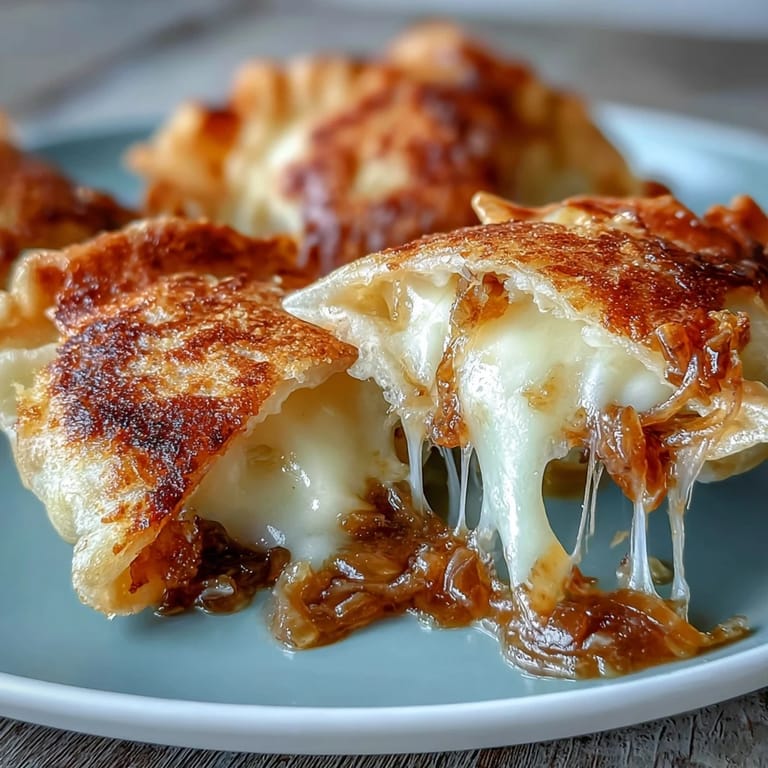
- Remove the lid and cook for one more minute to re-crisp the bottoms, creating that textural contrast that makes these dumplings so memorable. Transfer to a platter and repeat if making multiple batches.
- Craft your broth drizzle:
- In a small saucepan over medium heat, warm your broth with butter and Worcestershire sauce until the butter melts into a silky emulsion. Season with a pinch of salt and pepper, then either drizzle a small spoonful over each dumpling or serve alongside for dipping.
 Pin
Pin My friend Maya watched me make these at her kitchen counter and said they reminded her of the kind of thing she'd order at a Michelin-starred restaurant, which made me laugh because I was standing there in sweats at her stove with caramelized onions under my fingernails. But that's exactly the magic of these dumplings—they taste elaborate and restaurant-worthy, yet they're entirely within reach on a regular Tuesday night with the right ingredients and a little bit of time.
The Art of Caramelizing
Caramelization is less about temperature and more about patience and attention. The onions need constant gentle heat and occasional stirring so that their natural sugars break down evenly and turn golden without burning. I learned this the hard way the first time I tried to speed things up and ended up with blackened, bitter onions that smelled like regret. Now I use those twenty-five minutes to pour a drink, put on music, and just be present with the process—it's surprisingly meditative.
Choosing Your Cheese
Gruyère is not negotiable here because its nutty complexity is what makes French onion soup sing, but you can absolutely mix in Swiss or Emmental if Gruyère feels too expensive or hard to find. The Parmesan adds a salty sharpness that prevents the filling from tasting one-note and helps the cheese brown beautifully during the pan-fry. I once tried using only Gruyère without the Parmesan and the dumplings tasted creamy but a bit flat, so the combination really does matter more than individual measurements.
Serving and Storage Secrets
These dumplings are best served fresh and warm, but you can assemble them hours ahead and refrigerate until cooking time. You can even freeze the assembled dumplings on a tray and store them in a container for up to two weeks, cooking them directly from frozen with just an extra minute of steam time.
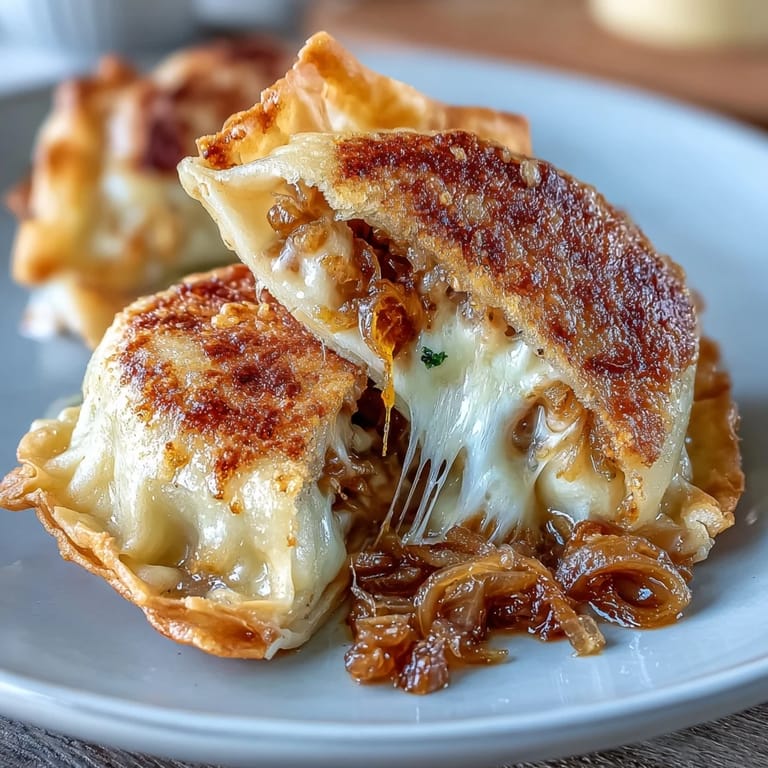
- Serve with the buttery Worcestershire broth drizzled over or on the side for dipping, and don't skip it—that drizzle is the final punch that ties everything back to the original soup.
- For extra texture and visual appeal, scatter crispy fried shallots on top just before serving, which adds a salty crunch that contrasts beautifully with the gooey cheese.
- Pair with a crisp white wine or sparkling beverage to cut through the richness and refresh your palate between bites.
 Pin
Pin These dumplings have become my secret weapon for potlucks, dinner parties, and lazy Sunday appetizers. They prove that fusion cooking doesn't have to be complicated—it's just about respecting two great traditions and letting them dance together on a plate.
Recipe Q&A
- → How do I caramelize onions properly?
Cook thinly sliced onions slowly in butter and olive oil over medium-low heat, stirring often until golden brown and sweet, about 30 minutes.
- → What cheeses work best for the filling?
Gruyère and Parmesan add creamy, nutty flavors and melt well inside the dumpling. Swiss or Emmental can be used as alternatives.
- → Can these dumplings be made vegan?
Yes, by substituting plant-based butter, vegan cheese, and an egg replacer for sealing, these dumplings become vegan-friendly.
- → How do you cook dumplings for the best texture?
Fry the dumplings in a thin layer of oil until golden, then steam briefly by adding water and covering, finishing with a quick crisp on the bottom.
- → What is the purpose of the broth drizzle?
The broth drizzle, made with butter and Worcestershire sauce, adds a rich, savory note that complements the sweet onions and crispy dumpling exterior.