 Pin
Pin I'll never forget the first time I created this centerpiece for a dinner party on a crisp autumn evening. My guests arrived as the sun was setting, and I wanted something on the table that would capture that warm, glowing feeling of gathering around a bonfire. As I arranged those vibrant orange, yellow, and red vegetables standing tall on the plate, I realized I'd created something that wasn't just beautiful to look at—it was alive with color and possibility. The moment someone reached for a carrot stick and dipped it in hummus, laughing at how it looked like they were pulling flames from the arrangement, I knew this wasn't just a centerpiece. It was edible art that brought people together.
I made this for my sister's engagement party last spring, and something magical happened. As the evening went on and people nibbled away at the arrangement, the centerpiece transformed. What started as a perfect bonfire became abstract art, then just a collection of the most colorful sticks and fruit. But that's exactly what made it perfect—it was meant to be eaten and enjoyed, not preserved untouched. By the end of the night, there were only a few carrot sticks left, and everyone was full and happy.
Ingredients
- 2 large carrots, peeled and cut into long thin sticks: These are your flames, so cut them lengthwise into the thinnest sticks you can manage. They'll be sturdier than you'd expect, and the thin profile is what makes them look like actual fire reaching upward. I always choose carrots that are straight and uniform in thickness.
- 1 yellow bell pepper, seeded and sliced into strips: Yellow is the hottest part of the flame. Cut these into long strips that mirror your carrot size. The sweetness of yellow peppers is a pleasant surprise when people taste them.
- 1 red bell pepper, seeded and sliced into strips: Red deepens the fire effect and adds another flavor note. These slightly softer than carrots, so handle them gently as you arrange them.
- 3 mandarins, peeled and segmented: These are non-negotiable for me. The natural orange glow they provide is exactly what a bonfire centerpiece needs. They're also the thing that makes people go 'oh, how clever' when they realize the whole thing is edible. Choose mandarins that separate easily into perfect segments.
- Fresh parsley or mint sprigs (for bonfire embers): These green touches around the base make the illusion complete, like ash or unburned edges. I prefer parsley for its delicate texture, but mint adds a wonderful freshness if someone decides to snack on it.
- 1 small handful pomegranate seeds (optional, for sparkle): If you can find pomegranate seeds, they're worth the effort. They catch the light like embers cooling in the night. They're optional, but they transform the piece from beautiful to unforgettable.
- 1/2 cup hummus or yogurt-based dip (for serving on the side): This isn't just for eating—it's for function. The dip gives people permission to dismantle your creation and snack. Hummus is my go-to because it's vegan and pairs perfectly with every vegetable here.
Tired of Takeout? 🥡
Get 10 meals you can make faster than delivery arrives. Seriously.
One email. No spam. Unsubscribe anytime.
Instructions
- Prep your produce with intention:
- Cut your carrots, peppers into long, clean strips. This step is about precision because what you're building is a visual moment. Take your time here—it makes everything that follows easier. I like to lay out my strips on a cutting board and assess them before I start assembling.
- Create your bonfire base:
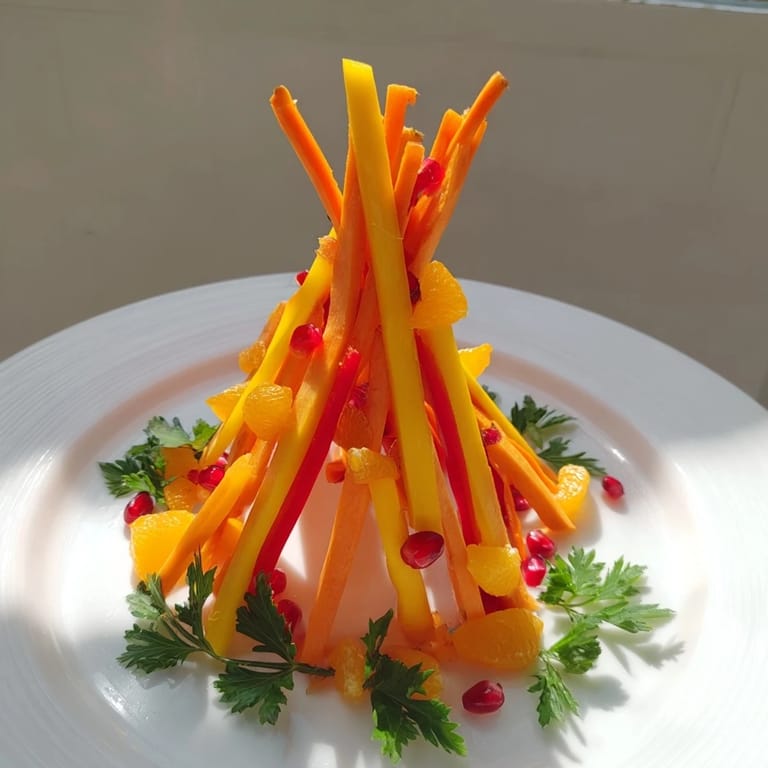
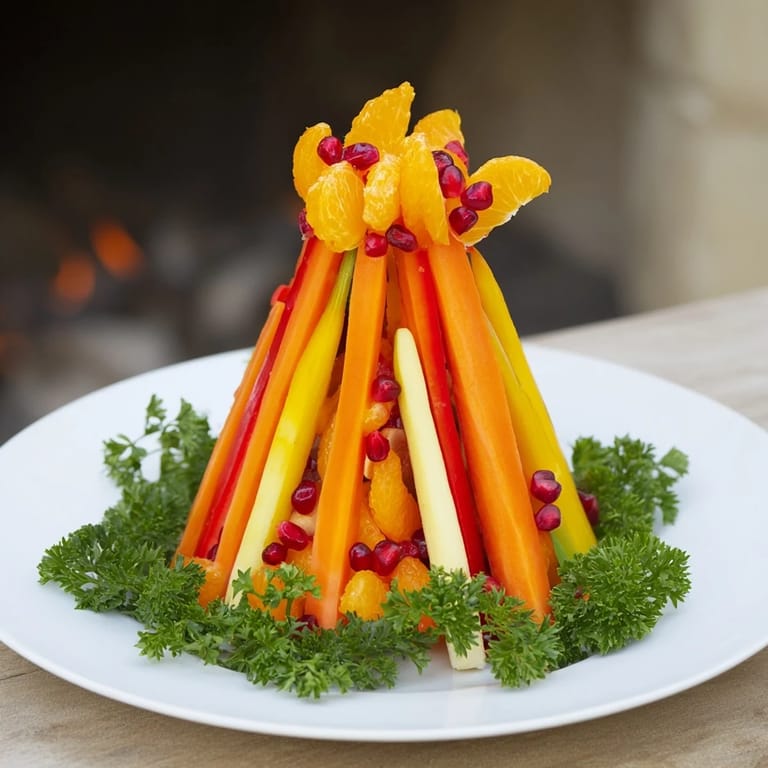
- Take those carrot sticks and stand them upright in the very center of your serving plate, leaning them against each other like you're building a teepee. They should form a loose, open cone shape. You want a little air between them, not a tight bundle. This is where the magic starts—suddenly you're looking at flames.
- Layer in the heat:
- Now tuck your yellow pepper strips in among the carrots, then weave in the red ones. Alternate colors as you go, higher and lower, so it really does look like flames flickering and dancing. Stand back every few strips and look at your work. You're looking for that moment when it stops looking like random vegetables and starts looking like fire.
- Add the glow:
- Arrange your mandarin segments at various heights around the structure and tucked in at the base. These warm orange tones are what make someone pause and really look at what you've created. Scatter them thoughtfully, almost like they're peeking out from between the flames.
- Finish with ash and ember:
- Tuck your parsley or mint sprigs around the base and edges, creating the impression of scattered ash or unburned growth around a fire ring. This is the detail that makes it feel complete and intentional rather than random.
- Crown it with sparkle:
- If you're using pomegranate seeds, scatter them across the whole arrangement now. They catch light beautifully and add one more element of visual interest. If you're not using them, that's fine—the centerpiece is already stunning.
- Set up your dip:
- Place a small bowl of hummus or yogurt-based dip nearby but not touching the centerpiece. This is your silent invitation for people to eat what they're admiring.
 Pin
Pin What moved me most about this centerpiece came during a holiday gathering when my five-year-old nephew stared at it for a solid minute and then asked, 'Did you catch actual fire and put it on this plate?' Watching his face light up when I explained that you could eat it, then watching him carefully pull out a carrot stick like he was defusing a bomb—that's when I understood that food doesn't have to be complicated to be memorable. It just has to spark joy.
The Art of Edible Arrangements
There's something deeply satisfying about creating something that's simultaneously a decoration and a snack. This arrangement taught me that the best party food is the food your guests want to interact with. They'll naturally gather around it, pick at it, and the conversation will flow around what you've created. It's the opposite of a stiff, untouchable centerpiece. Every element here was chosen because it's delicious on its own, so whether someone decides to eat the whole thing or just admire it, they're having the experience you intended.
Color Theory in Your Kitchen
I've learned that when you're working with vegetables, the colors aren't just pretty—they tell you about nutrients and flavors. Orange means beta-carotene and sweetness. Yellow brings brightness and mild pepper flavor. Red adds depth and slight sweetness. Putting them together isn't just visually interesting; you're creating a complete flavor profile that tells a story of warmth and gathering. This is why the specific vegetables matter. You could theoretically use other things to build a tall arrangement, but these particular vegetables create a specific emotional response that's almost universal.
Making It Your Own
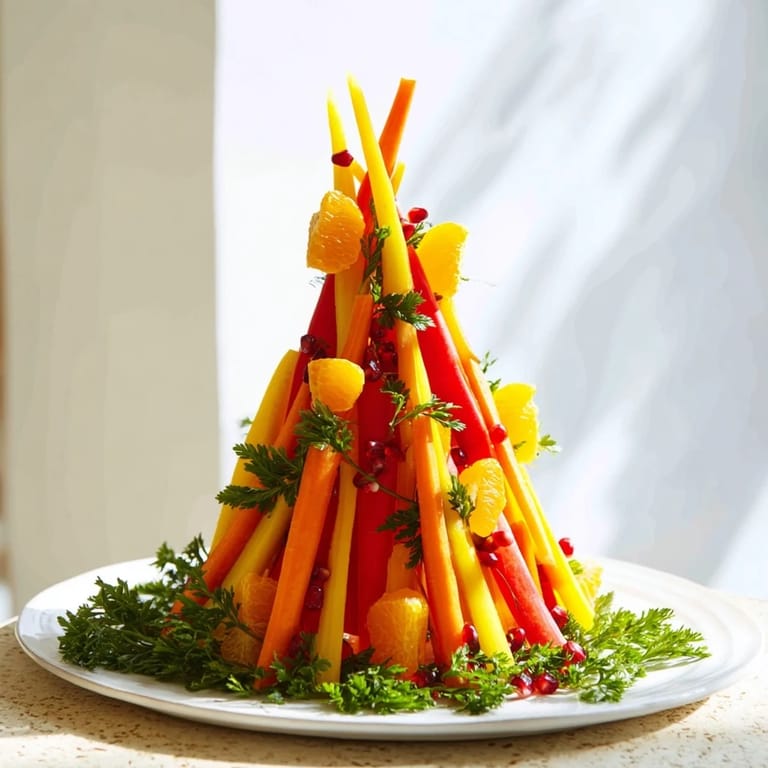
The foundation of this centerpiece is solid, but it's also a canvas for your own creativity. I've added thin slices of golden beet for extra earthiness, or strips of yellow carrot for double the golden effect. The principle is the same: warm colors that mimic flame, stacked vertically for drama. The beauty of this is that you can make it feel fresh and personal every single time you create it. Pay attention to what produce looks best at your market on the day you're making this, and build your bonfire around what's calling to you.
- Golden beets or yellow carrots can replace some of your other vegetables for a deeper, earthier color palette.
- Add thin apple slices for a slightly sweet surprise, or sliced pears if you want something more delicate.
- Fresh citrus slices other than mandarin work beautifully too—thin blood orange slices are especially striking.
 Pin
Pin Every time I set this on a table, I'm reminded that some of the most meaningful moments in the kitchen aren't about hours of cooking or complex techniques. They're about taking the time to make something beautiful and then watching people enjoy it. This centerpiece does exactly that.
Recipe Q&A
- → How do I achieve the flame-like appearance?
Cut carrots and bell peppers into long, thin strips and arrange vertically, layering colors to mimic flickering flames.
- → Can I add other produce for more color?
Yes, thin strips of golden beet or yellow carrot can enhance the warm color palette and add interest.
- → What herbs work best to resemble embers?
Fresh parsley or mint sprigs scattered around the base create an organic 'ember' effect with their vibrant green tones.
- → Is there a recommended dip to serve alongside?
Hummus or a yogurt-based dip complements the produce well and provides a creamy contrast for dipping.
- → How should this centerpiece be presented?
Arrange the produce on a large, flat, round serving plate for optimal visual impact and easy access during gatherings.