 Pin
Pin There's something about the first warm day of spring that makes you want to open all the windows and cook something green. I was standing at the farmers market with a bag of impossibly bright courgettes when a vendor mentioned she'd been making this pesto soup all week, and I watched her eyes light up describing it. That afternoon, my kitchen smelled like basil and summer promise, and I realized I'd found the soup I'd been craving without quite knowing it.
I made this for my neighbor last April when she'd just moved in, and we sat on her unfurnished kitchen floor eating it straight from mugs because her dishes hadn't arrived yet. She texted me weeks later asking if I could write down the recipe, which told me everything about how comforting this soup truly is.
Ingredients
- Courgettes (2 medium, diced): These are the backbone of the soup, but don't peel them—the skin adds color and nutrients that make each spoonful feel special.
- Onion (1 medium, chopped): It's the quiet foundation that deepens the flavor without announcing itself.
- Garlic cloves (2, minced): Fresh garlic makes all the difference; jarred can leave a harsh aftertaste that overshadows the delicate vegetables.
- Frozen or fresh peas (200 g): Frozen peas are actually perfect here—they're picked at peak ripeness and bring natural sweetness that fresh can't always match.
- Potato (1 medium, peeled and diced): This adds body and creaminess without needing actual cream, which I learned by happy accident.
- Vegetable stock (1 liter): Use stock you'd actually drink; weak stock makes weak soup, and this dish deserves better.
- Olive oil (2 tbsp): Good quality oil matters here since you taste it directly—don't use the bottle you've had open since last year.
- Salt and black pepper (½ tsp and ¼ tsp): Taste as you go because every stock and pesto brand seasons differently.
- Basil pesto (4 tbsp): Store-bought works beautifully, but if you have fresh basil and five minutes, homemade changes everything.
- Fresh basil leaves and crusty bread (optional): These finish the dish with texture and help you soak up every last drop.
Tired of Takeout? 🥡
Get 10 meals you can make faster than delivery arrives. Seriously.
One email. No spam. Unsubscribe anytime.
Instructions
- Warm your aromatics:
- Heat the olive oil over medium heat and add the chopped onion and minced garlic, letting them soften for 3 to 4 minutes until they're pale and fragrant but haven't taken on any color. You'll know it's right when your kitchen smells like something good is about to happen.
- Build the vegetable base:
- Stir in the diced potato and courgette, cooking for another 3 minutes so they start releasing their flavors into the oil. This step feels short, but it matters—you're creating the foundation of the soup's taste.
- Simmer until tender:
- Pour in the vegetable stock and bring everything to a boil, then turn the heat down and let it bubble gently for 15 minutes until the potato is so soft it almost falls apart when you touch it with a spoon. This is the time to step away, pour yourself something warm, and let the kitchen work its magic.
- Add the bright notes:
- Toss in the peas and let them simmer for 5 more minutes, just until heated through and their color deepens slightly. Don't skip this step or the peas get mushy—timing is gentle here.
- Blend until silky:
- Remove from heat and use an immersion blender to puree everything until smooth, or carefully transfer to a countertop blender in batches and blend until you reach the texture you want. I prefer it completely smooth, but if you like a bit of texture, pulse it a few times instead.
- Finish with pesto:
- Stir in 3 tablespoons of pesto and season with salt and pepper, tasting as you go because this final seasoning is what makes it sing. The soup should taste fresh and bright, not heavy.
- Serve and celebrate:
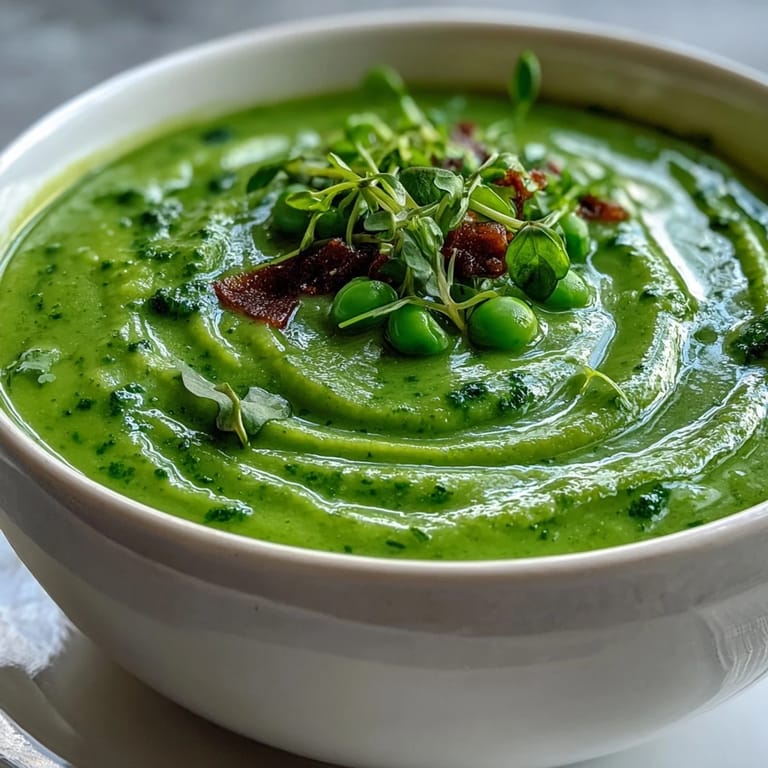
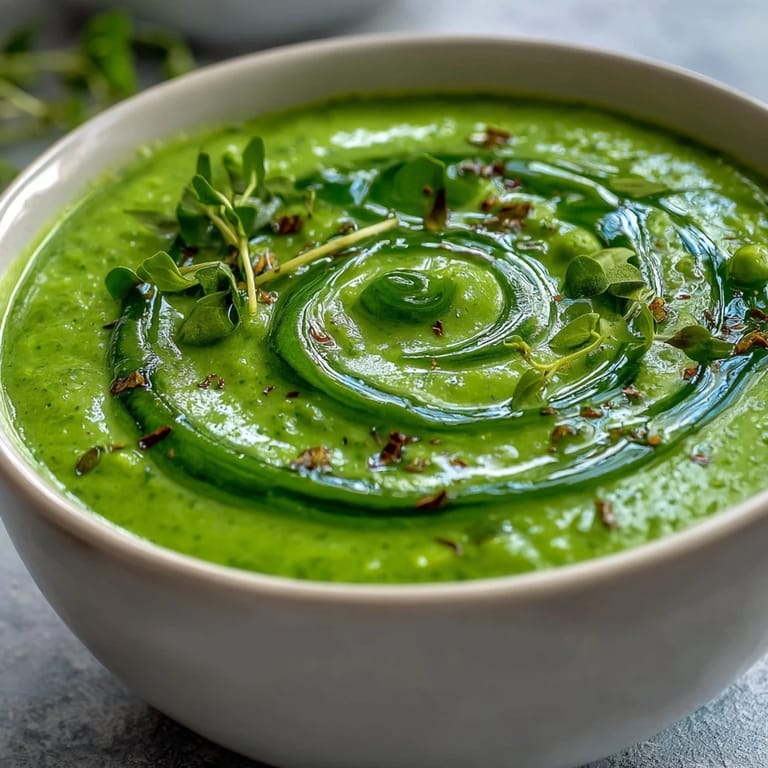
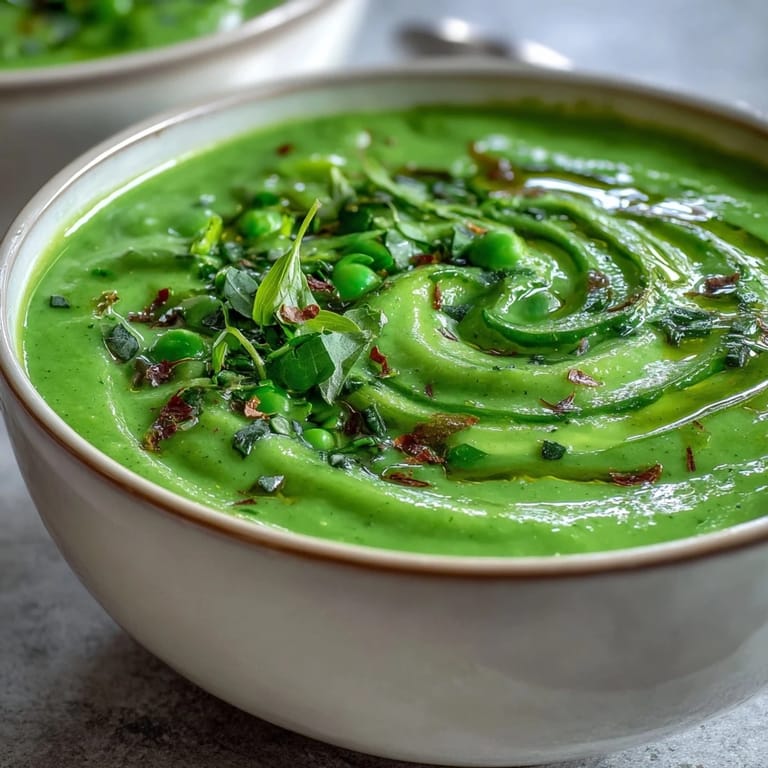
- Ladle into bowls, swirl a touch of the remaining pesto across the top, scatter fresh basil if you have it, and serve with crusty bread if the mood strikes. This moment—when you take that first spoonful—is why you made it.
 Pin
Pin Years ago, I made a version of this soup for someone going through a rough time, and they told me later it was the first meal that felt like someone understood what they needed. That's when I understood that good food is just paying attention to someone else—really paying attention—and trying to make their day a little softer.
The Magic of Pesto in Soup
Pesto is a finishing move, not a starting ingredient, and this soup taught me that lesson better than anything else. When you blend it into a hot soup right away, it loses its brightness and turns into something dull and muddy, but when you stir it in after the heat stops and swirl it as a topping, the basil stays itself—wild and alive and impossible to ignore. I learned this by making the mistake once, and I've never forgotten it.
Adapting This Soup for Every Season
Spring and summer are this soup's home, but it's more flexible than it seems. In cooler months, you can add a splash of cream or coconut milk to make it richer and more soothing when you need that comfort. In summer, chill it completely and serve it cold with an extra pesto swirl—it becomes a completely different experience, lighter and more refreshing, perfect for when it's too hot to want a warm bowl.
Variations That Feel Like New Discoveries
The beauty of this soup is that it's a starting point, not an endpoint, and I've found myself tinkering with it each time I make it. Swap the peas for broad beans if they're in season, add a handful of spinach in the last minute for extra green, or stir in some fresh dill instead of basil pesto if you're feeling adventurous. The core—the courgettes, the potato, the stock, the blending—stays the same, but the details belong to you.
- Broad beans, spinach, or even tender kale can replace or complement the peas depending on what's calling to you.
- A squeeze of fresh lemon juice at the end adds brightness that makes people ask what your secret is.
- Toast some pumpkin seeds or breadcrumbs to scatter on top if you want texture and a little ceremony with each bite.
 Pin
Pin This soup is proof that simple ingredients, when treated with care and attention, become something that nourishes both body and spirit. Make it when you need something good, and watch how it brings people closer to the table.
Recipe Q&A
- → Can I make this soup ahead of time?
Yes, this soup keeps well in the refrigerator for up to 3 days. The flavors often improve overnight. Reheat gently on the stove, adding a splash of water or stock if needed to adjust consistency.
- → Is this soup suitable for freezing?
Absolutely. Cool completely before transferring to airtight containers. Freeze for up to 3 months. Thaw overnight in the refrigerator and reheat thoroughly. Note that pesto is best added fresh after reheating.
- → Can I use frozen courgette instead of fresh?
Frozen courgette tends to become quite soft when cooked and blended, which can affect the texture. For best results, use fresh courgette. If using frozen, you may need to reduce the simmering time slightly.
- → What can I serve with this soup?
Crusty bread is ideal for dipping. Grilled cheese sandwiches, garlic bread, or a simple green salad complement the light flavors well. For a more substantial meal, serve with quiche or savory tartlets.
- → How can I make this soup vegan?
Simply use a vegan pesto (either store-bought or homemade with nutritional yeast instead of Parmesan). Ensure your vegetable stock is vegan-friendly. Omit optional cream or use coconut milk for extra richness.
- → Can I use different herbs in the pesto?
While basil is traditional, you can experiment with other herbs like parsley, coriander, or even spinach blended with nuts and olive oil. This will change the flavor profile while maintaining the soup's vibrant character.