 Pin
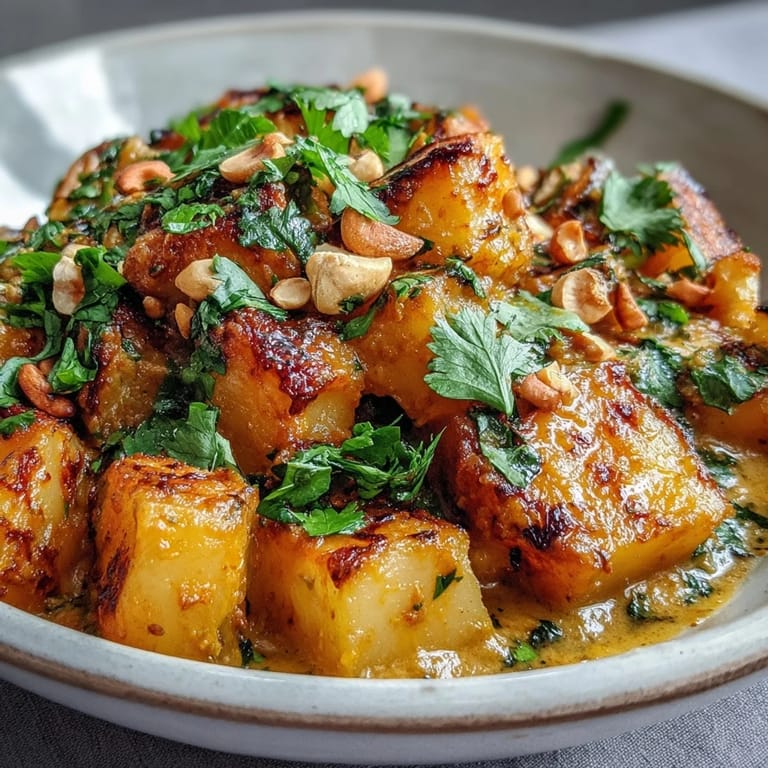
Pin My first encounter with celeriac was at a farmer's market on a crisp autumn morning, where a vendor described it as the celery root that tastes nutty when roasted. I picked one up skeptically, then spent weeks wondering what to do with this knobbly thing sitting in my crisper. One rainy afternoon, I decided to roast it with olive oil and discovered something magical—golden edges and a creamy interior that felt luxurious. That led me to toss it into a fragrant curry sauce, and suddenly this humble root vegetable became the centerpiece of a meal that impressed everyone at my table.
I made this dish for my partner on a November evening when they were feeling under the weather, and watching their face light up at the first spoonful reminded me that comfort food is really about showing someone you care through flavor and warmth. The creamy sauce wrapped around those golden chunks felt like an edible hug, and honestly, it became a regular request ever since.
Ingredients
- Celeriac (800 g), peeled and cubed: This root vegetable is your star player—nutty and buttery once roasted, it soaks up the curry sauce like nobody's business.
- Onion and garlic: The aromatic foundation that builds flavor depth; I always chop the onion finely so it melts into the sauce.
- Fresh ginger: A thumb-sized piece grated brings warmth and brightness that lifts the entire dish.
- Curry powder, cumin, and turmeric: Toast these together briefly to wake up their essential oils and deepen their presence in the finished dish.
- Coconut milk and vegetable stock: Together they create a silky sauce that's neither too thin nor too heavy, letting the spices shine through.
- Olive oil: Use good quality oil for roasting since it becomes part of the flavor profile.
- Cilantro, toasted nuts, and lime: These garnishes aren't extras—they're the final notes that make your palate dance at the end.
Tired of Takeout? 🥡
Get 10 meals you can make faster than delivery arrives. Seriously.
One email. No spam. Unsubscribe anytime.
Instructions
- Get your oven ready:
- Preheat to 200°C (400°F) so it's genuinely hot when your celeriac goes in.
- Roast the celeriac until golden:
- Toss your cubes with 2 tbsp olive oil, salt, and pepper on a baking sheet, then roast for 25–30 minutes, stirring halfway through. You're looking for golden edges and tender insides that feel creamy when you bite into them.
- Build your spice base:
- While the celeriac cooks, heat 1 tbsp olive oil in a large pan and sauté your chopped onion for 5 minutes until it turns translucent and soft. Add minced garlic and grated ginger, cooking just until fragrant—about 1 minute—so you don't burn them.
- Toast your spices:
- Stir in the curry powder, cumin, turmeric, and chili flakes, cooking for a minute to release their aromas and deepen their flavor. This is when your kitchen starts smelling incredible.
- Create the sauce:
- Pour in the coconut milk and vegetable stock, bringing everything to a gentle simmer where tiny bubbles rise slowly to the surface. Don't let it boil hard or the coconut milk can separate.
- Bring it all together:
- Add your roasted celeriac to the pan and simmer uncovered for 8–10 minutes, letting the sauce reduce slightly and the flavors meld into something cohesive. Give it a stir occasionally and watch it transform.
- Taste and adjust:
- Sample a spoonful and add more salt, pepper, or spice to match your preference—this is your moment to make it yours.
 Pin
Pin There was this moment when my mum tried it and asked if I'd made it from a restaurant recipe, and the pride I felt—not because she thought I couldn't cook, but because the flavors came together so seamlessly—made me realize this dish had become something I'd make again and again. It's now one of those recipes that feels like my own, even though it started as an experiment.
Making It Your Own
The beauty of this curry is how forgiving it is with substitutions and personal touches. If celeriac feels intimidating, parsnip or sweet potato work beautifully and cook in similar times, though sweet potato will add a bit of natural sweetness to the sauce. I've also added cooked chickpeas for extra protein and heartiness, which transforms it into a more filling vegetarian main that needs nothing but rice alongside it.
Serving and Pairing
This curry feels at home with steamed basmati rice, warm naan bread, or even fluffy quinoa if you're looking for something lighter. I've also spooned it over cauliflower rice for a lower-carb option, and it's equally delicious. The key is something to soak up the sauce and maybe a cucumber or tomato salad on the side to add freshness and contrast.
Storage and Make-Ahead Tips
This curry actually tastes better the next day once the flavors have had time to settle and deepen, making it ideal for batch cooking on a weekend. I store it in an airtight container in the fridge for up to three days, and it reheats gently on the stovetop with a splash of water to restore the sauce's silky consistency. You can also freeze it for up to a month, though the celeriac's texture becomes slightly softer when thawed—still delicious, just a touch less structured.
- Cool the curry completely before refrigerating to avoid condensation and excess moisture.
- Reheat gently over medium heat, stirring occasionally, rather than blasting it on high.
- Add fresh cilantro and garnishes after reheating so they stay bright and vibrant.
 Pin
Pin This curried celeriac has become my go-to dish when I want something warm and deeply satisfying without spending hours in the kitchen. I hope it brings you as much joy as it's brought to my table.
Recipe Q&A
- → Can I substitute another vegetable for celeriac?
Yes, parsnips or sweet potatoes work wonderfully as alternatives. Cut them into similar-sized chunks and adjust roasting time as needed, checking for tenderness with a fork.
- → How do I store leftover curried celeriac?
Store in an airtight container in the refrigerator for up to 4 days. The flavors actually deepen overnight. Reheat gently on the stovetop or in the microwave, adding a splash of vegetable stock if the sauce has thickened too much.
- → Can I make this dish spicier?
Absolutely! Increase the chili flakes, use hot curry powder instead of medium, or add a finely chopped fresh chili pepper when sautéing the onions. Adjust gradually to your heat preference.
- → What should I serve with this dish?
Steamed basmati rice, naan bread, or quinoa are excellent accompaniments. For a lighter option, serve over cauliflower rice or with a simple green salad on the side.
- → Can I add protein to make it more filling?
Yes, chickpeas are a perfect addition. Stir in one can of drained chickpeas along with the roasted celeriac. You could also add cubed tofu, paneer, or cooked lentils for extra protein.
- → Is this dish suitable for meal prep?
Definitely! This dish reheats beautifully and the flavors improve over time. Prepare in batches and portion into containers for easy weekday lunches or dinners throughout the week.