 Pin
Pin I'll never forget the first time I arranged a truly elegant charcuterie board—it was for my sister's engagement party, and I wanted to create something that felt as sophisticated as the occasion itself. I spent hours researching the perfect cheeses, sourcing prosciutto from the Italian deli downtown, and hunting for just the right board. When I finally laid everything out, following the rim of an heirloom marble board my grandmother had given me, something magical happened. The empty center drew everyone's eye, making the arrangement feel less like a simple spread and more like a work of art. That night, watching people gather around it, sharing bites and conversations, I realized that the most elegant boards aren't about filling every inch—they're about knowing when to leave space, when restraint speaks louder than abundance.
My best friend called me in a panic the day before her holiday open house, asking if I could bring something 'impressive but not stressful.' I made this board that afternoon and carried it carefully in the car, terrified the prosciutto would wrinkle. When I set it on her dining room table, even before anyone had touched it, three different people asked me where I'd had it catered from. I got to spend the whole evening at the party instead of the kitchen, and every time I glanced over, there was a small group admiring it, selecting their perfect bite combination. That's when I knew this approach to a board was genius—beautiful, delicious, and actually lets you be present.
Ingredients
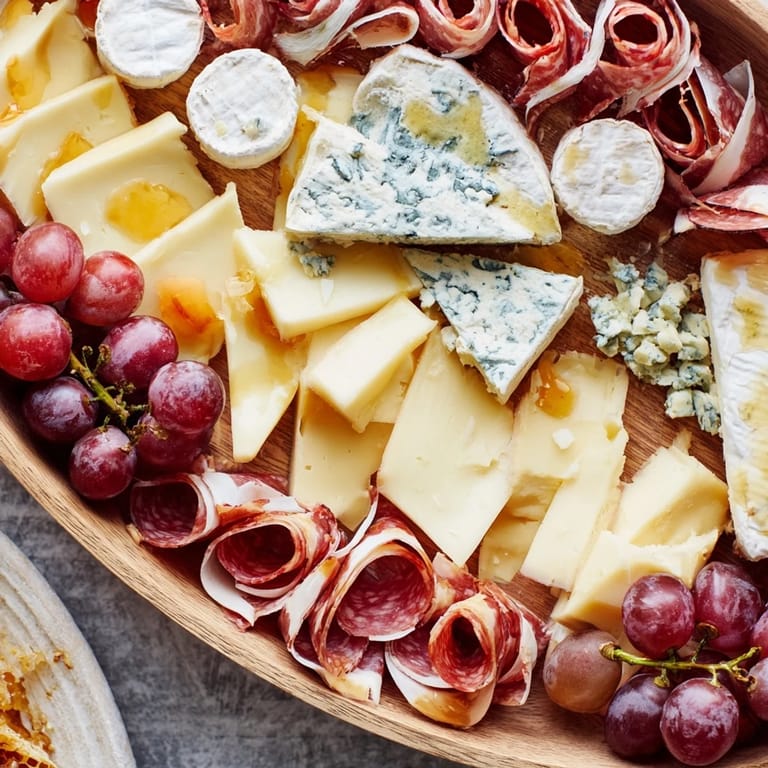
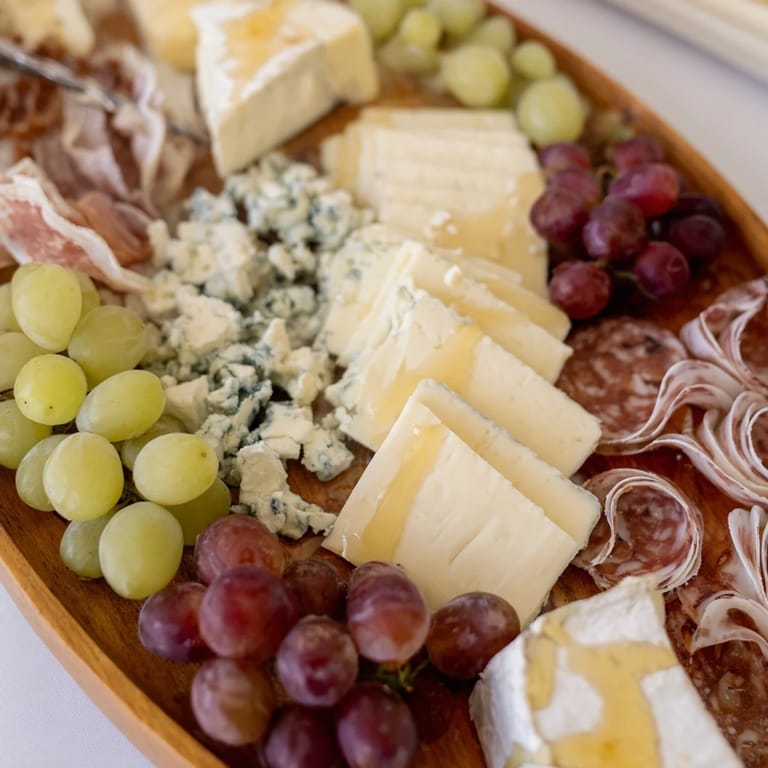
- Triple-cream Brie, 120 g: Cut into slim wedges just before serving to keep it creamy and luxurious. Cold brie can be difficult to cut, so let it sit at room temperature for five minutes first—this small step makes all the difference in achieving clean, elegant slices.
- Aged Manchego, 120 g: This Spanish cheese brings a nutty, crystalline quality that feels inherently fancy. Slice it thin enough to drape slightly, which adds visual drama to the board's perimeter.
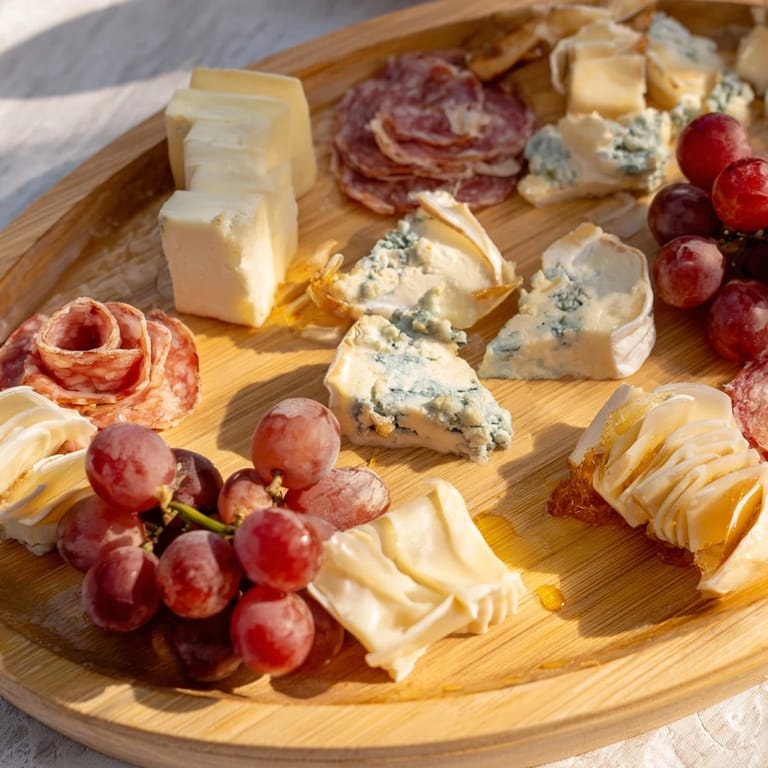
- Blue cheese, 100 g: Crumble this boldly—the irregular texture creates visual interest and gives people a reason to reach for it. Its sharpness balances the sweetness of the figs and honey perfectly.
- Goat cheese, 100 g: Form small rounds with a melon baller or simply use two small spoons to create quenelles. This creamy, tangy cheese feels like a special discovery tucked along the rim.
- Prosciutto, 100 g: Fold each slice gently into loose ribbons rather than laying it flat. This creates height and movement on the board, and the folds catch light beautifully.
- Thinly sliced salami, 120 g: Choose a high-quality variety and let each slice slightly overlap with the next, creating a subtle wave pattern. The deep red becomes a visual anchor for the entire arrangement.
- Coppa or bresaola, 100 g: These bring a subtle marbling and complexity that elevates the entire charcuterie selection. Roll them loosely for a more elegant presentation.
- Red and green grapes, 1 small bunch each: These little bursts of color are your secret weapon for filling gaps and drawing the eye around the rim. Leave them in small clusters rather than separating each grape.
- Pear and apple, 1 each: Slice these just before serving and toss them very gently with a squeeze of lemon juice to prevent browning. The pale slices create a delicate, sophisticated contrast against the deeper cheeses and cured meats.
- Dried apricots, small handful: Their warm color and chewy texture add another dimension to the experience. Arrange them in small groups rather than scattering randomly.
- Marcona almonds, 1/4 cup: These Spanish almonds are buttery and slightly sweet—noticeably different from regular almonds and worth seeking out for this board.
- Salted pistachios, 1/4 cup: Their green hue is vital to the color story of this board. The salt on them also awakens the palate between bites of cheese.
- Castelvetrano olives, 1/4 cup: These buttery green olives are milder and more elegant than Kalamata varieties. Pit them beforehand to protect your guests' teeth and your board's elegance.
- Cornichons, 1/4 cup: These tiny pickles provide sharp, bracing relief that makes people reach for more cheese. Keep them in a small bowl so the brine doesn't seep onto the board.
- Fig jam or quince paste, 1/4 cup: This is the sweet counterpoint that makes the whole board sing. Serve it in a small ramekin and let guests discover it—it's a delightful surprise.
- Honeycomb or honey drizzle: The wild card that feels pure luxury. A small drizzle next to the brie or scattered across is all you need.
- Baguette, thinly sliced and lightly toasted: Toasting drives off excess moisture and gives the bread structure to hold generous portions of cheese and jam. Don't toast it until the day of serving so it stays crisp.
- Assorted crackers, 1 box: Choose varieties that range from mild to nutty, and include at least one gluten-free option if serving guests with dietary restrictions. The variety matters because different cheeses pair beautifully with different textures.
Tired of Takeout? 🥡
Get 10 meals you can make faster than delivery arrives. Seriously.
One email. No spam. Unsubscribe anytime.
Instructions
- Choose Your Canvas:
- Select an elegant board with a prominent rim—this is the foundation of the entire presentation. A large round or oval board in marble, wood, or ceramic works beautifully. The rim should be distinct and defined, as it will frame everything you arrange. Handle it with care before you begin, wiping away any dust or marks. This board will be the stage for your edible masterpiece, so trust your instinct about what feels right for your occasion.
- Prepare Your Ingredients with Intention:
- Bring everything to room temperature at least 30 minutes before assembling—cheeses taste richer, cured meats are more tender, and even nuts and fruits taste better when they're not cold. Slice your pear and apple just before you begin arranging, tossing them with lemon juice so they stay pale and fresh. Cut your brie into slim wedges, slice your manchego, crumble your blue cheese, and form your goat cheese into small rounds. Fold your prosciutto into loose ribbons and roll your other cured meats gently. Pit your olives and pat your grapes dry. Warm your toast lightly in the oven so it's still warm when served.
- Create Your Rim with Intention:
- Start by envisioning the perimeter of your board as a clock face. Begin placing your cheeses first, spacing them evenly around the rim—this creates anchor points for everything else. Then nestle your cured meats between and around the cheeses, creating layers and movement. Follow with your fresh fruits, clustering grapes and interspersing your pear and apple slices. The goal is to alternate colors and textures continuously, so no two similar items sit beside each other. As you place each item, turn the board slightly and step back to see how it looks from above.
- Build Visual Drama with Negative Space:
- This is the secret: leave the entire center of the board empty and unadorned. This empty space isn't laziness—it's intention. It highlights the board's shape, creates a striking visual focal point, and makes the arrangement feel deliberate and sophisticated. The contrast between the abundant rim and the empty center draws the eye exactly where you want it to go. It transforms this from a casual spread into an intentional work of arrangement.
- Anchor with Accompaniments:
- Place your small bowls and ramekins along the perimeter, filled with fig jam, honey, cornichons, and olives. Position them as part of the rim, not separate elements. The bowls should nestle naturally into the arrangement, as if they belong there rather than as an afterthought. This keeps the entire presentation cohesive and tells guests that everything, even these small vessels, is part of the thoughtful design.
- Create Richness Through Proximity:
- Nestle items closely together so nothing sits in isolation. There should be gentle touching and overlapping—this creates abundance and richness without clutter. A slice of prosciutto might partially overlap a wedge of brie. Grapes might nestle against almonds. This proximity makes every bite feel connected to the others, like a conversation between flavors rather than a collection of unrelated items.
- The Final Check and Serve:
- Once you've completed the arrangement, place your cheese knives and tongs nearby. Step back and look at your work. Does the color balance feel right? Are there visual pathways that draw the eye around the entire rim? Do you have empty spots that need filling, or places that feel overcrowded? Make small adjustments as needed, then bring the board to your table with confidence. Serve it immediately while everything is at its optimal temperature and the arrangement is pristine. This is the moment your care becomes everyone else's pleasure.
 Pin
Pin I once made this board for my mother's birthday dinner, and halfway through the meal, my dad quietly told me it was 'too pretty to eat.' He meant it as a compliment, which made me laugh—because of course it was meant to be eaten, but the fact that it created that moment of hesitation, that instant where beauty and sustenance felt inseparable, meant everything. That's when I truly understood that a gorgeous board isn't just about the ingredients or even the arrangement. It's about creating a moment where people pause, look, appreciate, and then dive in with more awareness of what they're tasting. Food arranged with this kind of care becomes a conversation starter, a memory maker, a small celebration all by itself.
The Art of Selective Abundance
The philosophy behind this board is that elegance lives in restraint. I learned this the hard way after spending years trying to fill boards completely, creating towering mountains of cheese and meat that looked impressive for a moment but never felt special. Then I discovered this approach—building everything along a prominent rim and leaving the center bare—and it changed how I think about entertaining. It's the culinary equivalent of learning that a perfectly tailored jacket matters more than a closet full of clothes, or that one perfect painting on a wall is more striking than a gallery. When you create space, both literally and visually, everything else becomes more valuable. Your guests actually taste the cheeses rather than just sampling them. They notice the quality of the ingredients. They slow down.
Customizing for Your Crowd
The beauty of this format is its flexibility. For a vegetarian gathering, simply omit all the cured meats and add marinated artichoke hearts, roasted red peppers, sun-dried tomatoes, or extra aged cheeses that people might not usually buy for themselves. The structure remains the same—rims filled with intention, center left clear. For a more adventurous group, you could add a small pot of whipped ricotta infused with herbs, or bring in an entirely different cheese tradition, like a creamy Taleggio or a crumbly Wensleydale. I've even done a dessert version using dark chocolate chunks, candied citrus peel, and marcarpone alongside sweet dried fruits and candied nuts, following the exact same arrangement principle. The formula works because it's more about presentation philosophy than specific ingredients.
Setting the Stage for Success
The board itself is half the equation. I learned to invest in one truly beautiful board—something you'll want to bring out again and again. The rim should be prominent enough that it visually frames your arrangement, not so wide that it dominates. I prefer marble for its cool elegance and natural variations, but a deeply-grained wooden board brings warmth and works beautifully for casual gatherings. Size matters too—it should be large enough that the empty center creates real visual impact, but not so massive that it's difficult to move or display in your space. And here's a secret I learned from a catering chef: chill your board in the refrigerator for 15 minutes before serving. It keeps delicate cheeses firmer longer and creates a gentle visual freshness that somehow enhances the entire presentation. Place small serving utensils nearby—wooden or silver look more elegant than stainless steel—and perhaps a small stack of quality napkins in a neutral tone that complements your board rather than competing with it.
- Invest in a board that makes you happy to look at—you'll use it countless times, and its presence in your kitchen becomes a conversation starter in itself.
- Chill the board briefly before arranging to keep delicate cheeses stable and cool, especially if your kitchen or room is warm.
- Always arrange the board last, right before serving, to preserve the visual integrity of everything and keep fresh fruits from browning or cured meats from drying slightly.
 Pin
Pin I make this board now whenever I want to celebrate something quietly, or sometimes just for myself on a Friday night after a long week. There's something about the ritual—selecting the cheeses, slicing the fruit, arranging everything with care—that feels restorative. Whether you're making it for an elegant dinner party or a small family gathering, remember that boards like these aren't about impressing people with difficulty or expense. They're about creating a moment of beauty and abundance that says, 'I'm glad you're here, and I wanted to make this special for you.'