 Pin
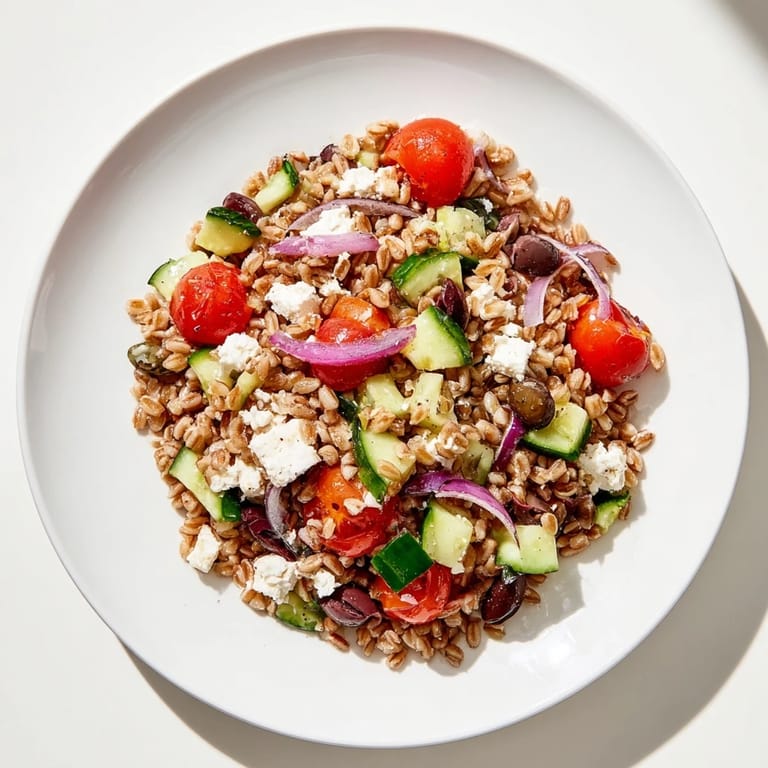
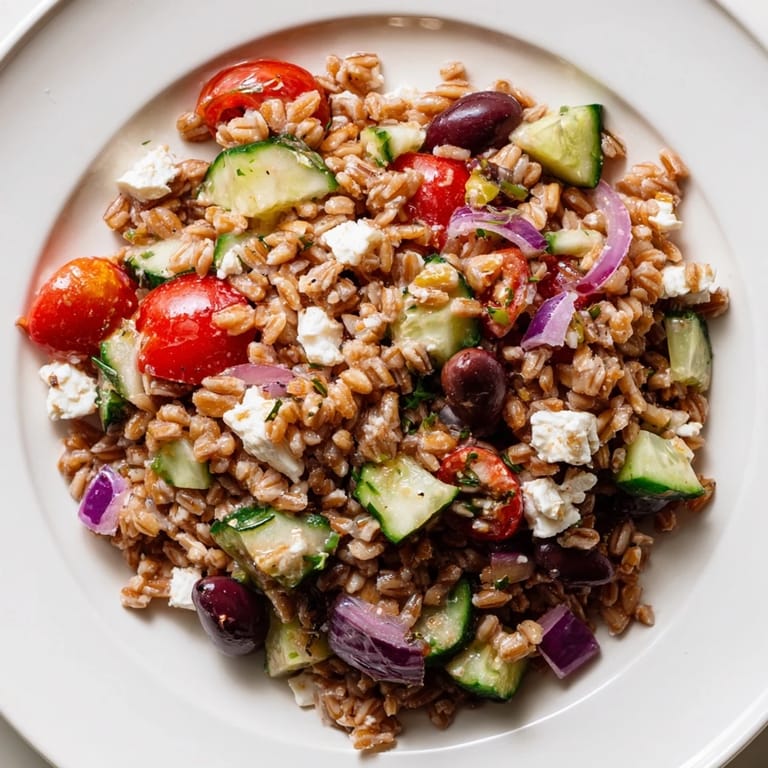
Pin There's something about farro that makes me slow down. One afternoon, a friend brought a container of this exact salad to a rooftop gathering, and I watched people keep coming back to it—not because it was fancy, but because it tasted like summer distilled into a bowl. The way the warm farro absorbed the sharp lemon dressing, the little briny pops of olives, the cool crunch that followed—it stuck with me. When I finally made it myself, I realized how a few good ingredients and patience create something that tastes both effortless and intentional.
I made this for a potluck once and brought it to a table where someone had already brought another salad—the forgettable kind with iceberg lettuce and bottled dressing. Within twenty minutes, mine was nearly gone while theirs sat untouched. My friend Sarah asked for the recipe right there, and I remember feeling that small satisfaction of knowing a simple thing done well beats complicated any time.
Ingredients
- Farro: Buy it from a bulk bin if possible—you'll know it's fresh, and you'll use what you need without waste. The nutty flavor is what makes this salad actually memorable.
- Cherry tomatoes: Halving them by hand takes an extra minute, but it means they don't get bruised and juice everywhere, which changes everything texture-wise.
- Cucumber: Dice it close to serving time so it stays crisp and doesn't weep into the salad.
- Red onion: The finely chopped version tastes less raw and aggressive than thick slices, trust me on this one.
- Fresh parsley and mint: These aren't decorative—they're the part that makes you taste the brightness of Mediterranean mornings.
- Kalamata olives: Pit them yourself or buy pre-pitted, but taste one before you add them to the bowl; sometimes they're too salty and need a quick rinse.
- Feta cheese: Crumble it by hand into uneven pieces rather than using pre-crumbled; it melts into the warm farro differently and tastes creamier.
- Extra-virgin olive oil: This is where you don't skimp; the dressing is simple, so the oil carries all the flavor.
- Fresh lemon juice: Squeeze it yourself—bottled lemon juice tastes hollow next to this.
- Dried oregano: If you have fresh, use about three times as much; the flavor profile shifts slightly but stays true.
Tired of Takeout? 🥡
Get 10 meals you can make faster than delivery arrives. Seriously.
One email. No spam. Unsubscribe anytime.
Instructions
- Rinse and cook the farro:
- Run the farro under cold water in a fine-mesh strainer, and you'll notice it feels like little stones at first. Bring it to a boil with water and salt, then lower the heat and let it simmer covered—you'll hear a gentle rhythm from the pot, and when you lift the lid around twenty minutes, it should smell toasted and warm, with the grains tender but still a little bouncy between your teeth.
- Let it cool while you prep:
- Spread the cooked farro on a plate or shallow bowl to cool faster; this is the perfect moment to chop your vegetables. The farro will still be slightly warm when you toss it, which actually helps everything come together better.
- Build the salad:
- In a large bowl, combine all your chopped vegetables, herbs, olives, and feta with the cooled farro. This is where you can taste as you go and feel the textures coming together—some soft, some crunchy, some briny.
- Whisk the dressing:
- In a small bowl, whisk the olive oil, lemon juice, oregano, garlic, salt, and pepper until the dressing looks cloudy and slightly emulsified. This takes about a minute and makes a real difference in how it coats everything.
- Toss and rest:
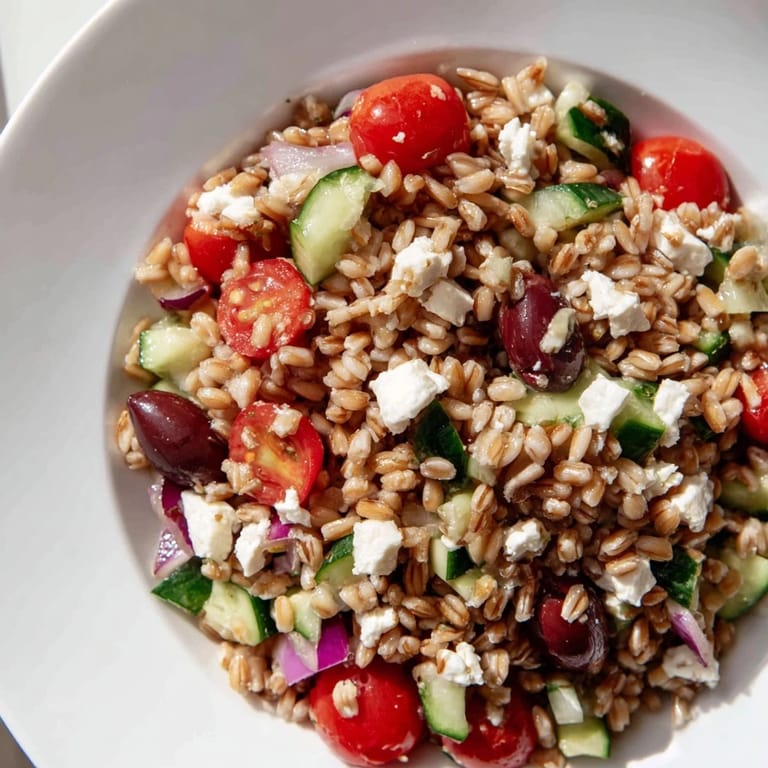
- Pour the dressing over the salad and toss it gently but thoroughly—you want every grain of farro to get a coating. Let it sit in the fridge for at least fifteen minutes; the flavors develop and meld, and the whole thing becomes more than the sum of its parts.
 Pin
Pin I served this once to my neighbor who was going through a rough patch, and she told me later that eating something that tasted this good and took no effort on her part made a difference she didn't expect. That moment taught me that sometimes the best thing food can do is show up simply and ask nothing in return.
What Makes Farro Special
Farro isn't like rice or pasta—it has this chewy interior that stays textured even when fully cooked, almost like it's pushing back a little when you bite it. That resistance is what keeps this salad from feeling mushy or one-note. It also has a subtle nuttiness that plays beautifully with the briny olives and sharp lemon without needing anything heavy or creamy to tie it all together. Once you cook with farro, you realize why Mediterranean cooks have used it for centuries.
Variations and Seasons
In summer, I pile this higher with extra tomatoes and serve it cold straight from the fridge. In cooler months, I'll warm the farro gently before dressing it and add roasted vegetables instead—bell peppers, zucchini, or eggplant work wonderfully. Some people add chickpeas or white beans to make it a more substantial lunch, which is smart if you're eating it solo. The foundation stays the same, but you can play with what the season offers.
Serving and Pairing
This salad is honest enough to stand alone as lunch, but it also knows how to behave as a side dish at a dinner table. Grilled chicken or fish sit beautifully next to it—the acidity of the lemon cuts through richness without any effort. I've also served it at room temperature at picnics, and it travels better than most salads because the farro doesn't get soggy and the flavors actually improve in a cooler environment. If you're thinking about wine, a crisp Sauvignon Blanc or chilled rosé is the natural choice—the citrus and minerality echo what's already on the plate.
- For meal prep, this keeps in the fridge for three days and tastes just as good on day three as day one.
- Double the recipe if you're feeding a crowd; it's just as easy to make and people always ask for seconds.
- If you want to make it vegan, skip the feta or use a crumbly vegan cheese, and the salad loses nothing.
 Pin
Pin This salad reminds me why cooking doesn't need to be complicated to be meaningful. It's the kind of dish you make for yourself on a Tuesday and end up thinking about for days.
Recipe Q&A
- → What is the best way to cook farro for this salad?
Simmer the farro in salted water over low heat for 20-25 minutes until tender but chewy. Drain excess water before cooling.
- → Can I prepare the salad in advance?
Yes, chilling the salad for at least 15 minutes enhances the flavors, making it perfect for ahead-of-time prep.
- → What alternatives can I use for feta cheese?
You can substitute with vegan cheese or omit it entirely to suit dietary preferences.
- → How can I add more variety to the salad?
Consider adding diced bell peppers or marinated artichoke hearts for extra flavor and texture.
- → What herb pairs well with the lemon-oregano dressing?
Fresh parsley and mint complement the zesty dressing, adding freshness and aroma.