 Pin
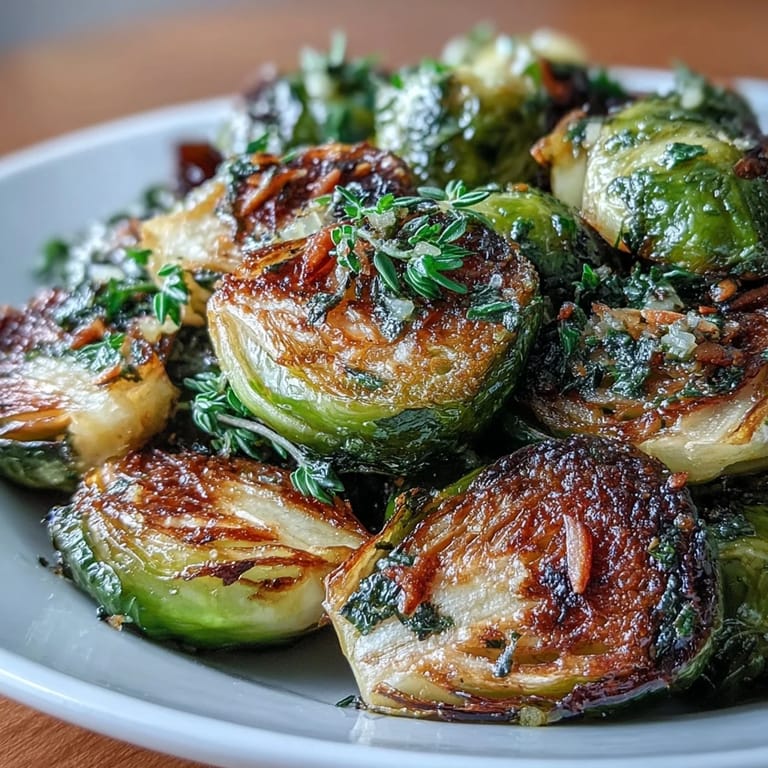
Pin My kitchen smelled like a Mediterranean garden the afternoon I first roasted Brussels sprouts this way. A friend had left a bundle of fresh thyme on my counter with a cryptic note: try this with something bitter. I had half a pound of sprouts languishing in my crisper drawer, so I tossed them with lemon zest and those fragrant herb leaves, and something clicked. The crispy edges, the bright citrus, the crunch of almonds—suddenly a humble vegetable became the thing people asked for at dinner.
There was a Tuesday last spring when I made this for my neighbor who had just moved in three houses down. She brought over a casserole dish as a housewarming gift, and I wanted to return the kindness with something that felt genuine rather than store-bought. When she took a bite and closed her eyes, I knew I had made the right choice. She asked for the recipe that evening, and now whenever I see her car in the driveway, I think about how this simple roasted vegetable became our first real conversation.
Ingredients
- Brussels sprouts, trimmed and halved (500 g): Look for smaller ones if you can find them, as they roast more evenly and develop better caramelization on those tender inner leaves.
- Fresh parsley, finely chopped (2 tbsp): The mild pepper notes keep the dish balanced and prevent the lemon from becoming too sharp.
- Fresh thyme leaves (1 tbsp): Strip the leaves from woody stems by running your thumb and forefinger backward along the stem, which takes about thirty seconds and makes a difference in texture.
- Lemon zest (from 1 lemon): Use a microplane if you have one, as it catches the bright oils without the bitter white pith underneath.
- Lemon juice (2 tbsp): Add this after roasting so the brightness stays vibrant and doesn't fade into the heat.
- Sliced almonds (40 g): Toast them yourself rather than using pre-toasted if possible, as they'll stay crunchier throughout serving.
- Extra-virgin olive oil (2 tbsp): This is where quality matters, since there aren't many ingredients competing for attention.
- Sea salt and freshly ground black pepper: Taste as you go, since salt levels vary depending on your oil brand and the moisture in your sprouts.
Tired of Takeout? 🥡
Get 10 meals you can make faster than delivery arrives. Seriously.
One email. No spam. Unsubscribe anytime.
Instructions
- Heat your oven and prep:
- Set the oven to 220°C (425°F) and line your baking sheet with parchment paper, which prevents sticking and makes cleanup feel like a gift to your future self.
- Coat the sprouts evenly:
- Toss the halved Brussels sprouts with olive oil, salt, pepper, parsley, thyme, and lemon zest in a large bowl until every piece glistens with oil and herbs cling to the cut sides. Don't worry about perfect coverage—the roasting will even things out.
- Arrange cut-side down:
- Spread the sprouts on your baking sheet with the flat cut sides facing down, which is where the magic happens as they crisp against the hot pan. Leave a little space between each piece so steam can escape.
- Roast and stir:
- Roast for 20 minutes, stirring halfway through, watching as the cut sides turn deep golden and the outer leaves caramelize to almost burnt-looking crispness. That darker color is flavor, not a mistake.
- Toast the almonds separately:
- While the sprouts finish, warm a dry skillet over medium heat and add the sliced almonds, stirring often for 2 to 3 minutes until they smell toasty and look lightly golden. This keeps them crunchy rather than soft, which makes the final dish textural and alive.
- Finish and serve:
- Transfer the roasted sprouts to a serving bowl, drizzle with fresh lemon juice, scatter the toasted almonds over top, and toss gently to combine. Serve while everything is still warm so the contrast between crispy sprouts and tender herb-coated centers shines through.
 Pin
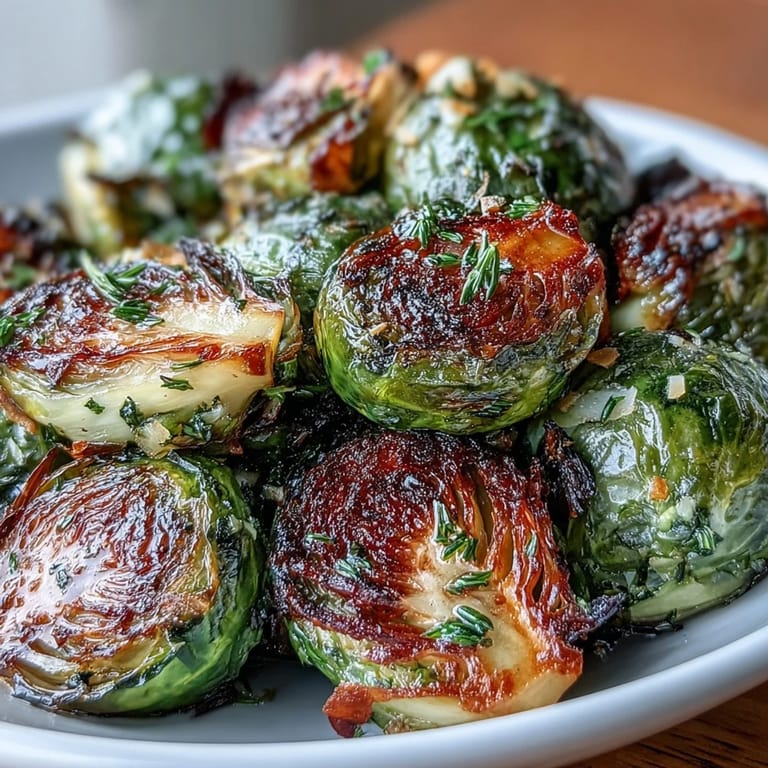
Pin I remember my son picking up a Brussels sprout with tongs at dinner and asking why these didn't taste like the ones from the school cafeteria. His face when he bit into the crispy caramelized edge was worth every minute of chopping and zesting. That's when I realized this dish had become more than a side—it was proof that the right technique and fresh ingredients could change how a whole family felt about vegetables.
The Science Behind the Crisp
Roasting Brussels sprouts at high heat causes the water inside them to evaporate, concentrating their natural sugars and creating those golden, caramelized edges through something called the Maillard reaction. The cut sides brown faster because they're in direct contact with the hot pan, which is why laying them flat-side-down matters more than most people realize. When you stir halfway through, you're giving the rounded sides a chance to crisp too, creating layers of texture that feel luxurious in your mouth.
Why Fresh Herbs Make All the Difference
Dried herbs are convenient, but fresh thyme and parsley carry oils and brightness that dried versions have lost during processing and storage. Fresh herbs also stay a little tender when tossed warm onto the roasted sprouts, creating pockets of flavor that dried herbs simply can't achieve. The moment you tear or chop fresh herbs, their volatile compounds begin to escape, which is why adding them just before eating keeps the dish tasting alive and present rather than muted.
Variations and Substitutions
This recipe is forgiving enough to bend to what's in your kitchen or what you're craving. Hazelnuts or walnuts work beautifully in place of almonds and bring their own earthy notes. A pinch of red pepper flakes adds subtle heat without overwhelming the herbaceous brightness, and if you love garlic, try mincing a clove or two and tossing it with the oil before roasting.
- Swap the almonds for toasted pumpkin seeds or sunflower seeds if you need to avoid tree nuts.
- Use fresh dill or chives instead of parsley if that's what's growing in your garden.
- Drizzle with a teaspoon of aged balsamic vinegar alongside the lemon juice for deeper sweetness.
 Pin
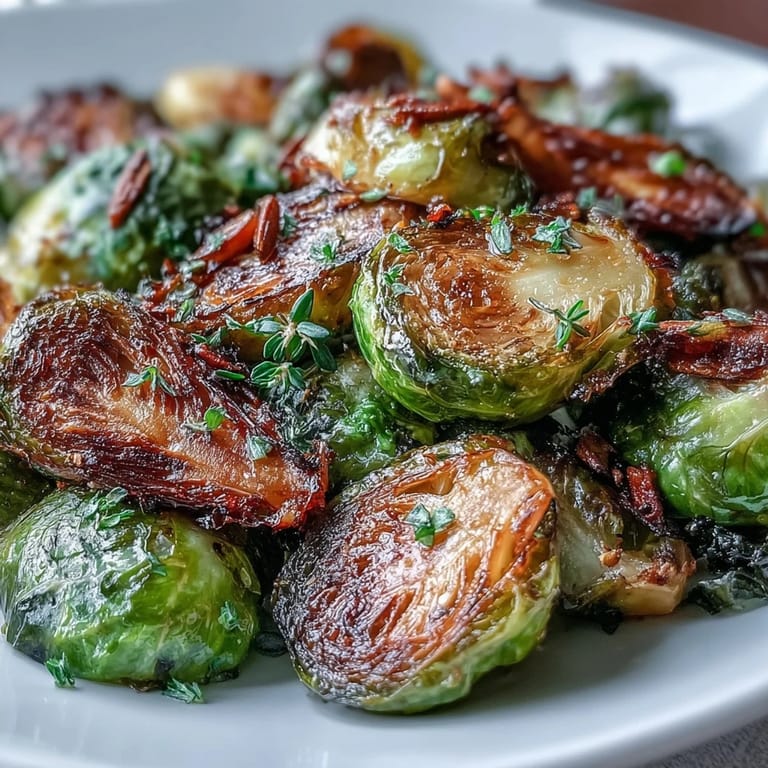
Pin This dish proves that simple cooking with honest ingredients often tastes better than recipes trying too hard. Make it once, and you'll understand why it keeps showing up on my table.
Recipe Q&A
- → How do I ensure Brussels sprouts are crisp-tender?
Roasting at a high temperature of 220°C (425°F) helps achieve a crisp exterior while keeping the insides tender. Stirring halfway through also promotes even cooking.
- → Can I substitute almonds with other nuts?
Yes, hazelnuts or walnuts can be used toasted in place of almonds to add a different but complementary flavor and texture.
- → What herbs enhance the flavor best?
Fresh parsley and thyme provide aromatic freshness that pairs well with the lemon and Brussels sprouts.
- → Is it necessary to toast the almonds?
Toasting almonds brings out their natural oils and flavor, adding a deeper, fragrant crunch to the dish.
- → Can red pepper flakes be added?
Yes, a pinch of red pepper flakes can be added before roasting for a subtle heat that complements the brightness of the lemon and herbs.