 Pin
Pin The first time I encountered shakshuka, I wasn't in some romantic Mediterranean kitchen—I was in a cramped Tel Aviv apartment at breakfast time, watching my friend Rina casually crack eggs into a bubbling tomato sauce like it was the most natural thing in the world. She moved with such ease, adjusting the heat, tasting the sauce, adding a pinch more cumin without measuring. That moment taught me that some of the most memorable meals come from the simplest gestures, and this egg and tomato creation became my answer whenever someone asked what I craved.
I made this for a Sunday brunch once when the power went out during a storm, and somehow cooking it over my camping stove on the back patio turned into the best part of the day. My partner and I huddled under an umbrella, watching the eggs set in the sauce, and everything about the world felt slower and kinder. Food tastes different when you're not rushing, when you're genuinely present with someone else.
Ingredients
- Olive oil (2 tbsp): Use something you'd actually taste—not the cheapest bottle, because it's truly one of the stars here and will flavor everything else.
- Yellow onion (1 medium, finely chopped): The foundation that builds sweetness as it softens; don't rush this part.
- Red bell pepper (1, diced): It brings both color and a subtle natural sweetness that balances the spice beautifully.
- Garlic (3 cloves, minced): Raw garlic can taste harsh, so cooking it gently with the onions mellows it into something almost sweet.
- Red chili (1 small, finely chopped): Optional but worthwhile; it gives a fresh heat that's different from ground spices.
- Crushed tomatoes (1 can, 400 g): The backbone of the sauce—pick a good brand without added sugar if you can.
- Fresh tomatoes (2 medium, chopped): These add brightness and texture that canned tomatoes alone can't quite deliver.
- Tomato paste (1 tsp): A small amount concentrates the tomato flavor without overpowering the dish.
- Ground cumin (1 tsp): Warm and earthy, it's the spice that makes people ask what that amazing flavor is.
- Sweet paprika (1 tsp): Gives gentle color and a soft, peppery depth without heat.
- Cayenne pepper (¼ tsp optional): Add only if you want that sharp, lingering warmth at the back of your throat.
- Ground coriander (½ tsp): Subtle and slightly citrusy, it adds complexity that ties everything together.
- Salt and black pepper (to taste): Season in stages so you can taste and adjust—this is how you learn what your palate prefers.
- Large eggs (4): Fresher eggs hold their shape better, and their yolks stay runnier where you want them.
- Fresh parsley (2 tbsp, chopped): A bright, grassy finish that makes the whole dish feel alive.
- Fresh cilantro (2 tbsp, chopped): It's sharp and herbaceous, cutting through the richness in the best way.
- Feta cheese (crumbled, optional): If you use it, it should be salty enough to taste it without overwhelming the sauce.
Tired of Takeout? 🥡
Get 10 meals you can make faster than delivery arrives. Seriously.
One email. No spam. Unsubscribe anytime.
Instructions
- Warm your pan and begin:
- Pour the olive oil into a large skillet or cast-iron pan over medium heat and let it shimmer for a moment. You want it fragrant but not smoking—this is where the magic really starts.
- Cook the vegetables until soft:
- Add the onion and red pepper, stirring occasionally as they soften for 5 to 7 minutes. Listen for the gentle sizzle; that sound tells you everything is happening at the right pace.
- Wake up the aromatics:
- Add the minced garlic and chili, stirring constantly for about a minute. The smell that rises from the pan will tell you when it's ready—a fragrant warmth that makes your kitchen smell like someone who knows how to cook.
- Build your sauce:
- Stir in the crushed tomatoes, fresh tomatoes, and tomato paste until everything is combined. The sauce will look thin at first, but don't worry—that's exactly right.
- Season and simmer:
- Sprinkle in the cumin, paprika, cayenne if you're using it, coriander, salt, and pepper. Stir well, then let everything simmer for 10 to 12 minutes, stirring occasionally, until the sauce thickens and deepens in color and flavor.
- Create nests for the eggs:
- Using the back of a spoon, gently push the sauce aside to make four small wells. These are where the eggs will nestle, creating little pockets of richness.
- Add the eggs:
- Carefully crack an egg into each well, keeping the yolk as intact as possible. The whites will look raw and delicate against the scarlet sauce—that vulnerability is part of the beauty.
- Cover and cook gently:
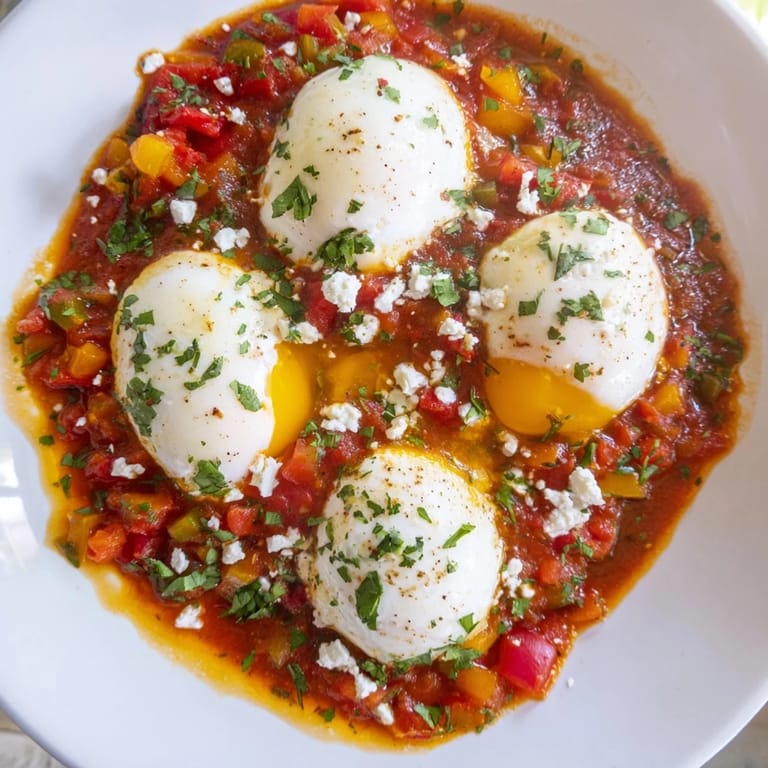
- Put a lid on the pan and lower the heat to medium-low, cooking for 6 to 8 minutes. The whites will slowly turn opaque while the yolks stay soft and golden, creating that perfect moment where everything is just right.
- Finish and serve:
- Remove from heat and scatter the parsley and cilantro over the top, along with feta if you're using it. Serve immediately, ideally with warm pita or crusty bread to soak up every drop of sauce.
 Pin
Pin There's a moment right before you crack the eggs into the sauce—when the tomatoes have darkened and the spices have melted into something magnificent—when you realize this simple dish has become something transcendent. It's a moment of quiet accomplishment, knowing that in the next few minutes, something delicious will be ready to share.
Why This Dish Belongs in Your Regular Rotation
Shakshuka works beautifully because it asks almost nothing of you but gives back generously—whether you're cooking for yourself or for people you love. It's humble enough to be casual but elegant enough to feel special, which is honestly the definition of what I cook for when life feels hectic and I need something real.
Playing with Heat and Flavor
The spice level here is genuinely flexible, and learning to adjust it is part of discovering what makes your version sing. Start conservatively with the chili and cayenne, taste as you go, and remember that you can always add heat but you can't take it back. I once made it for my mother-in-law, who doesn't enjoy spicy food, and I realized that even without the chili and with just the paprika and cumin, it's still stunning—maybe even more delicate and pure in flavor.
Beyond the Basic Recipe
Once you've made this a few times and feel comfortable with the rhythm, you'll start seeing all the ways you can play. Add sautéed spinach for earthiness, roast some eggplant separately and fold it in, or crumble some merguez sausage into the sauce if you want something more substantial. The core technique stays the same; the soul of the dish remains intact.
- Serve with thick Greek yogurt or labneh on the side for a cooling contrast to the warmth of the spices.
- Make it in a cast-iron skillet so you can bring the whole pan to the table—there's something generous about that presentation.
- Leftover sauce reheats beautifully, and you can crack fresh eggs into it for an even quicker next-day breakfast.
 Pin
Pin This is the dish I make when I want to feel connected to something old and good, yet completely present in my own kitchen right now. It's the kind of food that reminds you why we gather around tables together.
Recipe Q&A
- → What type of pan is best for cooking this dish?
A large skillet or cast-iron pan with a lid works best for even heat distribution and gentle poaching of the eggs.
- → Can I adjust the spice level in this dish?
Yes, the heat can be modified by adding or omitting chili and cayenne pepper according to your preference.
- → What are good side options to serve alongside?
Warm pita bread or crusty bread complement the dish well, helping to scoop up the sauce and eggs.
- → Is it possible to add extra vegetables?
Sautéed spinach or eggplant can be incorporated for added texture and flavor variations.
- → How do I know when the eggs are perfectly cooked?
The eggs are ready when the whites are set but the yolks remain soft, usually after 6–8 minutes of covered cooking.