 Pin
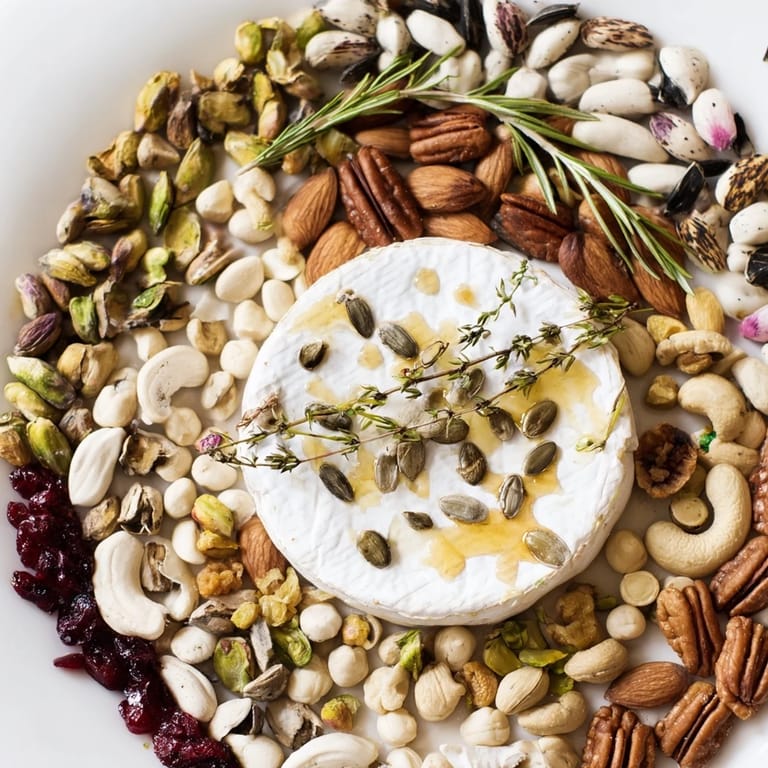
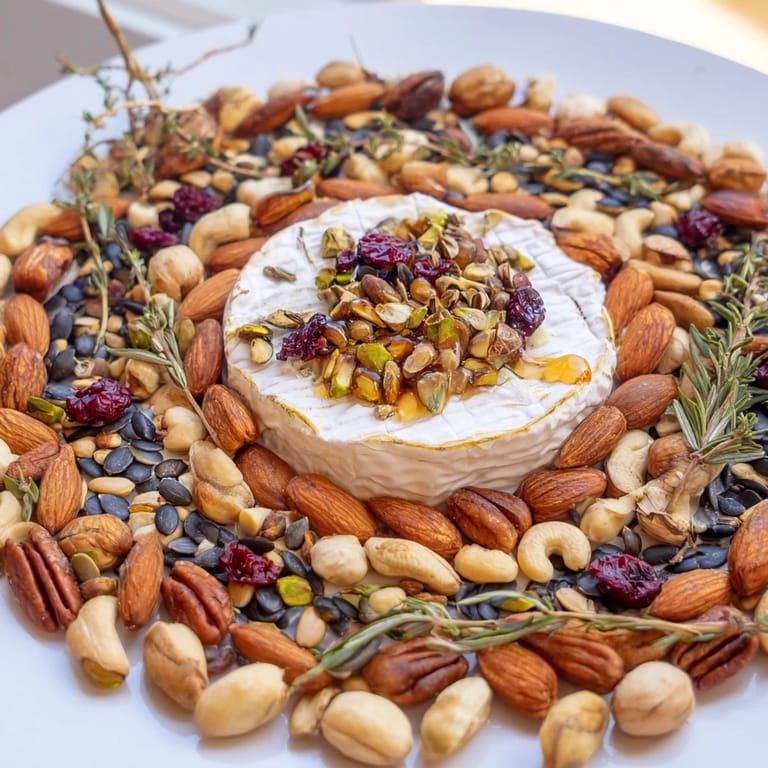
Pin I discovered The Labyrinth at a gallery opening where the appetizer table felt more like an installation art piece than food. A winding path of nuts and seeds spiraled across a wooden board, drawing your eye toward a glowing wheel of Brie at the center—it was equal parts edible and mesmerizing. That night, I watched people abandon conversations just to trace the maze with their fingers before popping treasures into their mouths. I went home determined to recreate that magic, and now this has become my secret weapon for any gathering where I want the food itself to be the conversation starter.
The first time I made this for a potluck, I arrived early and sketched the pattern with an actual pencil—my hand was shaking because it felt so silly, like I was defacing the board. But the moment I started laying down the almonds in a perfect line, something clicked. By the time the first guest arrived, the spiral was mesmerizing enough that they stopped mid-conversation to just watch me finish. That's when I realized this wasn't really about the cheese or nuts; it was about creating a moment where food became an experience.
Ingredients
- Raw almonds (40 g): Their mild, slightly sweet flavor anchors the whole composition without overpowering anything else.
- Roasted cashews (40 g): These provide a buttery richness that makes people reach back for more.
- Pistachios, shelled (40 g): The natural green color is a visual gift; no extra effort needed for vibrancy.
- Pecan halves (40 g): Their larger size helps break up the visual rhythm and adds an earthier note.
- Hazelnuts (40 g): These are the ones people often overlook until they try one and realize they've been missing out.
- Pumpkin seeds (30 g): Toss these in first because they're sturdy and hold their shape beautifully in lines.
- Sunflower seeds (30 g): Their pale color creates natural highlights in your maze.
- Black sesame seeds (20 g): These are the dark punctuation marks that make the pattern pop.
- White sesame seeds (20 g): They catch the light and add delicate contrast between darker ingredients.
- Flaxseeds (20 g): Smaller and slightly sticky when placed, they help fill gaps and look refined.
- Soft-ripened cheese wheel, 180 g (Brie or Camembert): This is the prize at the center—choose one that's nearly ready to eat, with a slight give when you press it gently.
- Dried cranberries or cherries, 2 tbsp: These jewel-like pieces fill empty spaces and add pops of color that stop the eye mid-maze.
- Fresh herbs, 2 tbsp (thyme or rosemary): A small handful scattered on top of the cheese catches light and signals that this is meant to be savored.
- Honey or agave, 1 tbsp: A delicate drizzle transforms the cheese from simple to luxurious; warm it slightly so it flows like liquid gold.
Tired of Takeout? 🥡
Get 10 meals you can make faster than delivery arrives. Seriously.
One email. No spam. Unsubscribe anytime.
Instructions
- Sketch your path (optional but worth it):
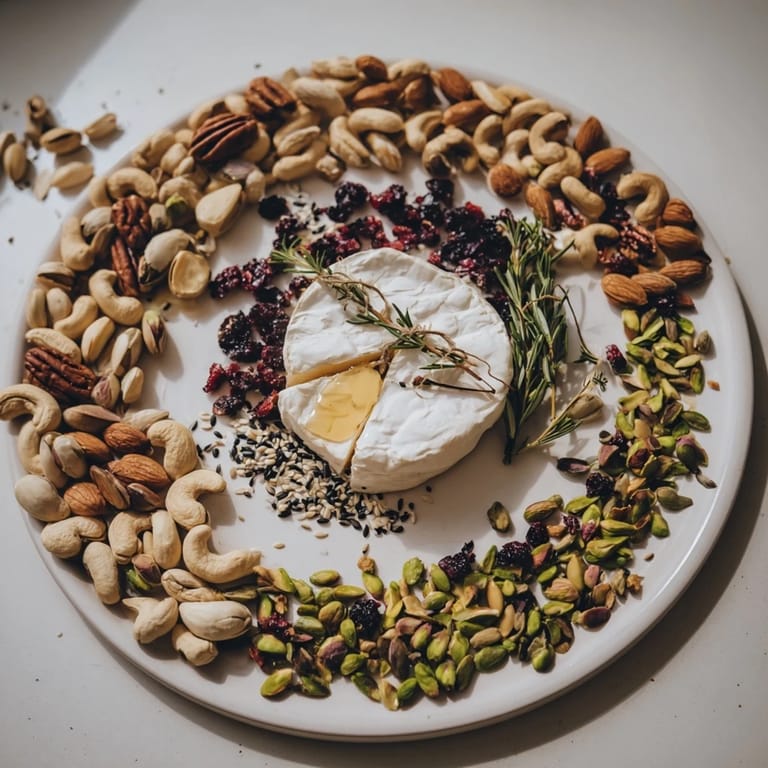
- Use a pencil to lightly trace a winding labyrinth from the outer edge toward the center of your board. This takes 2–3 minutes and gives you a confidence boost as you arrange everything.
- Start with your largest nuts:
- Lay out your pecans and almonds first, single-file along your pencil line. They're forgiving and easy to adjust if the spacing feels off.
- Build rhythm with contrasting colors:
- Alternate between light and dark seeds and nuts as you spiral inward—think of it like creating a visual beat that keeps the eye moving.
- Fill with smaller seeds:
- Sesame seeds and flaxseeds nest beautifully into tighter spaces and help define the maze's edges. Don't worry about perfection; slight irregularity looks more authentic.
- Crown your center:
- Unwrap the cheese wheel and place it at the exact center where your spiral ends. It should feel like the moment Dorothy opens the door to Oz.
- Garnish the cheese:
- Scatter fresh herbs on top and drizzle with honey in thin strokes. This transforms the cheese from a prop into a destination worth reaching.
- Fill the gaps:
- Tuck dried cranberries or cherries into any empty white space around the board. These add color and signal that every inch is edible and intentional.
- Add the final touch:
- Step back and look at your work before guests arrive. If something feels off, you have 5 minutes to shift things around without consequences.
 Pin
Pin I once made this for a friend's birthday dinner, and halfway through the meal, everyone stopped eating to take photos of the board from different angles. Then someone said, 'This is too pretty to eat'—and I thought, that's exactly right, but also, let's eat it anyway. That's when I understood that the best food isn't meant to be admired from a distance; it's meant to be engaged with, touched, and enjoyed in the moment.
The Art of Assembly
The magic of The Labyrinth isn't in any single ingredient; it's in the arrangement. You're not just placing nuts on a board—you're creating a visual narrative that invites people to slow down and follow a path. Think about how museum paths guide visitors through a space; your maze works the same way. The slight variations in color and texture keep the eye moving without exhaustion. This is food design at its most honest: no tricks, no elaborate cooking, just intentionality and a little bit of theater.
Customization and Allergies
One of my favorite things about this recipe is how adaptable it is to whoever's at your table. Swap out any nut for another, skip sesame if that's a concern, or use vegan cheese without losing a single ounce of impact. I once made an entirely seed-based version for a guest with a severe nut allergy, and honestly, the black and white sesame seeds created an even more striking visual pattern. The recipe isn't fragile—it's flexible, which means it becomes what your particular moment needs.
Perfect Pairings and Serving Ideas
Serve this alongside a crisp Sauvignon Blanc or sparkling cider, and watch how the acidity cuts through the richness of the cheese and nuts. Small forks or cocktail picks are essential—they keep hands clean and make the experience feel deliberate rather than chaotic. You can set this out 30 minutes before guests arrive without worry; nuts and seeds don't wilt, and the cheese stays perfect as long as your kitchen isn't sweltering. One last thing: if crackers feel right for your crowd, arrange them around the outer edge of the board, but don't overpower the maze itself.
- Use small wooden or ceramic picks rather than plastic ones—they feel more intentional and look better in photos.
- If you're serving this at a stand-up party, position the board at chest height so people can see and reach it without bending.
- Make a second, simpler version if your guest list is large; two smaller mazes feel more generous than one overcrowded board.
 Pin
Pin The Labyrinth is proof that the most memorable food experiences often come from paying attention to how you present something, not how complicated the ingredients are. Make this with intention, and it becomes something people remember.
Recipe Q&A
- → Can I substitute different nuts or seeds?
Absolutely, you can adjust the nuts and seeds based on personal preference or dietary needs, ensuring flavor and texture variety remain.
- → What types of cheese work best for the centerpiece?
Soft-ripened cheeses like Brie or Camembert create a creamy contrast, but plant-based alternatives can be used for a vegan option.
- → How do I create the labyrinth design?
Use a pencil to sketch a winding path on the serving board, then place the nuts and seeds in single-file lines along the drawing for a neat effect.
- → Are there suggestions for accompaniments?
Adding dried fruits, fresh herbs, or drizzling honey enhances flavors, while light white wine or sparkling cider pair nicely with the platter.
- → Is this suitable for guests with allergies?
Consider nut or seed allergies and opt for safe alternatives; check cheese ingredients if using vegan versions to avoid soy or nut allergens.