 Pin
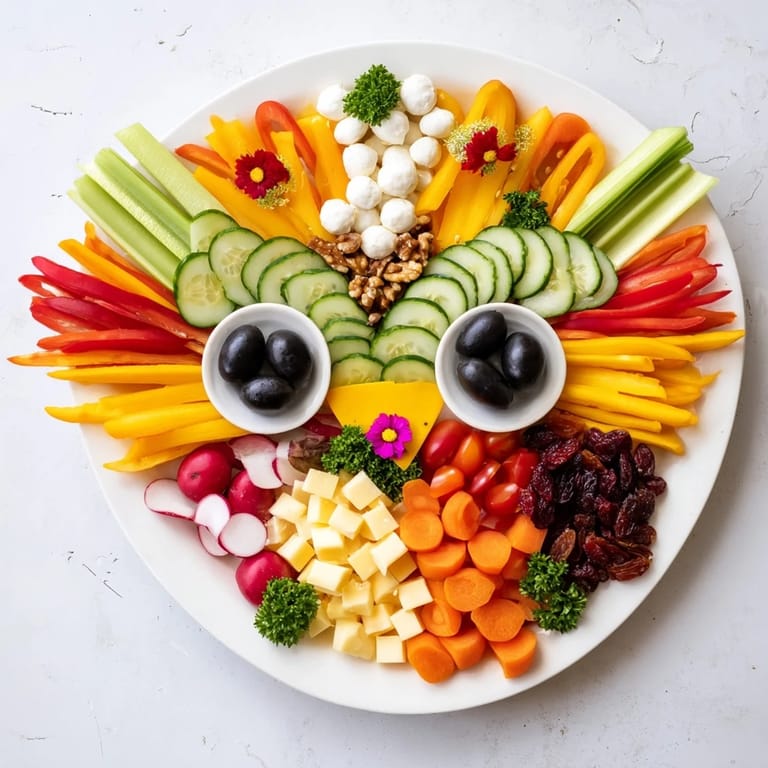
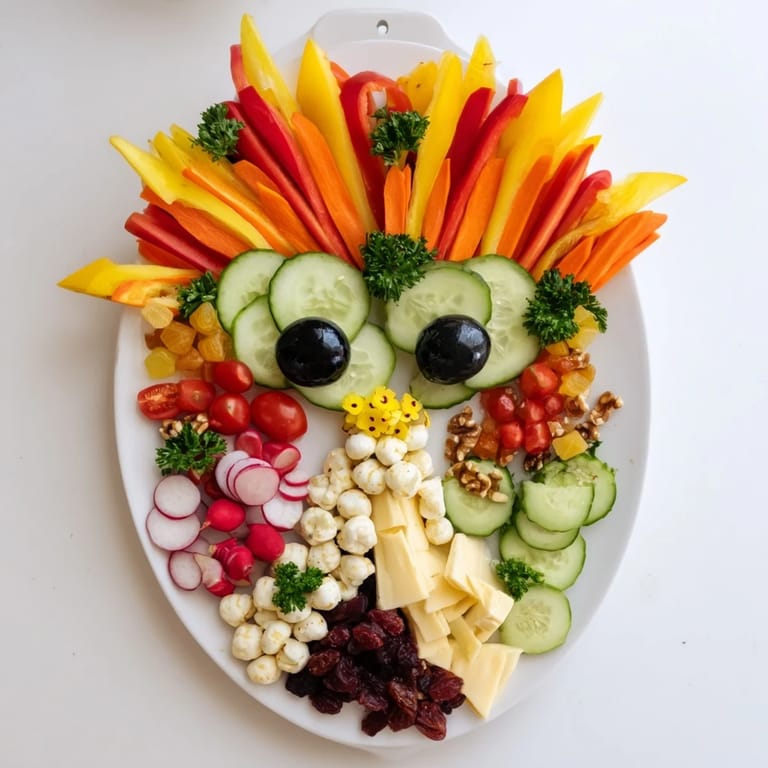
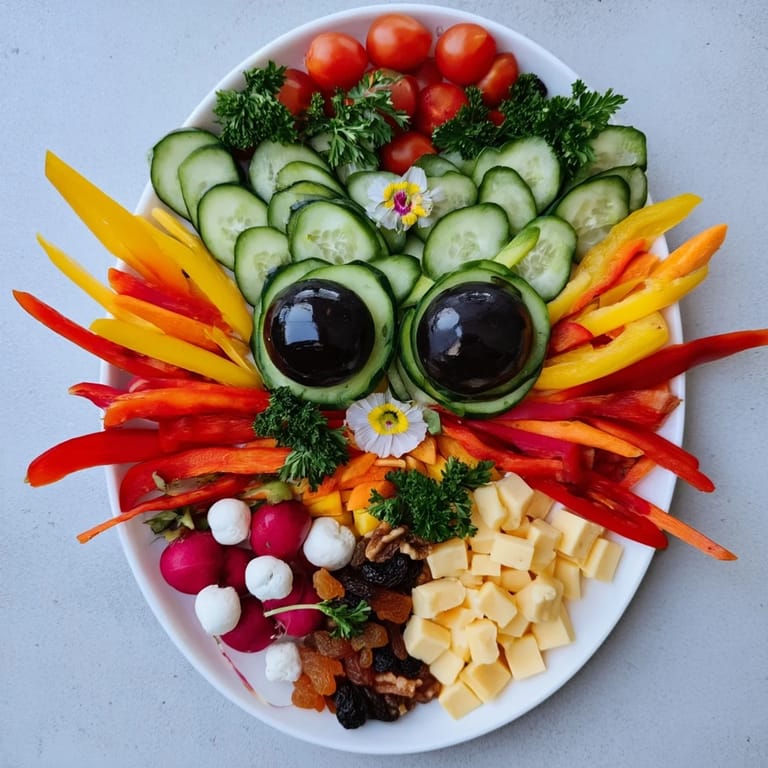
Pin I'll never forget the New Year's Eve when my sister walked into the kitchen holding a picture of an ornate masquerade mask from a Venetian carnival. She wanted to create something that matched that elegance—not just delicious, but so visually stunning that guests would gasp before they even tasted it. That night, we arranged vegetables and cheeses in sweeping arcs, placing olives where the mask's eyes would be, and The Masquerade Mask was born. Now it's become my signature move at every celebration, a conversation starter that transforms a simple platter into edible art.
I remember setting this up for a mixed crowd at a New Year's dinner—some vegan friends, some who love their cheese, a nut allergy to navigate. Instead of making separate platters, I realized the mask's beautiful symmetry meant I could simply adjust ingredients on different sides. By the end of the night, the platter was completely empty, but what struck me wasn't just that people ate it all. It was watching them gather around, talking about how thoughtful it felt to see their dietary needs honored without making them feel like outsiders.
Ingredients
- 2 large green or black olives, pitted (or 2 small cubes of firm cheese such as cheddar or gouda): These become your mask's eyes, so choose something that contrasts beautifully with your board. I've learned that pitting olives beforehand prevents that awkward moment mid-party when someone bites down expecting fruit. If you go the cheese route, make them identical for perfect symmetry.
- 1 cup cucumber slices, thinly sliced: These are your foundational green and they're wonderfully forgiving—slice them just before serving to keep that crisp, refreshing snap.
- 1 cup colorful bell pepper strips (red, yellow, orange): The jewels of your mask. I cut them lengthwise into elegant strips that fan beautifully, and the variety of colors is what makes this platter truly sing.
- 1/2 cup cherry tomatoes, halved: Use the sweetest ones you can find—they add bursts of color and a touch of juiciness that makes people come back for more.
- 1/2 cup red radish slices: These thin, peppery circles add unexpected texture and that gorgeous magenta that photographs like a dream.
- 1/2 cup baby carrots, halved lengthwise: The orange rays that help create the mask's feathered effect. I've found that splitting them lengthwise makes them lie flatter and look more intentional.
- 1/2 cup seedless grapes (red or green): These fill gaps with sweet color, and seedless means no one's worried about biting down unexpectedly.
- 1 cup assorted cheeses, cubed (cheddar, gouda, Swiss): Choose three varieties for visual interest and flavor layers. Cut them into uniform cubes so they nestle in beautifully among the vegetables.
- 1/2 cup mini mozzarella balls: These are pure luxury—they catch light, add richness, and guests always reach for them first. Fresh ones are worth the extra couple of dollars.
- 1/2 cup nuts (walnuts, almonds, or pistachios): I learned to keep these toward the edges since nut allergies are so common. They add satisfying crunch and sophistication.
- 1/4 cup dried fruits (apricots, cranberries, or figs): The hidden treasures that make people pause and say 'oh, I didn't expect that.' They add sweetness and jewel-like color in the gaps.
- 1/2 cup crackers or breadsticks (optional): Only if you want them—I often skip them to keep the focus on fresh ingredients, but they're wonderful for guests who want something to hold the vegetables.
- Fresh herbs (parsley, basil, dill): A final flourish right before serving. They make the whole thing look like it just stepped out of a magazine.
- Edible flowers (optional): If you can find them, a few pansies or nasturtiums in corners make it genuinely special, though it's not necessary.
Tired of Takeout? 🥡
Get 10 meals you can make faster than delivery arrives. Seriously.
One email. No spam. Unsubscribe anytime.
Instructions
- Find your canvas:
- Choose a large, oval or rectangular serving board—something that feels substantial enough to hold this display. I prefer marble or wood for the contrast, but even a white platter works beautifully. Take a moment to visualize where your eyes will go and which direction the feathered design will flow.
- Place the mask's gaze:
- Position your two olives or cheese cubes near the center top of the board, spaced apart about 3-4 inches. These are your anchor points—everything else flows from here. Step back and look; they should feel balanced and deliberate, not accidental.
- Create the feathered crown:
- Starting just above and around those eye openings, begin fanning out your vegetable slices in wide, sweeping arcs. Arrange cucumber slices first in one direction, then bell peppers in the other, creating that ornate, feathered-mask effect. Overlap slightly so they hold together, and let them radiate outward like the mask is opening up toward your guests.
- Layer in the precious elements:
- Now tuck your cheese cubes and mozzarella balls among the vegetables, distributing them so no two pieces of the same type sit adjacent. This is where the platter transforms from pretty to stunning—the richness of the dairy catches light and breaks up the vegetable colors perfectly.
- Fill the spaces with intention:
- Scatter nuts and dried fruits into any gaps, but do this thoughtfully. These aren't fillers—they're flavor surprises. I like to group a small handful of nuts in one area, dried apricots in another, so someone exploring the platter discovers different experiences as they move around.
- Add the optional structure:
- If you're using crackers or breadsticks, arrange them at the lower edge or sides of the mask, almost like it's wearing a decorative collar. This grounds the design and gives guests something to build with if they want.
- Crown with freshness:
- At the very last moment before serving—I mean this—scatter your fresh herbs and any edible flowers across the design. This green and delicate finish makes everything pop and signals to people that this is fresh, intentional, and made with care.
- Serve with confidence:
- Place it in the center of your table where light can hit it. Step back. Take a breath. You've just created something that's equal parts edible art and genuine nourishment.
 Pin
Pin What I treasure most about this recipe isn't really about the ingredients at all. It's that moment when someone who's been stressed about hosting sees it for the first time and their whole face changes. Suddenly they're not worried about whether the main course is perfectly seasoned—they've already impressed everyone simply by how much care they put into the details. That's what The Masquerade Mask gave me: permission to show up for people through thoughtfulness rather than hours at the stove.
Adapting for Your Crowd
One of the greatest gifts of this platter is how infinitely customizable it is without losing its impact. For vegan friends, I swap the cheeses and mozzarella for marinated tofu cubes and coconut-based bites—they look equally luxurious and taste unexpectedly wonderful. For guests who want protein, cooked shrimp, smoked salmon, or paper-thin cured meats tuck in beautifully among the vegetables. I've even made a version with entirely seasonal produce—summer stone fruits and heirloom tomatoes in August, roasted root vegetables in October. The mask shape is so flexible that whatever you fill it with, it always feels intentional and celebratory. The key is maintaining color balance and keeping items bite-sized so guests can easily pick what calls to them without the whole design collapsing.
The Hidden Power of Presentation
I've learned something remarkable from making this platter dozens of times: presentation doesn't just make food look better—it genuinely changes how people experience it. A cucumber slice on a boring platter tastes like vegetables. That same slice, fanned in an arc as part of a mask's feathered design, tastes like celebration. There's actual psychology at work here. When people feel like care went into how something is presented, they slow down. They taste more intentionally. They're more likely to try ingredients they might have passed by on a standard cheese board. This recipe isn't complicated, but it leverages something powerful: the human heart responds to thoughtfulness before the human mouth even opens.
Serving Suggestions and Dips
While the platter stands beautifully on its own, I always prepare a couple of dips on the side because they transform this from appetizer to experience. A simple hummus seasoned with pomegranate molasses, or herbed cream cheese mixed with lemon zest, gives guests options. I set these in small bowls just off to the side of the mask—close enough to be accessible, far enough not to distract from the centerpiece. Some people will eat this entirely plain and discover how naturally delicious fresh vegetables are when they're this fresh. Others will dip everything. Both experiences are perfectly valid, and the platter supports both equally.
- Make dips up to 2 hours ahead, but add fresh herbs to cream cheese dips only 30 minutes before serving so they stay bright and don't discolor.
- If you're traveling with this platter, transport vegetables and fruits in separate containers and assemble on-site—it travels better and you can adjust based on what the space looks like.
- Trust your instincts on color balance. If something doesn't feel right visually, swap it for something else. There's no single right way—only what feels festive and intentional to you.
 Pin
Pin Every time I set this platter out, I'm reminded that feeding people doesn't always mean cooking. Sometimes it means arranging, thoughtfully and with intention, the best ingredients you can find. That's its own kind of care, and it matters just as much.
Recipe Q&A
- → How do I create the mask eye openings?
Use two olives or small cheese cubes placed near the top center of your serving board, spaced apart horizontally to imitate the eyes.
- → Can I make this platter vegan?
Yes, substitute the cheeses with marinated tofu cubes or additional vegetables to maintain texture and color.
- → What are good garnishes for this platter?
Fresh herbs like parsley, basil, or dill and edible flowers add a festive and aromatic touch to the presentation.
- → How should I arrange the fruits and vegetables?
Fan out sliced vegetables and fruits in wide, symmetrical arcs around the eyes, mimicking the ornate, feathered edges of a masquerade mask.
- → Can I add proteins to this platter?
For non-vegetarian guests, consider adding cooked shrimp, smoked salmon, or cured meats alongside the fruits and cheeses.