 Pin
Pin There's something almost meditative about arranging a cheese board with intention. I discovered this philosophy one autumn afternoon when a guest arrived early, and instead of scrambling through my usual crowded spreads, I had only three ingredients on hand—a wedge of aged Comté, some prosciutto, and a handful of stunning green olives. What started as limitation became revelation. By giving each element its own space, its own third of the board, suddenly you could taste the Comté's nutty depth, the silky salt of the ham, the buttery brightness of those olives, each one singing instead of competing.
I made this for someone I wanted to impress without trying too hard. They noticed immediately how clean it looked, how the eye could actually rest on each component. That's when I realized this board isn't really about the ingredients—it's about the respect you're showing them, and by extension, the people eating.
Ingredients
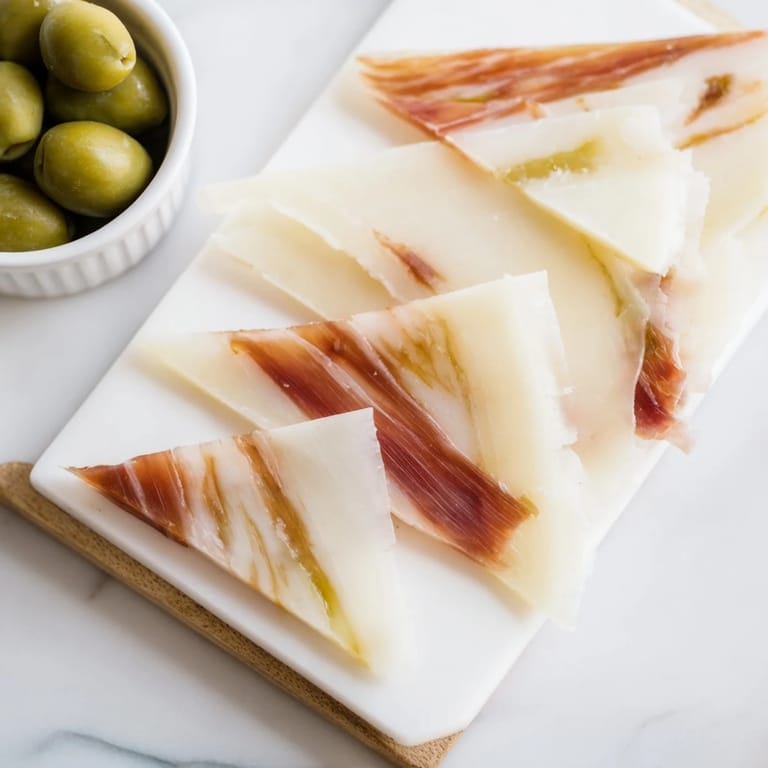
- Aged Comté, 80g, thinly sliced: This French Alpine cheese has a crystalline texture and deep, caramel-forward flavor that deserves its own spotlight—don't rush the slicing, clean cuts make all the difference.
- Jamón Ibérico, 80g, thinly sliced: The Rolls-Royce of cured ham with an almost buttery quality; its delicate texture means you want it to drape elegantly, not get crammed together.
- Castelvetrano olives, 80g, pitted and drained: These Sicilian olives are creamy and mild with almost a pistachio flavor, a gentle counterpoint to the richness of the cheese and ham.
Tired of Takeout? 🥡
Get 10 meals you can make faster than delivery arrives. Seriously.
One email. No spam. Unsubscribe anytime.
Instructions
- Set Your Canvas:
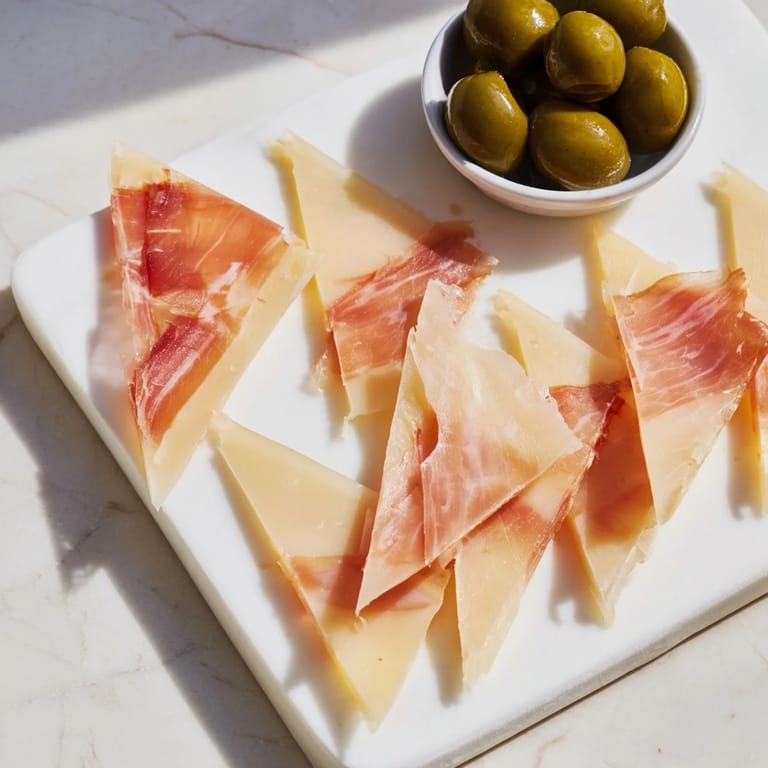
- Start with a clean board at room temperature—cold boards dull flavors. Take a moment to visually divide it into three equal sections, either in your mind or with a light arrangement.
- Arrange the Comté:
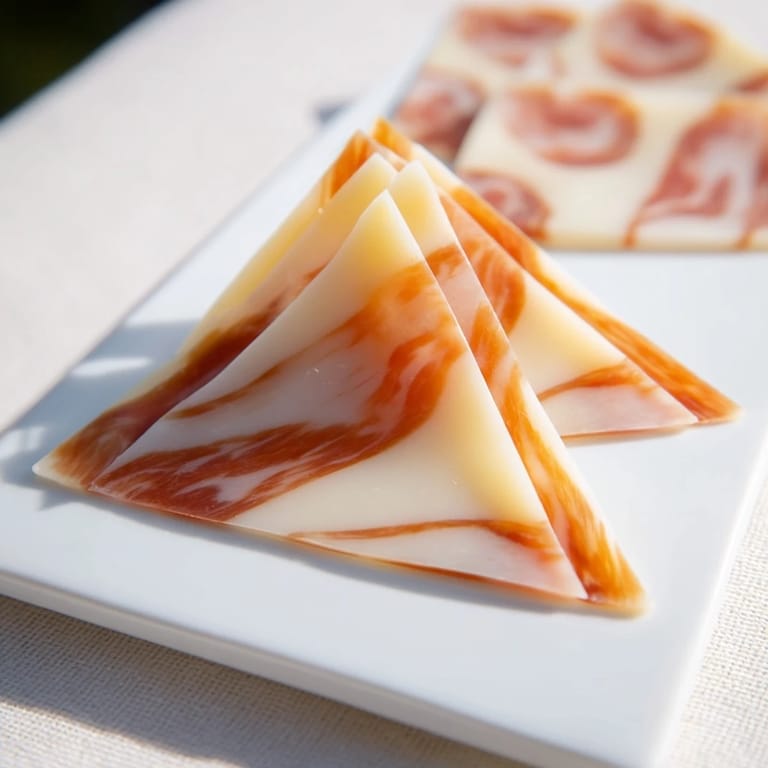
- Lay the cheese slices in the first third with slight overlaps, creating a loose stack that shows off those beautiful crystalline edges. It should look casual but intentional.
- Layer the Jamón:
- In the second third, fold each slice gently and let them bunch slightly—this is where the ham gets to be theatrical. The folds catch light and add visual interest.
- Place Your Olives:
- For the final third, you can pile them in a small bowl for elegance, or arrange them directly on the board in a loose cluster. Either way, they should feel like a finishing flourish.
- Serve Right Away:
- Bring everything to room temperature if it's been sitting in the fridge. The flavors of aged cheese and cured meat really open up when they're not cold, and those olives need warmth to show their buttery side.
 Pin
Pin I remember my friend leaning in close, studying each section like it was a small art exhibition. We ended up talking through every flavor, noticing things we'd missed before. That's the gift of this board—it slows people down and makes them actually taste.
The Power of Negative Space
In cooking and in life, what you leave out matters as much as what you include. This board taught me that. When I used to make boards with six cheeses, four cured meats, nuts, jams, and crackers, I thought I was being generous. Instead, I was making it harder for anyone to actually enjoy anything. The Minimalism Master strips all that away and trusts the ingredients to be enough. Your guests will taste better because there's less distraction. Your kitchen work is lighter. And somehow, it feels more luxurious, not less.
A Board for Every Occasion
This arrangement works beautifully for an impromptu snack for two, but it also scales up if you're feeding more. Make it as wide as your board will allow, keeping that three-part division. A larger board actually enhances the visual impact—you get those dramatic spaces between sections. I've made this before a dinner party, right before guests arrived, and it set such a calm, collected tone for the whole evening. Everyone seemed to relax more, eat more slowly, talk more deeply. There's something about simplicity that puts people at ease.
Pairing and Serving Suggestions
A crisp, dry white wine—think Muscadet or a dry Riesling—is the natural companion here. Champagne works beautifully too if you're feeling celebratory. Water is essential, to cleanse your palate between the salty ham and the creamy cheese. And here's something I learned the hard way: serve all the wine and water at the temperature it's meant to be enjoyed, but never rush your guests through the board itself.
- Let the board sit for five minutes after arranging so all three elements reach their optimal temperature and flavor.
- Provide small knives or spreaders so people can cut cheese as needed rather than grabbing pre-sliced pieces that might dry out.
- Don't feel obligated to add anything else—the three ingredients are the complete story here.
 Pin
Pin This board reminds me that sometimes the most elegant thing you can do is step back and let quality speak for itself. It's a lesson I use far beyond the kitchen.
Recipe Q&A
- → How should the serving board be arranged?
Divide the board into three equal sections, placing cheese, charcuterie, and olives in separate thirds to highlight each component distinctly.
- → Can the aged Comté be substituted?
Yes, alternatives like Gruyère or Manchego can be used to maintain the aged cheese profile.
- → What is the best way to serve the olives?
Castelvetrano olives can be placed in a small bowl or piled neatly on the board’s third section for a tidy presentation.
- → Are there any dietary considerations?
This dish is suitable for vegetarian and gluten-free diets but contains milk and potentially traces from charcuterie; check allergens accordingly.
- → What beverages pair well with this board?
Crisp, dry white wines or Champagne complement the flavors and textures beautifully.