 Pin
Pin My neighbor stopped by one December afternoon with a terrible cold, and I found myself simmering ginger slices in broth without really thinking about it—just something my hands seemed to remember. The kitchen filled with this warm, almost medicinal steam, and when I stirred in the miso at the end, the whole thing transformed into something that felt less like soup and more like a gentle reset button. She drank two bowls and said it was the first time she'd felt warm from the inside out in days. That's when I realized this wasn't just another recipe; it was one of those dishes that works quietly, without fanfare.
I made this soup on a snowy evening when my partner came home saying his coworkers had all gotten sick, and he was trying not to panic. I didn't make a big deal of it—just quietly chopped vegetables while he changed clothes, and by the time he sat down with a bowl, something about the ritual of it seemed to ease his worry. He had seconds. The next morning, he felt fine, and I can't prove the soup did anything, but we both believe it did.
Ingredients
- Low-sodium vegetable broth (6 cups): This is your foundation, so choose one you'd actually drink on its own—the quality matters because there's nothing to hide behind.
- Fresh ginger (2-inch piece, peeled and thinly sliced): Don't pre-slice it unless you're cooking immediately; I learned the hard way that ginger oxidizes and loses that bright bite if it sits around.
- Garlic (2 cloves, thinly sliced): Slice it just before cooking so it releases its essence into the broth rather than sitting as separate pieces.
- White or yellow miso paste (2 tablespoons): This is where the probiotic magic lives, but heat destroys it, so we add it at the very end—it's the whole reason we're careful with the temperature.
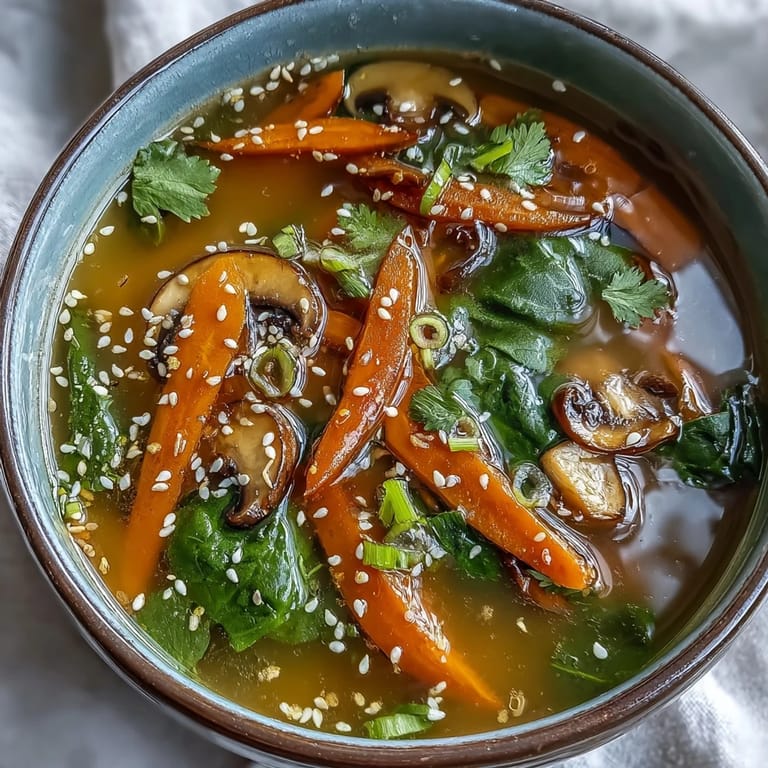
- Shiitake mushrooms (1 cup, thinly sliced): They add an earthy, meaty quality that makes the broth richer without any animal products.
- Baby spinach or bok choy (1 cup, roughly chopped): Either works beautifully; spinach is delicate and wilts almost instantly, while bok choy holds its texture a bit longer.
- Carrot (1 medium, julienned or thinly sliced): Thin slices are key—they cook through in the last few minutes without turning to mush.
- Green onions (2, sliced): Save these for the very end; they're your brightness, and sliced raw, they keep that sharp onion character.
- Toasted sesame seeds (1 tablespoon): Toast them yourself if you have time—they're completely different from raw, with this deeper, almost nutty flavor.
- Fresh cilantro (1 tablespoon, chopped, optional): A handful of cilantro lifts the whole thing, adding this herbaceous note that feels modern and fresh.
- Chili oil or red pepper flakes (1 teaspoon, optional): A tiny drizzle gives heat without overwhelming the delicate broth.
Tired of Takeout? 🥡
Get 10 meals you can make faster than delivery arrives. Seriously.
One email. No spam. Unsubscribe anytime.
Instructions
- Bring the broth to a gentle simmer:
- Pour your vegetable broth into a large saucepan and let it heat over medium until you see those first lazy bubbles breaking the surface. You want a simmer, not a rolling boil—something barely active that invites ingredients in rather than attacking them.
- Infuse with ginger and garlic:
- Add your thin-sliced ginger and garlic and let them float around for about 10 minutes, which gives them time to release their warmth and flavor without disintegrating. You'll notice the broth starting to smell noticeably different—spicier, more alive.
- Cook the mushrooms and carrot:
- Stir in the shiitake slices and carrot strips and let them simmer for 5 minutes until they've softened but still have a tiny bit of resistance when you bite them. Watch them change color slightly as they absorb the broth's flavor.
- Prepare the miso mixture:
- Ladle out one cup of the hot broth into a small bowl and whisk the miso paste into it until completely smooth—no lumps. This step matters because miso paste won't dissolve directly into the pot; it needs a little private introduction first.
- Return the miso to the pot carefully:
- Lower the heat to low and pour the miso mixture back into the soup, stirring gently to combine. This is the moment where you resist the urge to crank up the heat; keeping it low preserves those beneficial probiotics that make miso paste worth using in the first place.
- Add the greens and finish:
- Stir in the spinach or bok choy and sliced green onions, and within about a minute, you'll see the greens collapse into the broth, releasing their color and final notes of freshness. Taste it now and decide if it needs a bit more miso depth or a splash of soy sauce for salinity.
- Serve and garnish:
- Ladle the soup into bowls and top each one with a small handful of sesame seeds, a scatter of cilantro if you're using it, and a careful drizzle of chili oil. The garnish isn't just decoration—it's where the final texture and heat come from.
 Pin
Pin I served this soup to my mom on a morning when she was feeling worn down, and something about watching her wrap her hands around the warm bowl and just breathe the steam in reminded me that food is sometimes just about showing up for someone. She didn't need advice or cheerleading—just a bowl of soup that said I was thinking of her.
When to Add Extra Protein
If you want something more substantial, cubed silken tofu is your answer—it's so soft that it barely needs cooking and just absorbs all the miso and ginger flavor as it sits in the broth. Add it in the last minute or two, right after the miso goes in, so it stays tender rather than getting tough.
Making It Heartier
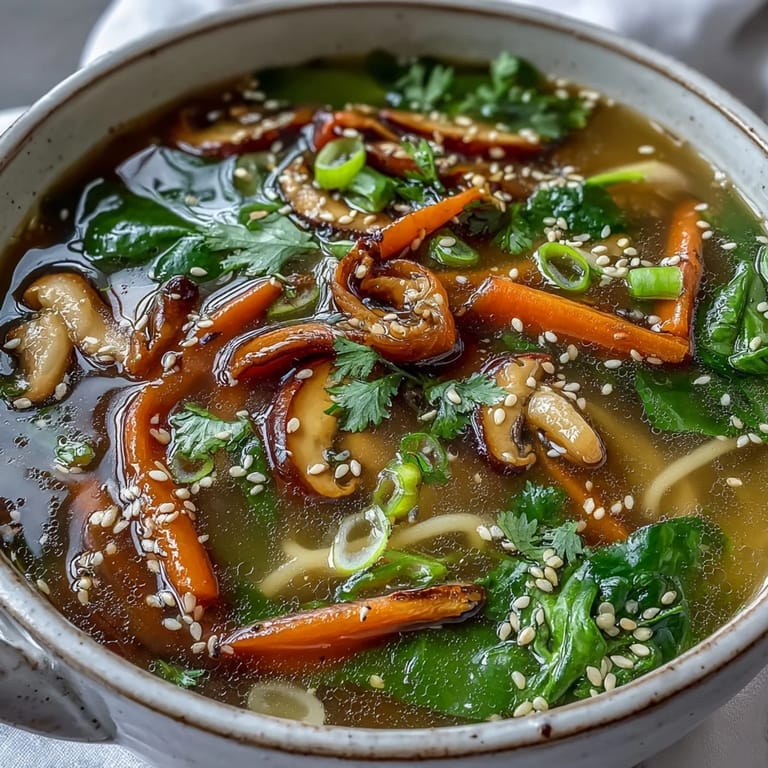
Sometimes a light soup isn't enough, and that's when I reach for noodles—soba or udon add substance without changing the fundamental character of the broth. Cook the noodles separately so you control their texture, then divide them among bowls and pour the soup over top, which lets people decide how much noodle they want with each spoonful.
Flavor Variations to Explore
Red miso brings a deeper, funkier richness that transforms this from a simple broth into something more complex and comforting. I also love swapping the spinach for kale when I want something that holds its shape better, or adding a splash of rice vinegar if the soup tastes a little flat and needs brightness. There's actually room to make this recipe your own, and it only gets better with each small adjustment you make.
- Try red miso when you want earthier, deeper warming.
- A light drizzle of toasted sesame oil at the very end brings everything into focus.
- Save vegetable scraps in the freezer and use them to make your own broth for even more flavor.
 Pin
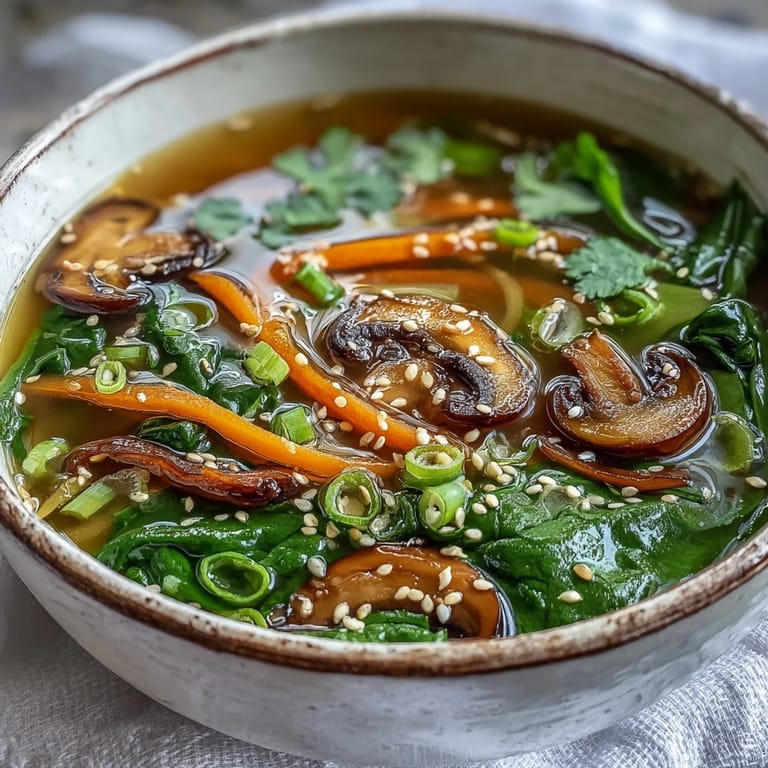
Pin This soup has a quiet way of becoming part of your winter rhythm, something you make without needing an excuse or permission. It's the kind of dish that reminds you that taking care of yourself can be simple and delicious at the same time.
Recipe Q&A
- → Can I use different types of miso paste?
White or yellow miso works best for a delicate flavor, but red miso offers a deeper, more intense taste. Avoid boiling miso as high temperatures destroy beneficial probiotics.
- → What vegetables can I substitute?
Kale, Swiss chard, or napa cabbage work well instead of spinach or bok choy. Other mushrooms like cremini or oyster can replace shiitakes. Add diced daikon radish for extra crunch.
- → How do I store leftovers?
Keep refrigerated in an airtight container for up to 3 days. Reheat gently over low heat—avoid boiling to preserve the miso's probiotic benefits. The flavors often deepen overnight.
- → Can I make this gluten-free?
Yes, simply ensure your vegetable broth and miso paste are certified gluten-free. Most traditional miso contains fermented soybeans and rice, making it naturally gluten-free.
- → How can I add more protein?
Cubed silken tofu absorbs the flavorful broth beautifully. Edamame, cooked chickpeas, or shredded chicken also work well. For a heartier version, add soba or udon noodles.
- → Why shouldn't I boil the miso?
High heat destroys the beneficial enzymes and probiotics in fermented miso paste. Always remove some hot broth to dissolve the miso separately, then stir it back into the soup off the heat.