 Pin
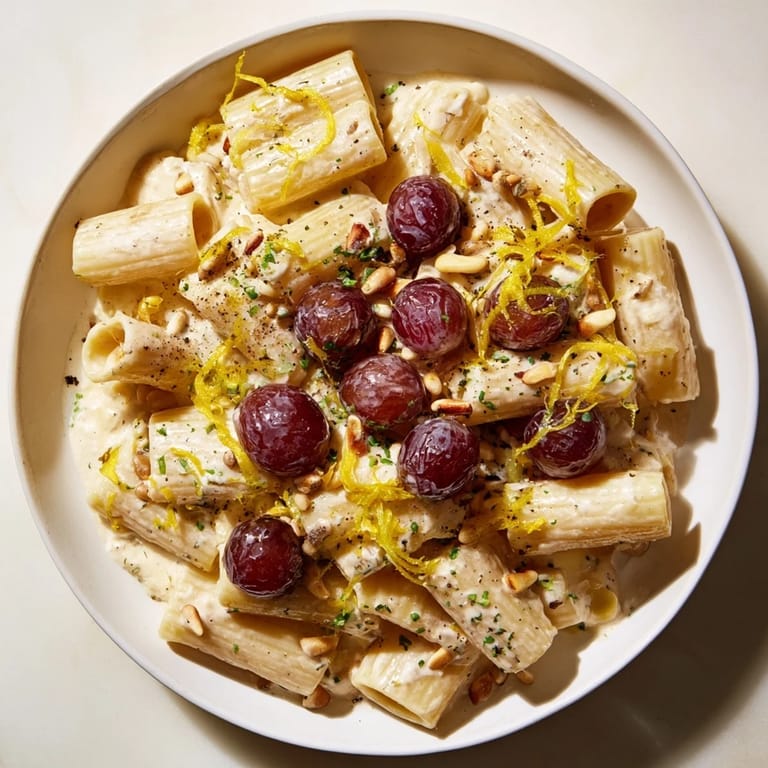
Pin The first time I served this pasta, my dinner guests did a double-take at the plate—roasted grapes on pasta seemed almost wrong until they tasted it. That sweet-tart burst against the creamy ricotta and bright lemon was unexpected enough to make people pause mid-bite and ask for the recipe. I've made it dozens of times since, and it never stops surprising me how such simple ingredients create something that feels restaurant-worthy but tastes entirely homemade.
I remember cooking this for a friend who'd been having a rough week, and watching her face light up when she tasted those roasted grapes was everything. She came back the next Sunday asking if I'd make it again, and it became our standing dinner date tradition for almost a year.
Ingredients
- Pasta (350 g dried short pasta): Penne, rigatoni, or fusilli all work beautifully—I prefer penne because it catches the ricotta sauce in its tubes and holds onto those precious grape juices.
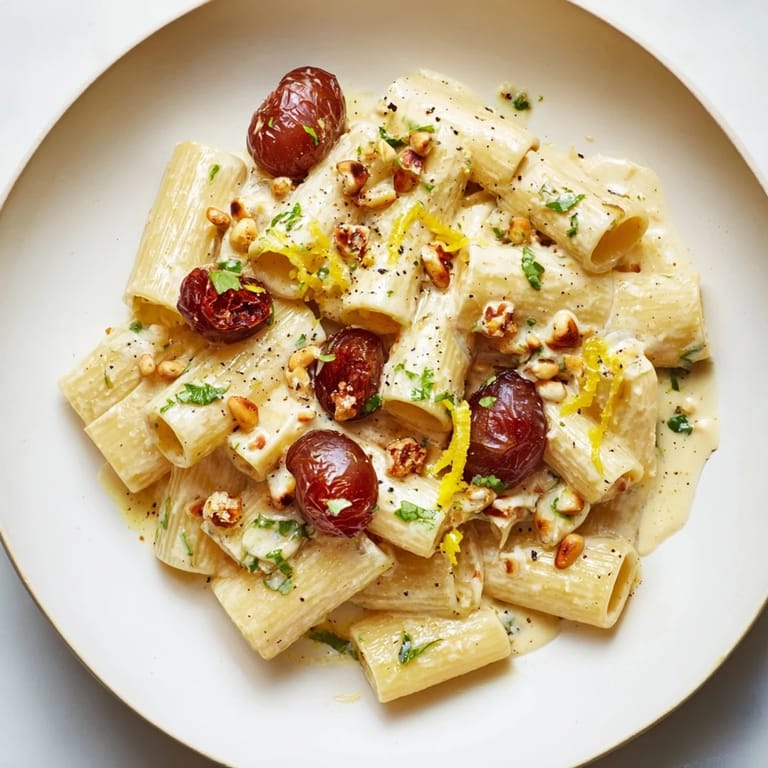
- Red or black grapes (300 g seedless): The magic of this dish lives here; roasting concentrates their natural sugars and gives them a slight caramelized edge that transforms them completely.
- Fresh ricotta (250 g): Use the best ricotta you can find—it's the canvas for everything else, so creamy quality matters.
- Lemon zest and juice: This cuts through the richness and keeps the whole dish feeling bright and alive rather than heavy.
- Fresh basil and parsley: Added at the end, these keep the dish feeling like spring even when it's not.
- Extra-virgin olive oil (2 tbsp): The final drizzle matters; a good one adds depth and a subtle peppery finish.
- Toasted pine nuts (40 g optional): They add textural contrast and a nutty richness that ties everything together, though the dish works without them.
Tired of Takeout? 🥡
Get 10 meals you can make faster than delivery arrives. Seriously.
One email. No spam. Unsubscribe anytime.
Instructions
- Get the oven ready and prep your grapes:
- Preheat your oven to 220°C (425°F) and line a baking tray with parchment paper. Remove stems from your grapes and spread them out in a single layer, then toss them with 1 tbsp olive oil, 1/2 tsp salt, and 1/4 tsp pepper until they're evenly coated.
- Roast the grapes until blistered:
- Pop the tray in the oven for 20–25 minutes, giving it a shake halfway through. You'll know they're done when they're soft, wrinkled, and starting to caramelize at the edges—the kitchen will smell almost jammy and sweet.
- Cook the pasta while grapes roast:
- Bring a large pot of salted water to a boil and cook your pasta according to package directions until it's just tender with a little bite. Before draining, scoop out and reserve about 120 ml (1/2 cup) of the starchy pasta water—this is your secret to a silky sauce.
- Make the ricotta mixture:
- In a bowl, combine your ricotta with the lemon zest, lemon juice, chopped basil, parsley, and 1/4 tsp salt. Stir gently until smooth and creamy, but don't overmix or the ricotta can get grainy.
- Bring it all together gently:
- Return your drained pasta to the pot and add the ricotta mixture, tossing slowly to coat everything. If it feels too thick, add a splash or two of that reserved pasta water until you reach a creamy, sauce-like consistency that clings to each piece.
- Fold in the roasted grapes:
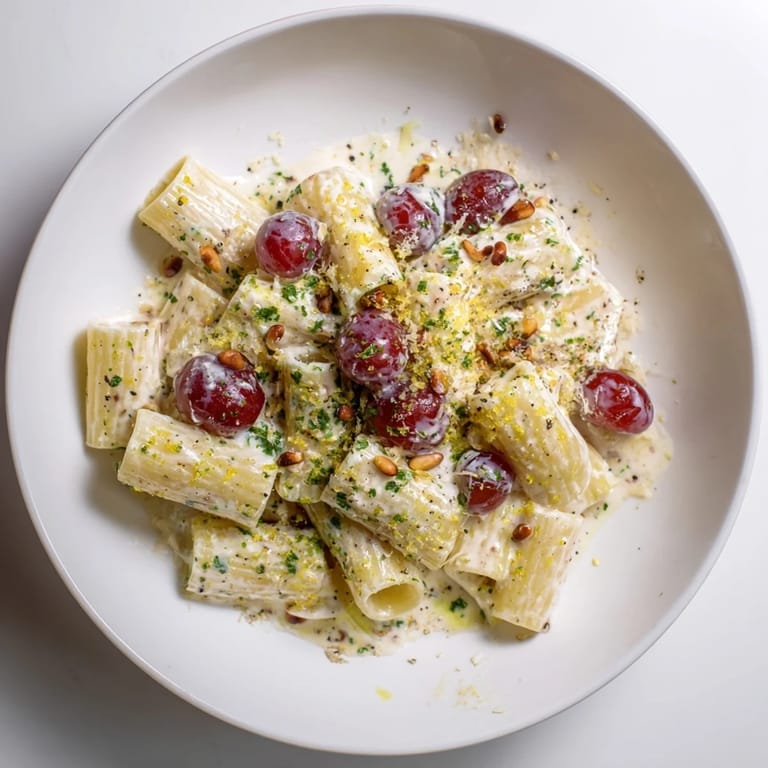
- Gently add the roasted grapes and all their juices to the pasta, folding everything together with a light hand so the grapes don't burst into mush. Drizzle the whole thing with your best extra-virgin olive oil and give it one final gentle toss.
- Plate and finish:
- Divide the pasta among your plates and top each serving with toasted pine nuts, fresh cracked black pepper, a whisper of fresh basil, and a scatter of Parmesan if you like. Serve right away while everything's still warm.
 Pin
Pin There's something almost magical about how a dish this elegant can be so forgiving. I once made it for a potluck where I was convinced I'd overroasted the grapes, but they turned out to be the best batch yet—wrinkled and concentrated into little flavor bombs.
Why This Combination Works
Sweet roasted grapes shouldn't work alongside creamy ricotta, but the brightness of fresh lemon and herbs keeps everything in balance. It's an Italian principle I only recently understood—the interplay of richness, acid, herbs, and unexpected sweetness. Each element does something different, but together they create something that feels both comforting and surprising.
Making It Your Own
This recipe is a canvas. I've swapped ricotta for goat cheese when I wanted something tangier, and the grapes played beautifully against that sharp edge. Some people use walnuts instead of pine nuts, others add a pinch of red pepper flakes for heat. The core of the dish—the roasted grapes and creamy cheese—is what matters; everything else is permission to play.
Serving and Pairing Ideas
I serve this as a main course for four, or as a more generous side alongside a simple green salad with vinaigrette. A crisp white wine like Sauvignon Blanc or Pinot Grigio cuts through the richness perfectly and echoes the lemon. It's equally at home at a casual dinner party or a quiet night in.
- For a nut-free version, skip the pine nuts entirely—the dish is complete without them.
- Whole-wheat or gluten-free pasta works beautifully if you need it to.
- Make the ricotta mixture up to a few hours ahead, but add the pasta water adjustment right before serving to keep the sauce from getting stodgy.
 Pin
Pin This dish proved to me that the best recipes don't always come from tradition—sometimes they come from standing in your kitchen with what's on hand and being brave enough to try something unexpected. That's where the magic lives.
Recipe Q&A
- → How do roasted grapes affect the dish?
Roasting grapes softens them and intensifies their sweetness, adding a caramelized depth that contrasts beautifully with the creamy ricotta and fresh herbs.
- → Can I use different types of pasta?
Short pasta shapes like penne, rigatoni, or fusilli work best as they hold the creamy sauce and grape bits effectively.
- → What role does lemon zest play?
Lemon zest adds a bright, citrus aroma and subtle sharpness, balancing the richness of the ricotta and sweetness of the grapes.
- → Are pine nuts necessary?
Pine nuts are optional but provide a pleasant toasted crunch that complements the soft textures and flavors of the dish.
- → How should the pasta water be used?
Reserved pasta water is gradually added to the ricotta mixture to create a silky sauce that evenly coats the pasta without thinning out flavors.
- → Can this be adapted for dietary preferences?
Yes, whole-wheat or gluten-free pasta can be used, and goat cheese may substitute ricotta for a tangier profile. Pine nuts can be omitted for nut-free options.