 Pin
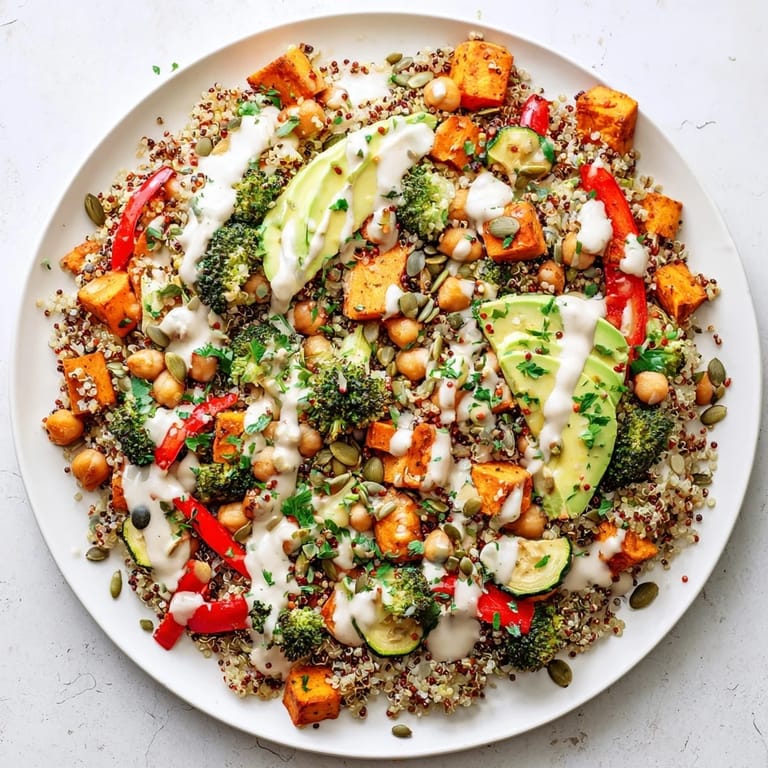
Pin I stumbled onto Buddha bowls during a particularly uninspired Tuesday lunch, staring at my fridge wondering why everything felt so separate and disconnected. That's when it hit me—what if I stopped thinking of lunch as a plate and started thinking of it as a conversation between textures and tastes? This quinoa Buddha bowl became my answer, a way to turn whatever I had roasted into something that felt intentional and whole.
My friend Maya came over on a rainy Saturday afternoon, and I threw together four of these bowls without much fanfare—just arranged them on the counter, added the dressing, and let her dig in. She went quiet for a moment, then asked if I'd been cooking professionally on the side, which made me laugh because it was just organized roasted vegetables and a grain. That's when I realized the magic wasn't in complexity; it was in making each element taste like it belonged there.
Ingredients
- Quinoa: This grain isn't just trendy—it's a complete protein with all nine amino acids, and rinsing it first removes the bitter coating nobody tells you about until the first bite goes wrong.
- Sweet potato: The natural sweetness caramelizes beautifully when roasted hot and fast, creating little crispy edges that make the whole bowl feel less healthy and more indulgent.
- Red bell pepper: Choose one that's heavy for its size; they'll have more flesh and less watery interior, and the sweetness deepens as they roast.
- Zucchini: Slice it thick enough that it won't turn into mush—about a quarter-inch—and the pieces will stay intact and actually taste like something.
- Broccoli florets: Toss them in oil well or they'll dry out in the oven; the goal is tender-crisp with those golden edges, not sad little trees.
- Smoked paprika: This one ingredient transforms roasted vegetables from forgettable to memorable with barely any effort on your part.
- Chickpeas: Drain and rinse them thoroughly, and if you want extra crispy ones, pat them dry and roast them separately for fifteen minutes alongside the vegetables.
- Tahini: The dressing's backbone, but it can be stubborn; whisk it with the lemon juice first to prevent it from clumping into a paste.
- Tahini dressing components: The lemon juice cuts the richness, the maple syrup balances the earthiness, and the water is your control—add it slowly until you get a consistency that clings to a spoon but still pours.
Tired of Takeout? 🥡
Get 10 meals you can make faster than delivery arrives. Seriously.
One email. No spam. Unsubscribe anytime.
Instructions
- Heat your oven and prep the vegetables:
- Set the oven to 425°F and take your time with the knife work—uniform pieces roast evenly. Toss everything with oil and spices on a large sheet, making sure nothing's crowded; they need space to caramelize, not steam.
- Get the vegetables into the oven:
- Roast for twenty to twenty-five minutes, stirring halfway through. You'll know they're ready when the edges are golden and a fork slides through without resistance.
- Cook the quinoa while vegetables roast:
- Rinse it under cold water—this matters more than people admit. Combine with water and salt, bring to a boil, then reduce heat and cover; fifteen minutes later it'll be fluffy and the water completely absorbed.
- Make the dressing with intention:
- Whisk tahini and lemon juice first to prevent clumping, then add the sweet and savory elements. Taste as you go; you might need more salt or lemon depending on your tahini's personality.
- Assemble your bowl like you're plating art:
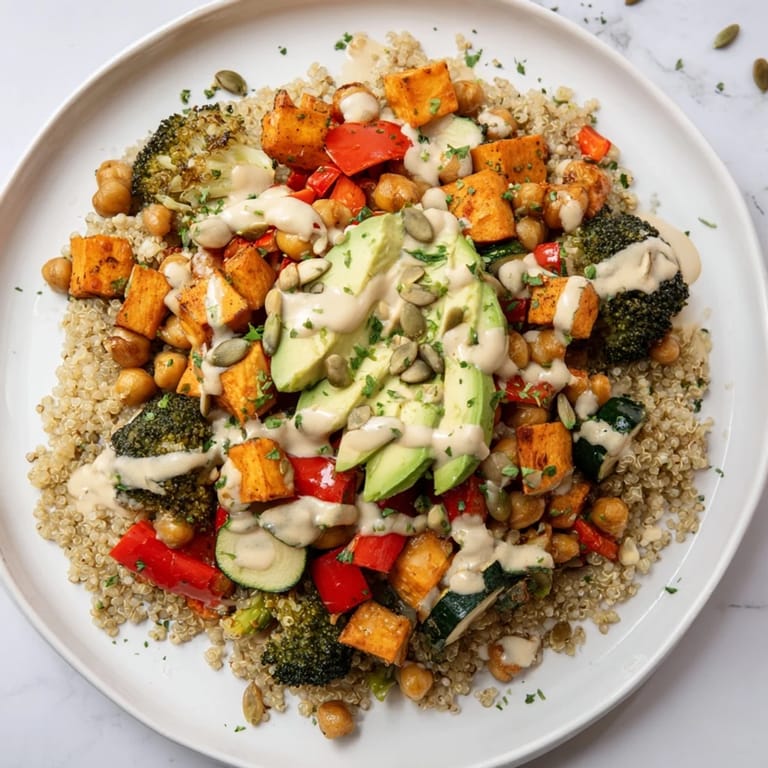
- Start with quinoa as your base, arrange the roasted vegetables in sections, scatter chickpeas on top, and drizzle the dressing in a way that reaches every bite.
 Pin
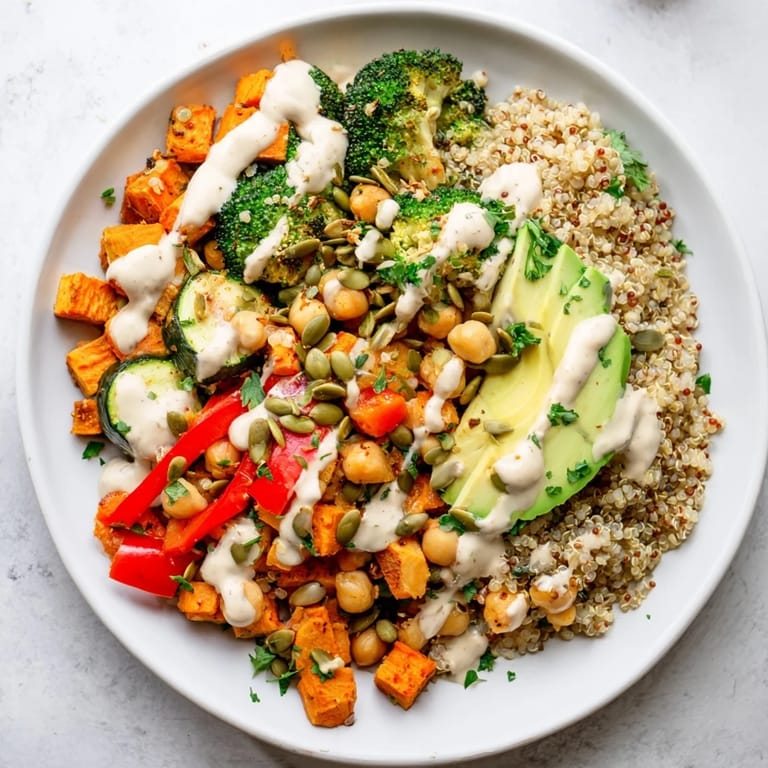
Pin There's a moment in cooking when you stop thinking about the individual steps and start tasting everything as it comes together—that's when a Buddha bowl stops being a meal and becomes something you actually want to eat again tomorrow. For me, that moment arrived the first time I nailed the dressing-to-vegetable ratio, when every bite had something creamy, something crunchy, something warm, and something bright.
Building Your Bowl: The Architecture That Matters
The order you assemble matters more than you'd think. Warm quinoa holds heat and helps soften the avocado if you add it; hot vegetables sitting directly on the grain warm up the dressing slightly, making it cling better; and dressing goes on last so it doesn't get absorbed into the grain before you eat it. Think of it like layers of flavor and temperature working together, not just ingredients stacked at random.
Dressing That Changes Everything
This tahini dressing is a gateway—once you've made it once, you'll make it constantly for salads, roasted vegetables, grain bowls, and probably spooned straight from a bowl when nobody's watching. The combination of sesame depth, citrus brightness, and subtle sweetness from the maple syrup makes it taste more complicated than the five minutes it takes to whisk. Keep extra in the fridge; it keeps for a week and tastes even better the next day as flavors meld.
Variations and Flexibility
The beauty of this bowl is that it works with whatever you have roasted or on hand. Swap in cauliflower, carrots, Brussels sprouts, or whatever's calling to you from the vegetable drawer. Chickpeas are wonderful, but black beans, lentils, or even white beans shift the bowl's personality without changing its soul. Avocado is optional but that creamy richness against the tahini dressing is something special; pumpkin seeds add crunch and nutty depth; and fresh herbs—parsley, cilantro, or even basil—brighten the whole thing at the end.
- Make the components ahead and assemble just before eating for the best temperature contrast and texture.
- Roast a double batch of vegetables on Sunday and use them throughout the week in different combinations.
- The dressing is thick enough to hold in a jar, making these bowls genuinely portable for lunch at work or a picnic.
 Pin
Pin This bowl taught me that eating well doesn't have to feel like punishment or perfection; it just has to taste good and make you feel nourished afterward. Make it once for yourself and you'll understand why Buddha bowls became a thing.
Recipe Q&A
- → How do I cook quinoa to keep it fluffy?
Rinse quinoa under cold water, then simmer in salted water for 15 minutes. Let it sit covered off heat for 5 minutes before fluffing with a fork.
- → What vegetables work best for roasting?
Sweet potato, bell pepper, zucchini, and broccoli roast well, developing caramelized edges and tender textures.
- → How can I make the tahini dressing creamy but pourable?
Whisk tahini with lemon juice, water, maple syrup, garlic, and salt. Adjust water gradually to reach a smooth and pourable consistency.
- → Can I substitute chickpeas with other legumes?
Yes, black beans or lentils can be used as alternatives for varied flavor and texture.
- → Are there topping suggestions to enhance texture?
Avocado slices, pumpkin seeds, and fresh parsley or cilantro add creamy, crunchy, and fresh notes respectively.