 Pin
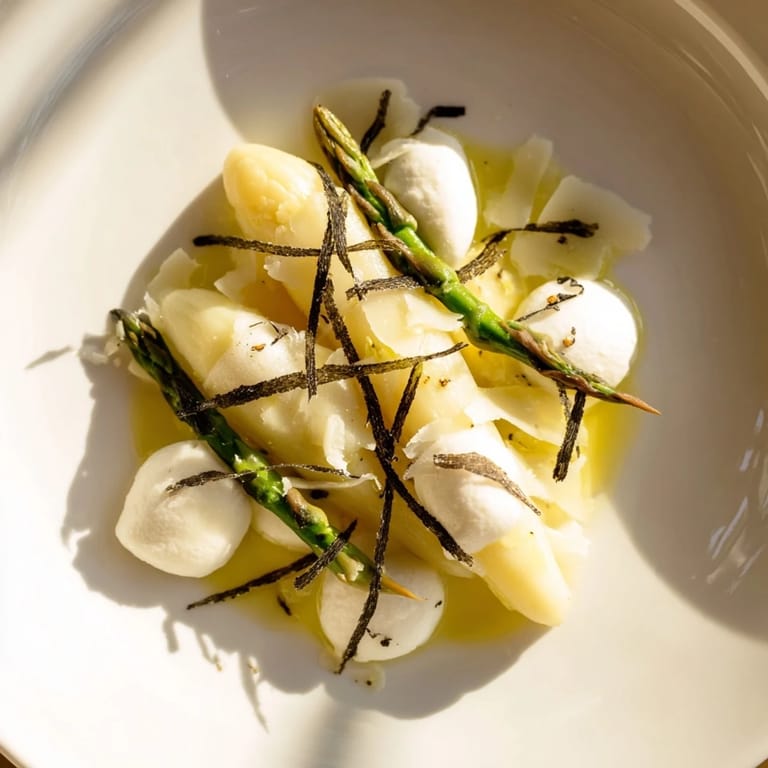
Pin I discovered white asparagus entirely by accident at a small market in Brussels, pale and ghostly under the morning light. The vendor explained it grows underground, protected from sunlight, which gives it that delicate sweetness and tender texture. That single bunch sparked an obsession with creating something equally refined—something that would let those whispered flavors shine without competition. When I paired it with burrata and truffle, the dish practically assembled itself, and suddenly I had something that felt almost too elegant for my home kitchen.
I made this for a dinner party on a rainy April evening, and watching my friend taste it, then close their eyes for a moment—that's when I knew it was special. The combination of textures and the way the truffle aroma hit right before the flavors landed felt like sharing a secret. It became the dish I return to whenever I want to feel like I've done something truly well.
Ingredients
- White asparagus, 500 g: Peel these gently after trimming the woody ends; the skin comes away easily and the flesh underneath is where that tender sweetness lives.
- Burrata or buffalo mozzarella, 75 g: Buy it as close to serving time as possible, and let it breathe on the plate rather than sitting cold in the fridge.
- Aged Comté cheese, 75 g: Shave it thin with a vegetable peeler or cheese plane; thick chunks lose the delicate nature of this dish.
- Parmigiano-Reggiano, 50 g: Grate it finely so it catches the light and distributes evenly across the plate.
- Fresh black truffle, 15 g (or truffle paste, 1–2 tbsp): Fresh truffle is a luxury but worth it if you can find it; the paste version is reliable and honestly, most people can't tell the difference once it's shaved thin.
- Extra-virgin olive oil, 2 tbsp: Use something you actually love tasting; this isn't the place for a mediocre oil.
- Fresh lemon juice, 1 tbsp: Squeeze it just before you dress; bottled juice loses something essential.
- Flaky sea salt, 1/2 tsp: The texture matters here—it's a finishing touch that adds dimension.
- Freshly ground white pepper: White pepper keeps the dish looking pristine while adding gentle heat.
- Microgreens or chervil (optional): A small handful lifts the whole plate visually and adds a peppery freshness.
Tired of Takeout? 🥡
Get 10 meals you can make faster than delivery arrives. Seriously.
One email. No spam. Unsubscribe anytime.
Instructions
- Bring water to a simmer and blanch the asparagus:
- Fill a large pot with salted water—it should taste like the sea. When it's barely simmering, add your asparagus and watch it carefully; you want it tender enough to cut with the edge of a fork but still with a whisper of resistance.
- Shock it immediately in ice water:
- This stops the cooking and preserves that pale, delicate color. Drain gently and pat dry on clean towels so it's not waterlogged when it hits the plate.
- Arrange the asparagus on chilled plates:
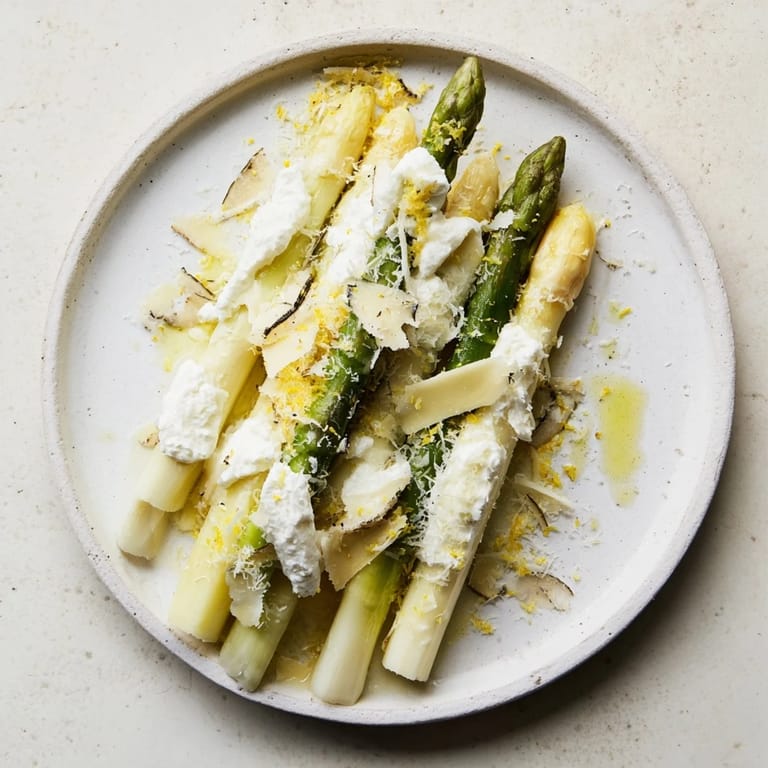
- Cold plates make all the difference with a dish like this. Slice the asparagus in half lengthwise and arrange it so it looks intentional, like you're creating something beautiful.
- Layer on the cheeses:
- Tear the burrata into bite-sized pieces and scatter them over the asparagus while it's still cool. Add your Comté shavings next, then dust with the finely grated Parmigiano-Reggiano.
- Shave the truffle in delicate stripes:
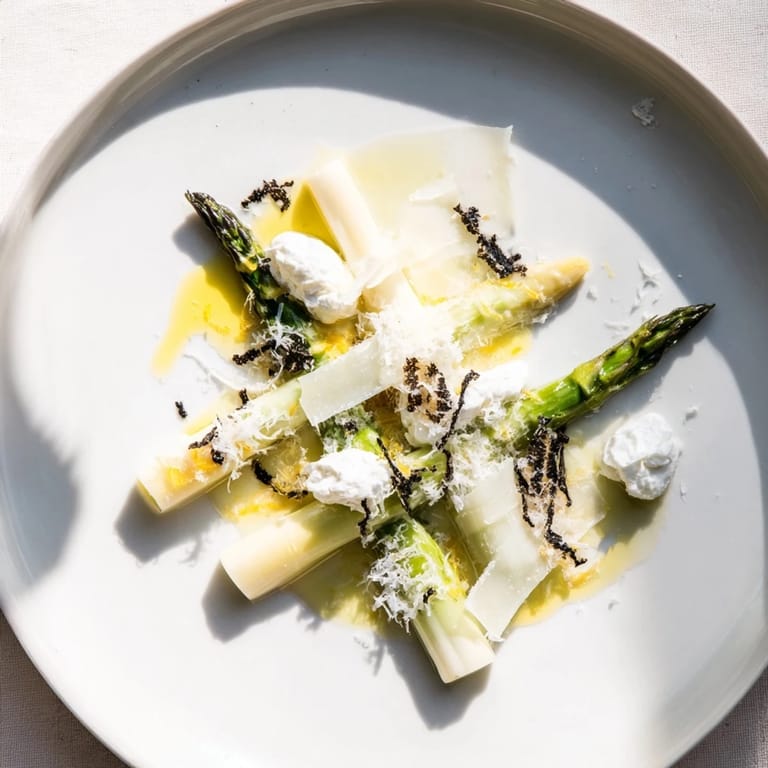
- If you have fresh truffle, use a truffle slicer or a sharp vegetable peeler to create thin stripes that drape across the plate. If using paste, draw fine lines with a small spoon or squeeze bottle for precision.
- Dress with restraint:
- Whisk together the olive oil, lemon juice, sea salt, and a tiny pinch of white pepper, then drizzle it gently and evenly across everything. This isn't a salad that needs drowning.
- Finish and serve immediately:
- A small handful of microgreens or fresh chervil scattered over the top adds a final flourish of freshness. Serve right away while the plate is still cold.
 Pin
Pin The first time someone asked for the recipe, I realized this dish had crossed over from being something I made to impress to something that genuinely made people happy. That matters more than the truffle, honestly.
Understanding White Asparagus
White asparagus grows entirely underground, blanched from sunlight, which gives it that pale, almost ivory appearance and a sweeter, more delicate flavor than its green cousin. It has a tender texture when cooked properly and lacks the grassy notes you might expect from green asparagus. If you can't find white asparagus, you can substitute green, but reduce the cooking time by a minute or two since it cooks faster and has a firmer structure. The beauty of white asparagus in this dish is that it doesn't compete with the cheeses and truffle—it creates a neutral, elegant canvas for them to shine.
Cheese Pairing Philosophy
The three cheeses here work together like a flavor pyramid: creamy richness from the burrata, nutty depth from the Comté, and a sharp, umami punch from the Parmigiano-Reggiano. Each one brings something different to the table, and together they create a complexity that feels more interesting than any single cheese could achieve. If Comté isn't available, aged Gruyère or even a mild Emmental works beautifully as a substitute. The key is finding cheeses with some aging on them—they add sophistication without being overpowering.
Working with Truffle
Truffle is an investment, but a little goes a long way when you're shaving it thin and letting it sit on top of a dish where its aroma can actually reach you. If you're using fresh truffle, store it wrapped in paper inside a sealed container in the coldest part of your fridge, and use it within a few days. Truffle paste is a legitimate alternative and honestly holds up beautifully in a dish like this where the texture isn't the main event—the flavor is. For a subtle enhancement, you can also add a drop or two of truffle oil to your dressing, which deepens the earthy notes without making the dish feel heavy.
- Fresh truffle should be stored carefully and used quickly to maximize its aromatic impact.
- Truffle paste is shelf-stable and delivers reliable flavor without the expense or storage hassle of fresh.
- A light hand with truffle is always better than overdoing it—you want it to whisper, not shout.
 Pin
Pin This dish taught me that sometimes the most impressive meals are the ones where you get out of your own way and let good ingredients speak for themselves. Serve it with something crisp and dry—a Sancerre or Grüner Veltliner—and watch it disappear.
Recipe Q&A
- → How to cook white asparagus perfectly?
Simmer peeled white asparagus in salted water for 8–10 minutes until tender but firm, then chill immediately in ice water to stop cooking.
- → What cheeses complement white asparagus in this dish?
Burrata or buffalo mozzarella provide creaminess, while aged Comté and Parmigiano-Reggiano add nutty and savory notes.
- → How is black truffle incorporated?
Fresh black truffle can be sliced thinly over the dish or replaced with high-quality truffle paste drizzled in delicate stripes.
- → What dressing enhances the flavors?
A simple dressing of extra-virgin olive oil, fresh lemon juice, flaky sea salt, and white pepper balances richness with brightness.
- → Are there suitable garnishes?
Microgreens or chervil add a fresh, herbal finish and visual appeal, enhancing the dish subtly without overpowering.
- → Can Comté cheese be substituted?
Gruyère or mild goat cheese can be used as alternatives if Comté is unavailable while maintaining creamy, earthy tones.