 Pin
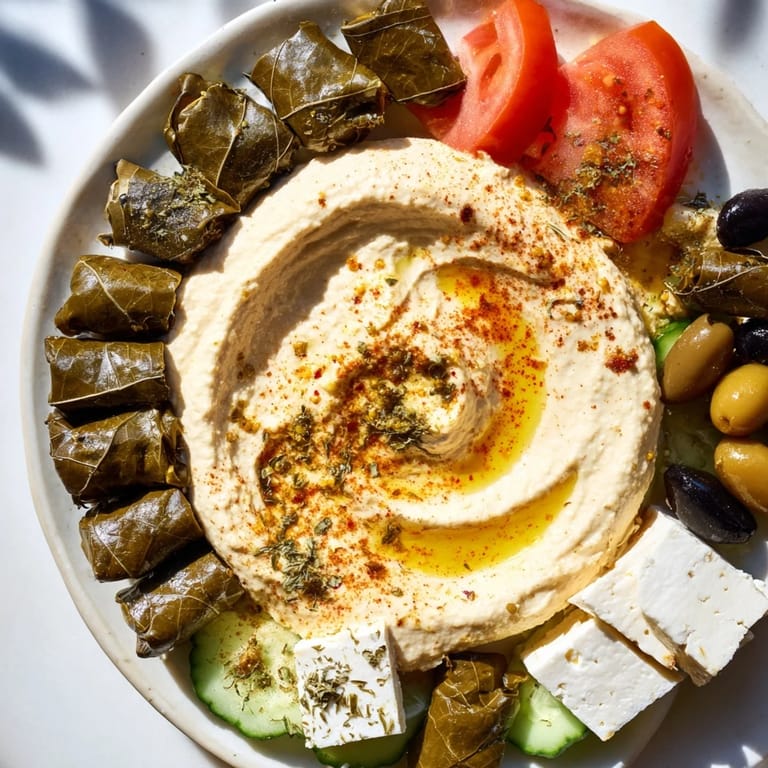
Pin The first time I assembled a proper Turkish meze platter, I wasn't trying to impress anyone—I was just hungry and tired of making decisions. My neighbor had left a container of homemade dolmas on my doorstep, and I had some chickpeas that needed using, so I threw together what I thought might work. What emerged was this stunning, almost accidental spread that somehow made a Tuesday afternoon feel like a celebration. Now, whenever I need to feed people or myself without fuss, this platter is my answer.
I made this for a small gathering last spring, and I remember standing in my kitchen at 4 PM, realizing I'd forgotten to plan dinner entirely. Rather than panic, I opened my cupboards and found the tahini, grabbed some cheese from the fridge, and in thirty minutes had created something that made my friends linger at the table talking for hours. That's when I understood that meze isn't really about perfection—it's about abundance and sharing, about giving people permission to slow down.
Ingredients
- Chickpeas: The foundation of silky hummus; rinsing them well removes the starchy liquid that would make your blend grainy instead of cloud-like.
- Tahini: This sesame paste carries the whole flavor profile, so don't skip it or substitute lightly—it's the soul of good hummus.
- Extra-virgin olive oil: Use something you actually like tasting on its own, because it absolutely will be.
- Garlic: One small clove is honest; more is aggressive, and this platter is meant to be welcoming.
- Lemon juice: Fresh juice, not bottled—it makes the difference between hummus that tastes bright and one that tastes flat.
- Cumin: A small pinch ties everything to the Turkish tradition without overpowering.
- Feta and other cheeses: Mix at least two kinds if you can; the contrast of salty feta against milder beyaz peynir creates more interest than one cheese alone ever will.
- Mixed olives: Buy the ones kept in brine at the deli counter if possible—they taste like someone actually cared about them.
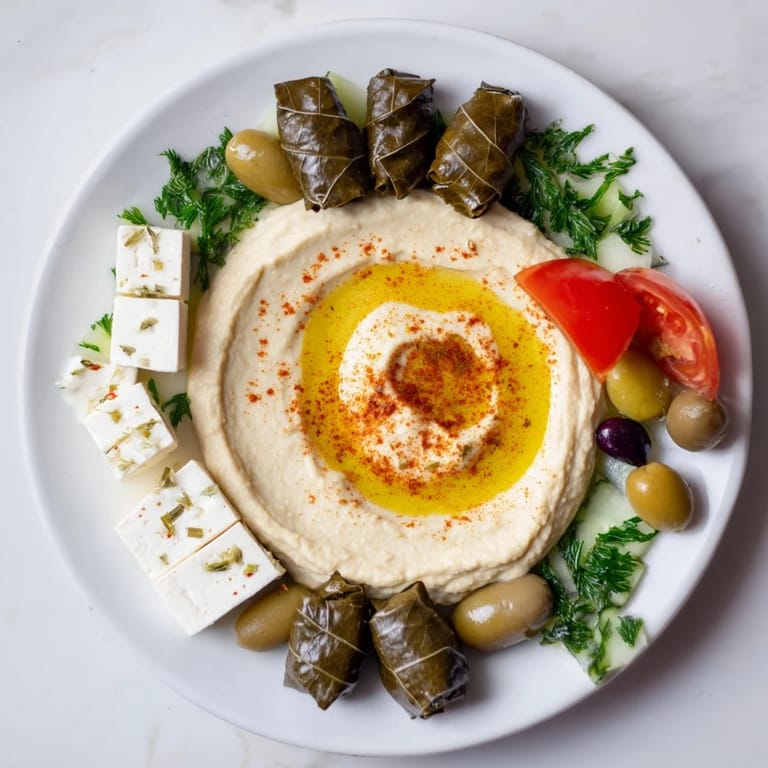
- Fresh vegetables and herbs: Cucumber, tomato, lemon, and parsley aren't decorative—they're essential breaks between richer elements, giving your palate room to rest.
Tired of Takeout? 🥡
Get 10 meals you can make faster than delivery arrives. Seriously.
One email. No spam. Unsubscribe anytime.
Instructions
- Blend your hummus:
- Add all hummus ingredients to a food processor and blend until the mixture goes from rough and grainy to completely smooth and creamy, about 2–3 minutes. Taste as you go and adjust lemon or salt if needed, then transfer to a shallow bowl and let it sit while you build the platter.
- Arrange the grape leaves:
- Place dolmas in neat folds around one section of your platter, or cluster them in the center—there's no wrong way, just what looks generous to you. If they're cold from the fridge, let them come to room temperature first so their flavors wake up.
- Group your cheeses:
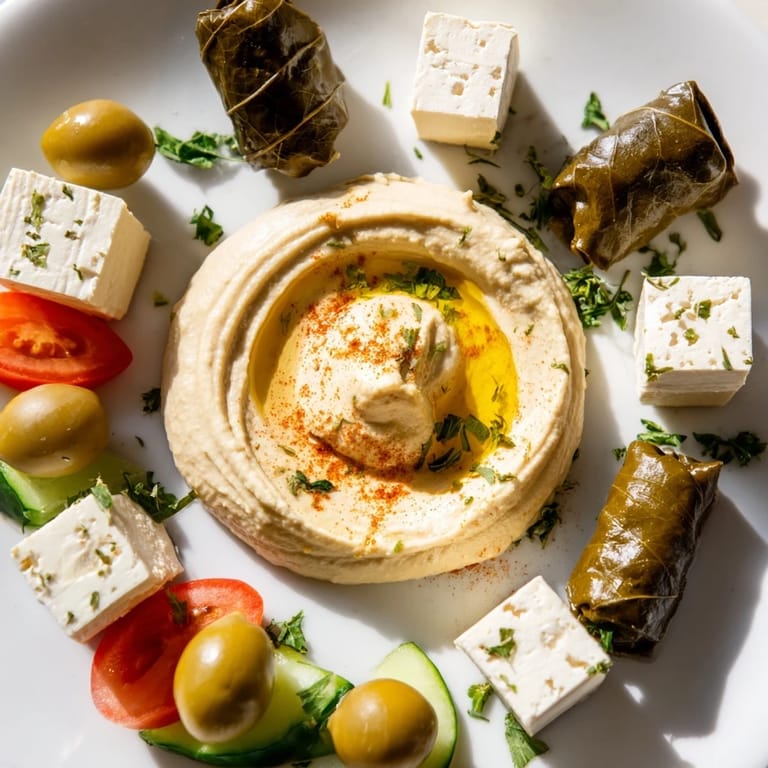
- Cut each cheese type into bite-sized pieces and cluster them in separate piles across the platter; this visual separation actually helps people taste the differences between them. Leave space for everything else rather than cramming—a platter that looks abundant feels better to eat from.
- Season and place the olives:
- Toss your olives with a bit of olive oil and a pinch of dried oregano, then either pile them into a small bowl or scatter them where there are gaps. This step is important because plain olives can taste a bit bare compared to everything else around them.
- Add fresh elements:
- Arrange cucumber and tomato slices, squeeze lemon wedges into place, and scatter parsley over everything like you're painting with green. The fresh components should peek through, not bury, the richer elements.
- Serve and let it breathe:
- Warm your pita or flatbread just before eating, cut it into triangles, and set everything on the table at once. There's something about a complete meze that invites people to eat slowly and talk more.
 Pin
Pin What I love most about this platter is that it works for almost any occasion—a casual lunch, an unexpected guest, or a moment when you want something that feels special without performance. There's something deeply generous about setting down a spread like this and watching people relax into it.
Building Your Own Variations
The beauty of meze is that it's not precious about exact ingredients. If you don't have beyaz peynir, use more feta or add some ricotta salata instead. Roasted red peppers from a jar work wonderfully alongside the other elements, and grilled eggplant tossed with garlic and lemon becomes a quiet star if you have ten minutes to char it. I've added spiced walnuts, marinated artichoke hearts, and even sliced hard-boiled eggs when the mood struck. The core formula is simple: creamy, salty, brined, fresh, and bread to tie it together.
Timing and Make-Ahead Strategy
The hummus can be made up to two days ahead and stored in the fridge under a thin layer of olive oil, which actually keeps it fresher. Cheeses can be cut and stored in containers the morning of serving. Olives tossed with oil and oregano improve if done an hour before—the oregano has time to bloom. Vegetables should be sliced close to serving time so they stay crisp and don't weep onto the platter. The dolmas are ready to go straight from the fridge. This staged approach means you can build the final platter in five relaxed minutes rather than scrambling at the last moment.
Pairing and Serving Thoughts
A crisp white wine like Turkish Narince or a Greek Assyrtiko brightens everything here without competing for attention. Raki, that clear anise spirit, is traditional and cuts through the richness beautifully if you're inclined. For non-alcoholic options, sparkling lemonade or a strong brewed tea served cold both work. The pita or flatbread is your anchor—it catches flavors, softens under the weight of everything, and makes eating feel less like picking and more like assembling bites of intention.
- Warm the bread just before serving so it's still slightly soft inside with a bit of give.
- Don't overthink portions; offer more than you think people will eat and watch how they graze.
- Setting out small plates gives people permission to go back for more without awkwardness.
 Pin
Pin This platter has taught me that feeding people doesn't require stress or hours of work. Sometimes the most memorable meals are the ones where everything feels effortless and shared.
Recipe Q&A
- → What are dolmas?
Dolmas are grape leaves stuffed with a mixture of rice and herbs, often served cold or warm as part of a Mediterranean spread.
- → Can I make the hummus ahead of time?
Yes, hummus can be prepared a day ahead and refrigerated to allow flavors to meld before serving.
- → What cheeses work best for this platter?
Feta, beyaz peynir, kasseri, or halloumi provide a creamy and tangy variety that pairs well with other elements.
- → How should olives be served?
Toss olives with olive oil and dried oregano before serving to enhance their flavor and aroma.
- → What are ideal accompaniments?
Fresh cucumber and tomato slices, lemon wedges, parsley, and warm pita or flatbread complement the platter beautifully.
- → Are there suggested beverage pairings?
A crisp white wine like Turkish Narince or traditional raki pairs wonderfully with these flavors.