 Pin
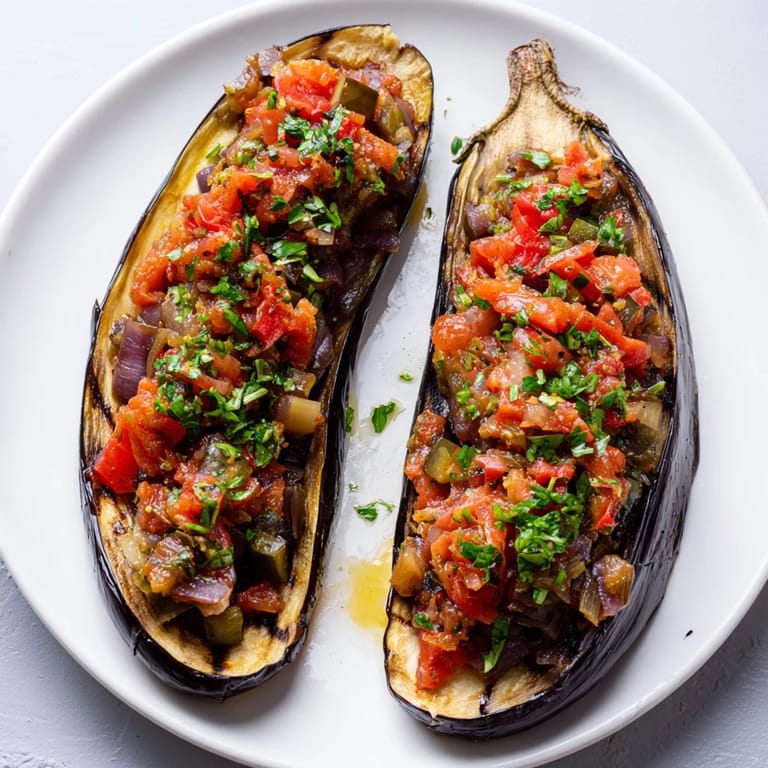
Pin The first time I made imam bayildi, I was standing in a cramped Istanbul kitchen with my friend Zeynep's mother, who kept insisting I was frying the eggplants too aggressively. She'd nudge me aside every few minutes with a knowing smile, showing me the gentle way to coax them golden without bruising their delicate flesh. That patient lesson stuck with me—and so did the name, which means the imam fainted, supposedly from the sheer deliciousness of the dish. I've made it dozens of times since, and I still think of her hands guiding mine.
I served this to my book club last autumn, and someone asked if the eggplant was actually a fancy mushroom—that's when I knew I'd gotten the texture right. The filling had simmered long enough that the tomatoes had broken down into something almost jam-like, clinging to every forkful. By the time we finished, there wasn't a drop of that fragrant oil left on any plate, which felt like the highest compliment possible.
Ingredients
- Eggplants (4 medium, about 250 g each): Choose ones that feel slightly heavy for their size and have unblemished skin; they'll have fewer seeds and cook more evenly.
- Onions (3 medium, thinly sliced): The slow cooking of onions is what builds the soul of this dish, so don't rush this step or skip using a sharp knife to slice them consistently.
- Ripe tomatoes (4, peeled and diced): If you can't find truly ripe tomatoes, canned whole tomatoes are actually your friend—fresh mediocre ones will make the filling watery.
- Garlic (4 cloves, minced): Mince it finely so it disappears into the filling rather than announcing itself in sharp little bites.
- Green bell peppers (2, seeded and finely chopped): Their slight sweetness balances the richness of the olive oil and prevents the dish from feeling one-note.
- Flat-leaf parsley (1 bunch, chopped): Add this at the very end to keep its fresh color and flavor; cooking it to death will turn it into dark, flavorless strings.
- Extra virgin olive oil (120 ml / ½ cup): This is not the time to use budget oil; good olive oil is what transforms this from a simple baked vegetable into something memorable.
- Water (120 ml / ½ cup): This creates the gentle steam that cooks the eggplant from the inside out.
- Lemon juice (½ lemon): The acid brightens everything and cuts through the richness without overwhelming the delicate flavors.
- Sugar (1 tsp): Just enough to balance acidity and coax out the tomatoes' natural sweetness, nothing more.
- Sea salt (1½ tsp, plus more to taste): Salt the eggplants upfront to draw out bitterness; it's a step that actually matters with this vegetable.
- Black pepper (½ tsp): Freshly ground only—pre-ground pepper will taste stale against all this fresh flavor.
- Paprika (1 tsp, optional): Use it if you want a whisper of smokiness, but don't feel obligated; the dish is complete without it.
Tired of Takeout? 🥡
Get 10 meals you can make faster than delivery arrives. Seriously.
One email. No spam. Unsubscribe anytime.
Instructions
- Salt the eggplants and let them rest:
- Wash them, peel lengthwise stripes in a striped pattern (this looks beautiful and helps them cook evenly), then cut a lengthwise slit in each one, careful to leave the ends intact so they stay structurally sound. Sprinkle generously with salt and let them sit for 20 minutes—this is when the bitterness weeps out, so don't skip it or rush it.
- Rinse and dry thoroughly:
- Rinse each eggplant under cold water and pat dry with paper towels until they're really dry; moisture is the enemy of browning. Preheat your oven to 180°C (350°F) while you work.
- Build the filling base:
- Heat half the olive oil in a large skillet over medium heat and add your sliced onions, stirring occasionally as they soften into a golden, sweet mess—this takes about 8 minutes and is the foundation of everything. Add the minced garlic and chopped peppers, cooking for another 3 minutes until fragrant.
- Simmer the tomato mixture:
- Stir in the diced tomatoes, sugar, salt, pepper, and paprika if using, and let it simmer gently for 10 minutes until the mixture thickens and tastes fully integrated. Remove from heat and stir in the fresh parsley so its brightness doesn't get cooked away.
- Gently fry the eggplants:
- In a clean skillet, heat the remaining olive oil over medium heat and carefully fry the eggplants on all sides until they're lightly browned and beginning to soften, about 8 minutes total—think of it as a gentle coaxing rather than aggressive browning. You want them pliable enough to stuff without splitting.
- Stuff and assemble:
- Place the eggplants in a baking dish, carefully open each slit, and divide the filling generously among them, letting it cascade into the openings. Drizzle everything with lemon juice and pour water around the eggplants (not over them).
- Bake covered and uncovered:
- Cover the dish tightly with foil and bake for 35 minutes, then remove the foil and bake for another 10–15 minutes until the eggplants are completely tender and the filling is bubbling gently at the edges. The uncovered time lets the top of the filling concentrate slightly and lets the edges caramelize just a bit.
- Cool before serving:
- Let the dish cool to room temperature—this is when the flavors truly marry and the textures set. Warm or room temperature, it's equally delicious.
 Pin
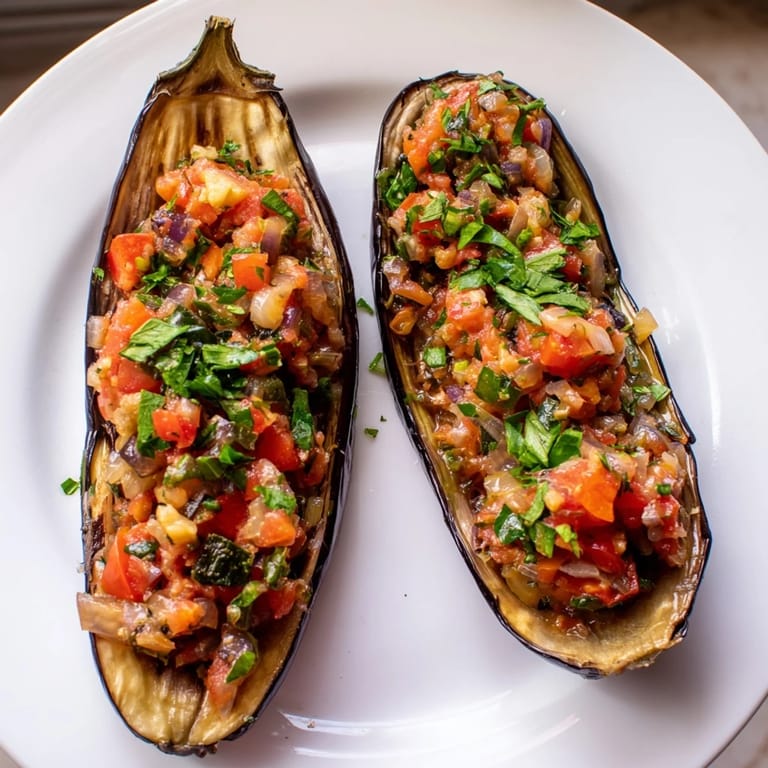
Pin There's a moment when you pull this out of the oven and the kitchen fills with that combination of olive oil, slow-cooked tomatoes, and soft eggplant—it stops conversations. It's the kind of smell that makes people walk toward the kitchen asking what you're making, and the answer always seems to surprise them: just eggplants, but better than they imagined.
Why This Dish Has Stayed in My Rotation
Imam bayildi sits at this interesting intersection where it's impressive enough to serve guests but forgiving enough to make on a tired Tuesday night. The prep work is straightforward—there's no special technique or hard-to-source ingredient—but the result feels like you've spent hours in the kitchen. It's also one of those rare dishes that actually tastes better the next day, which means you can make it ahead without stress, letting the flavors deepen and integrate overnight.
How to Serve It (Beyond Just Eating It Straight)
I've served this as the centerpiece of a vegetarian spread with crusty bread, creamy yogurt, and a sharp green salad, and it held its own without apology. Some nights I pair it with plain rice to soak up the oil, other times with nothing at all because the dish is complete by itself. The versatility is part of why I keep coming back to it—it fits into so many moods and occasions without needing modification.
Small Details That Shift Everything
I learned the hard way that the quality of your olive oil matters here more than in almost any other recipe I make regularly. Cheap oil will leave a slick, unpleasant film; good olive oil becomes silky and integral to the dish. I also discovered that adding a tiny pinch of cinnamon to the filling—just barely enough to notice—adds a warmth that people can't quite identify but somehow makes them eat more.
- If your tomatoes aren't particularly ripe, add an extra ½ teaspoon of sugar to round out the flavor without making it taste sweet.
- Make this a day ahead if you can; the flavors absolutely deepen overnight and it reheats beautifully at 160°C (320°F) for about 15 minutes.
- For a spicy version, finely mince a green chili and fold it into the filling at the very end so its heat stays bright and doesn't fade into the background.
 Pin
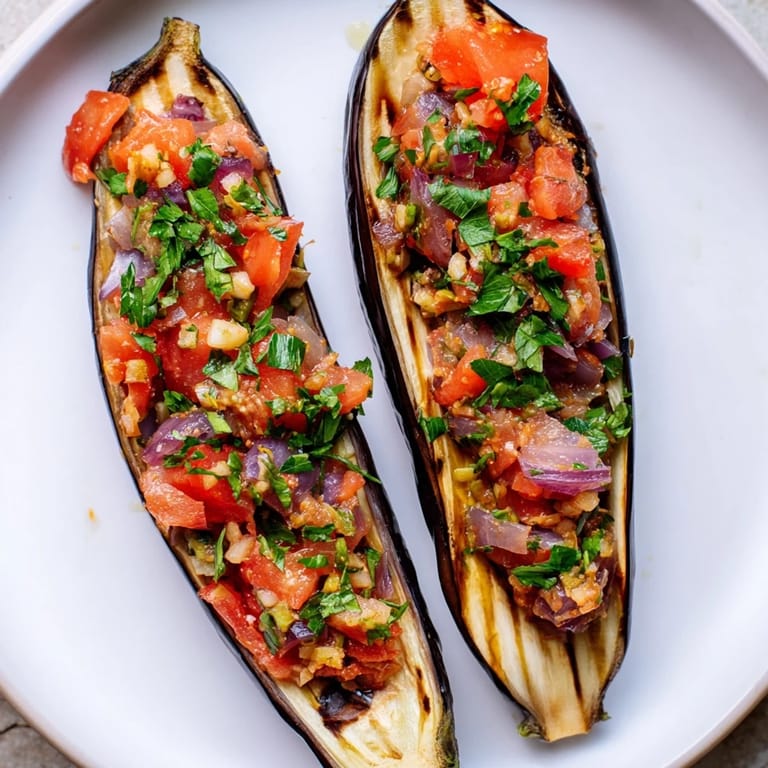
Pin This dish has quietly become one of my most-requested recipes, probably because it tastes like care without demanding it. Once you've made it once, you'll make it again.
Recipe Q&A
- → How do I prepare the eggplants for cooking?
Slice lengthwise stripes on the eggplants, salt them to remove bitterness, rinse, then pat dry before frying.
- → What is the role of olive oil in this dish?
Olive oil gently fries the eggplants and enhances the rich flavors during baking, contributing to the silky texture.
- → Can I add extra spices to the filling?
Yes, a pinch of cinnamon or allspice can be added for a warming depth, and green chili for a spicy kick.
- → Is it better served hot or cold?
Imam Bayildi is traditionally enjoyed warm or at room temperature, allowing flavors to fully develop.
- → What can I serve alongside?
Serve with crusty bread, rice, or a side of yogurt to complement the rich vegetable filling.