 Pin
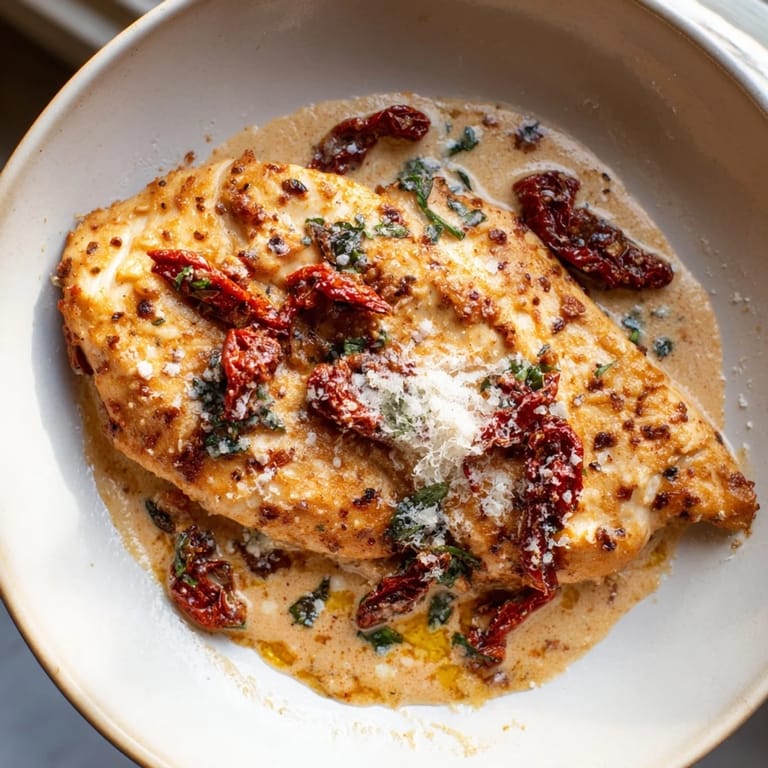
Pin The first time I made this dish, I was standing in my kitchen on a Tuesday evening, sun-dried tomatoes glistening in their jar like jewels, and I thought: what if I could make someone feel loved through dinner? That's when Marry Me Chicken found me, and honestly, it's lived up to its name more times than I can count. The cream catches the light, the Parmesan drifts down like actual snow, and suddenly you're serving something that looks like you spent hours when really, you've barely broken a sweat. It's become my go-to when I want to feel like I'm doing something special without the stress.
I remember bringing this to a dinner party once and watching my friend's face when she tasted it—she literally set down her fork and said, 'How are you even real?' That sauce, creamy and tangy all at once, had somehow made four simple chicken breasts into the main event. The best part was how everyone went quiet for a moment, the kind of quiet that means the food is doing exactly what it's supposed to do.
Ingredients
- Boneless, skinless chicken breasts: Four breasts around 600 to 700 grams give you the right size for a beautiful sear and quick cook—too thin and they dry out, too thick and the pan work gets fussy.
- Kosher salt and freshly ground black pepper: These matter more than you'd think; salt draws out moisture right before searing, giving you that golden crust that makes everything taste better.
- Olive oil: Use a regular one here, not your fancy stuff—you need it to handle the medium-high heat without any drama.
- Garlic, dried oregano, and red pepper flakes: The garlic blooms in the pan and becomes the flavor backbone; the oregano whispers Italian warmth, and the pepper flakes are optional but they add a little intrigue if you want it.
- Sun-dried tomatoes in oil: These aren't an afterthought—they're tangy, concentrated, and they turn a simple cream sauce into something with actual personality.
- Chicken stock: Keep it to 240 milliliters so you don't drown the sauce; gluten-free if you need it.
- Heavy cream: 180 milliliters is the magic amount—too much and you lose the tomato edge, too little and you miss that silky mouthfeel.
- Parmesan cheese: 60 grams stirred into the sauce plus extra for that snow finish; real Parmigiano-Reggiano makes a noticeable difference if you have it.
- Unsalted butter: One tablespoon at the end sounds small, but it catches the light and smooths everything into luxury.
- Parmesan for garnish: 30 grams, microplaned or finely grated until it's almost cloud-like; this is where the dish gets its name.
- Fresh basil: Optional, but a few leaves scattered at the end make it look like you know what you're doing.
Tired of Takeout? 🥡
Get 10 meals you can make faster than delivery arrives. Seriously.
One email. No spam. Unsubscribe anytime.
Instructions
- Dry and season your chicken:
- Pat each breast completely dry—water is the enemy of a good sear. Sprinkle both sides with salt and pepper, and let it sit for a minute so the salt can start its work.
- Sear until golden:
- Heat your oil in a large skillet over medium-high heat until it's shimmering and almost smoking. Lay the chicken breasts in and don't touch them for four to five minutes—patience is the whole secret here. Flip and cook the other side another four to five minutes until the outside is golden and the centers are almost done. Set them on a plate.
- Build the sauce foundation:
- Keep the same skillet, turn the heat to medium, and add your minced garlic along with oregano and red pepper flakes if you're using them. Listen for the sizzle, watch for the garlic to stop looking raw—about one minute is all you need. The kitchen will smell incredible.
- Add the sun-dried tomatoes:
- Stir them in and let them warm for another minute, just long enough to release their oils and flavor into the pan.
- Deglaze and simmer:
- Pour in your chicken stock, scraping up all those brown bits stuck to the bottom—that's pure flavor. Let it bubble and reduce slightly for two to three minutes.
- Cream it into luxury:
- Pour in the heavy cream and add the 60 grams of grated Parmesan, stirring gently until everything is smooth and cohesive. Bring it to a gentle simmer, not a rolling boil.
- Return the chicken home:
- Nestle those golden breasts back into the sauce, then let everything simmer uncovered for five to eight minutes. Spoon the sauce over the chicken as it finishes cooking, watching until the chicken is white all the way through and the sauce has thickened slightly.
- Finish with butter:
- Remove from heat and swirl in that tablespoon of cold butter—it'll make the sauce glossy and complete.
- Plate with drama:
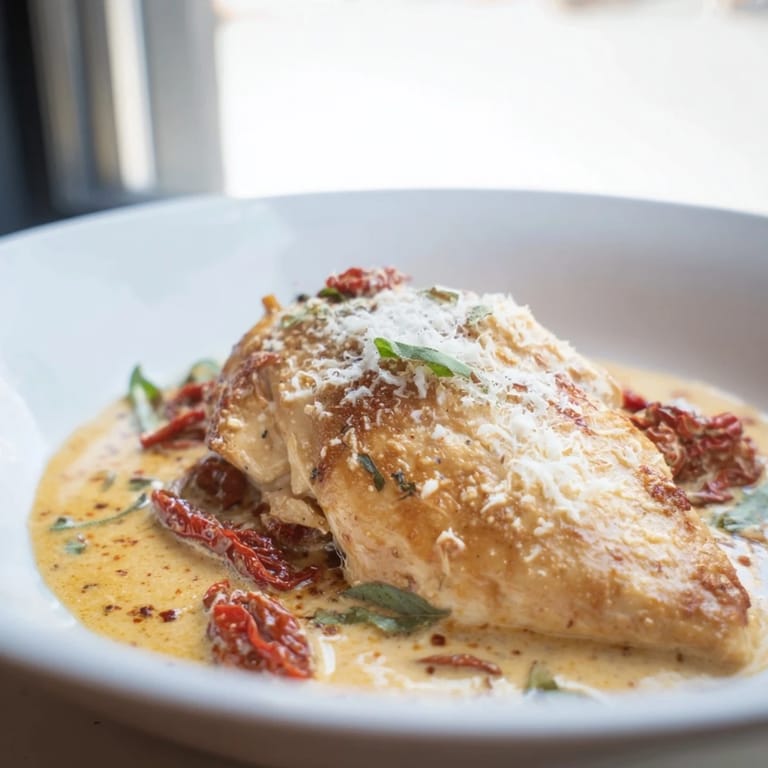
- Transfer each chicken breast to a plate, spoon the sauce generously over and around it, then take your microplane and dust the top with a generous amount of finely grated Parmesan until it looks like fresh snow. Tuck a basil leaf on top if you have it.
 Pin
Pin What I love most about this dish is that it bridges two worlds—it feels elegant and special, but there's nothing pretentious about it. It's honest cooking that happens to be beautiful, which somehow feels like the highest compliment.
The Magic of Sun-Dried Tomatoes
Sun-dried tomatoes are what elevate this from a basic cream sauce to something with real character. They're concentrated tomato flavor without any of the water, so they give you depth that fresh tomatoes simply can't match. The first time I used them, I was skeptical—they looked so dark and intense—but once they warmed in the pan, they softened and released this jammy, tangy richness that made everything taste like it came from Tuscany. They're already oiled when you buy them, so you're not adding grease to an already creamy sauce; you're just adding complexity and warmth.
Playing with Texture and Temperature
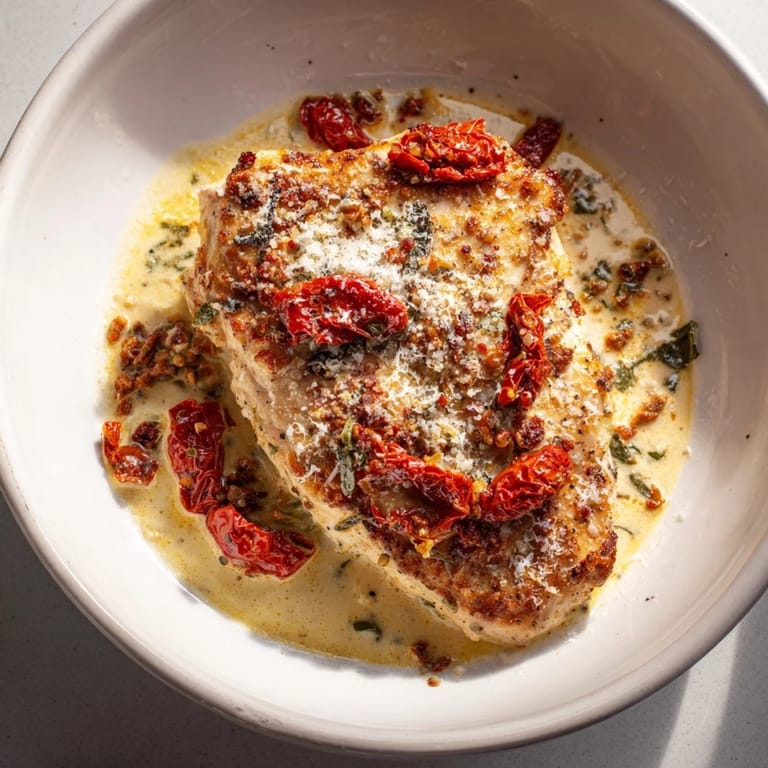
This dish works because you have layers of texture happening at once—the soft, yielding chicken, the silky cream sauce, and then that one moment of surprise when the cold, fluffy Parmesan snow melts on your tongue and reminds you that this is still a fresh, living dish even as it's warming you from the inside. The cold Parmesan against hot sauce creates this small sensory experience that people notice and remember. If you grate it too coarsely, it takes too long to melt and you lose that contrast. If you add it too early, it'll melt into nothing. Timing it right is the difference between a good plate and one that people actually talk about later.
Serving Suggestions and Pairings
This sauce is too good to leave on the plate, so you need something to soak it up—pasta is the obvious choice, but I've also served it over creamy polenta, mashed potatoes, or even soft polenta, and every version feels right. A simple green salad alongside cuts through the richness and keeps you coming back for another bite. The dish pairs beautifully with a crisp white wine, something with enough acidity to stand up to the cream without overwhelming the delicate chicken.
- Toss the sauce with pappardelle or any wide pasta to catch the creamy goodness in every fold.
- Serve alongside roasted vegetables or a simple arugula salad for balance and brightness.
- A chilled glass of Pinot Grigio or Sauvignon Blanc completes the experience without any fuss.
 Pin
Pin This recipe taught me that sometimes the most romantic meals are the ones where you're not trying too hard—just working with good ingredients, respecting the process, and finishing with a little flourish. That's what love through food actually looks like.
Recipe Q&A
- → How do you achieve the Parmesan snow effect?
Use a microplane or the finest grater side to finely grate Parmesan cheese, creating a light, fluffy snow-like dusting that melts slightly over the hot chicken.
- → Can I use chicken thighs instead of breasts?
Yes, chicken thighs can be substituted for a juicier texture; adjust cooking time accordingly to ensure they are cooked through.
- → What is the best way to prevent the sauce from separating?
Simmer the sauce gently and avoid boiling once cream is added to maintain a smooth, creamy consistency.
- → Can sun-dried tomatoes be substituted?
Dried tomatoes packed in oil provide the best flavor, but rehydrated dried tomatoes work as a substitute, though the sauce may be less rich.
- → How should leftovers be stored?
Store in an airtight container in the refrigerator for up to 3 days. Reheat gently on low heat to preserve sauce texture.